Unlock the Secrets to a Professional Finish on Bamboo Structures
By Sai Goutham | April 7, 2022 | Construction -

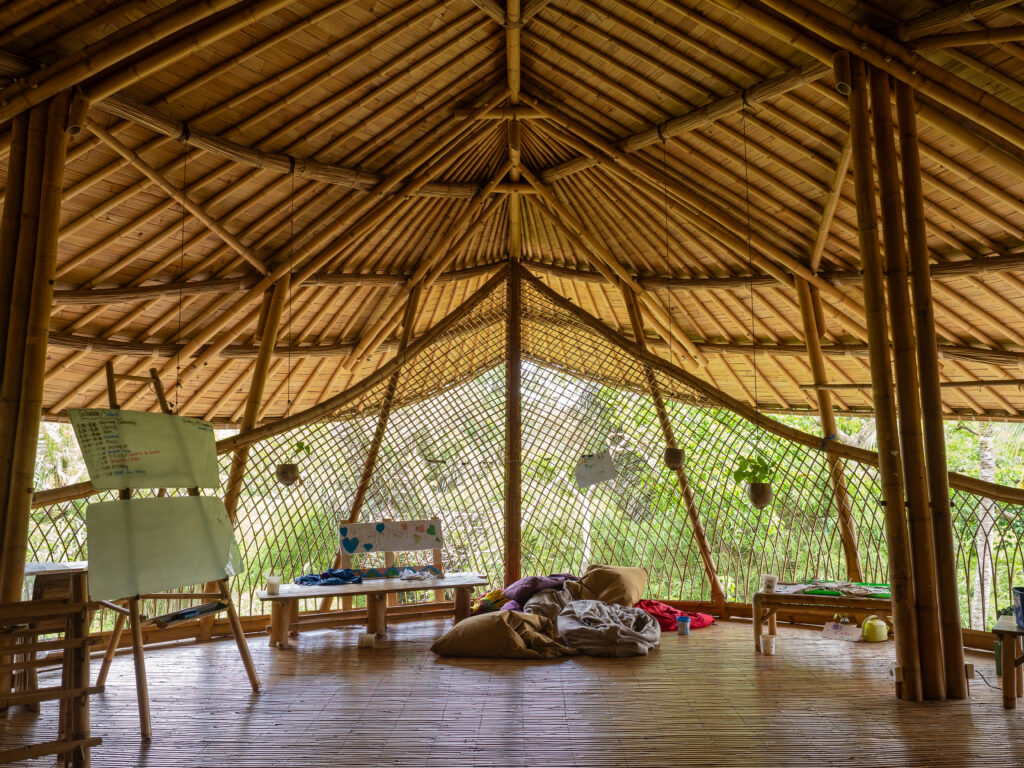
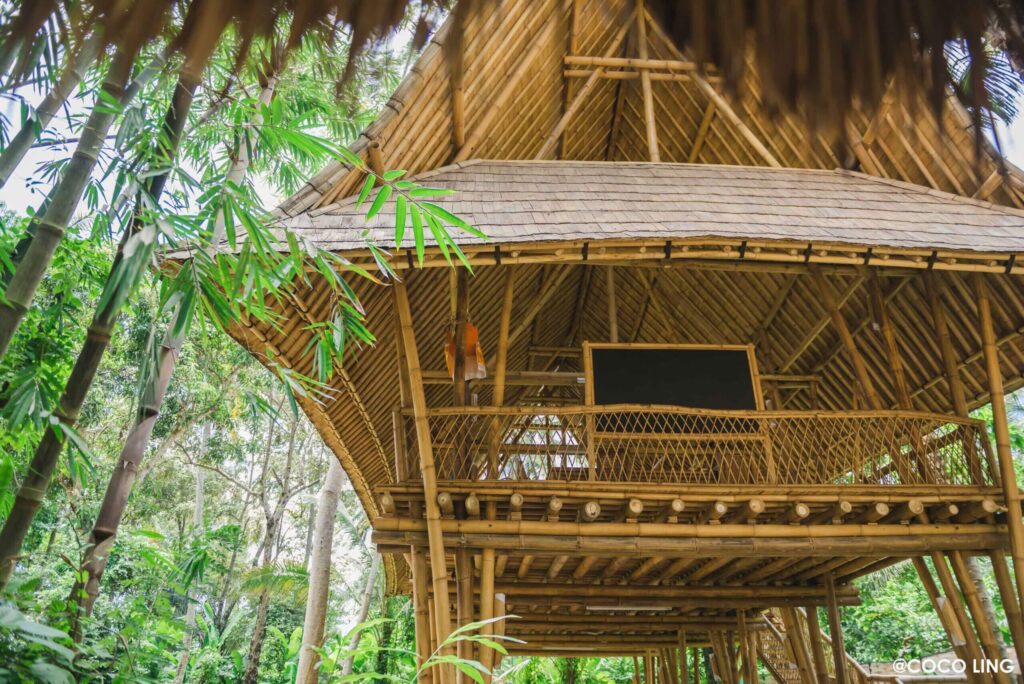
Finishing is the final stage of the bamboo building process. Once the main structural framing and roofing of the bamboo building are finished, it is time for the final finishes. Finishing helps to improve safety, visual appearance and protects the bamboo from weathering.

In this article, we share the three important steps for finishing a bamboo structure:
- Fastening the bamboo structure to the foundations
- Cleaning and Detailing
- Final Coatings
1. Fastening the bamboo structure to foundations
Building foundations is the first step of bamboo construction, however they are not actually fastened to the bamboo posts until all the structural elements are added and the roofing is finished. This provides the option to make any structual changes if needed during construction.
Once the structure is complete the structure is then fastened to the foundations this gives stability and completely reduces the movement of the structure.
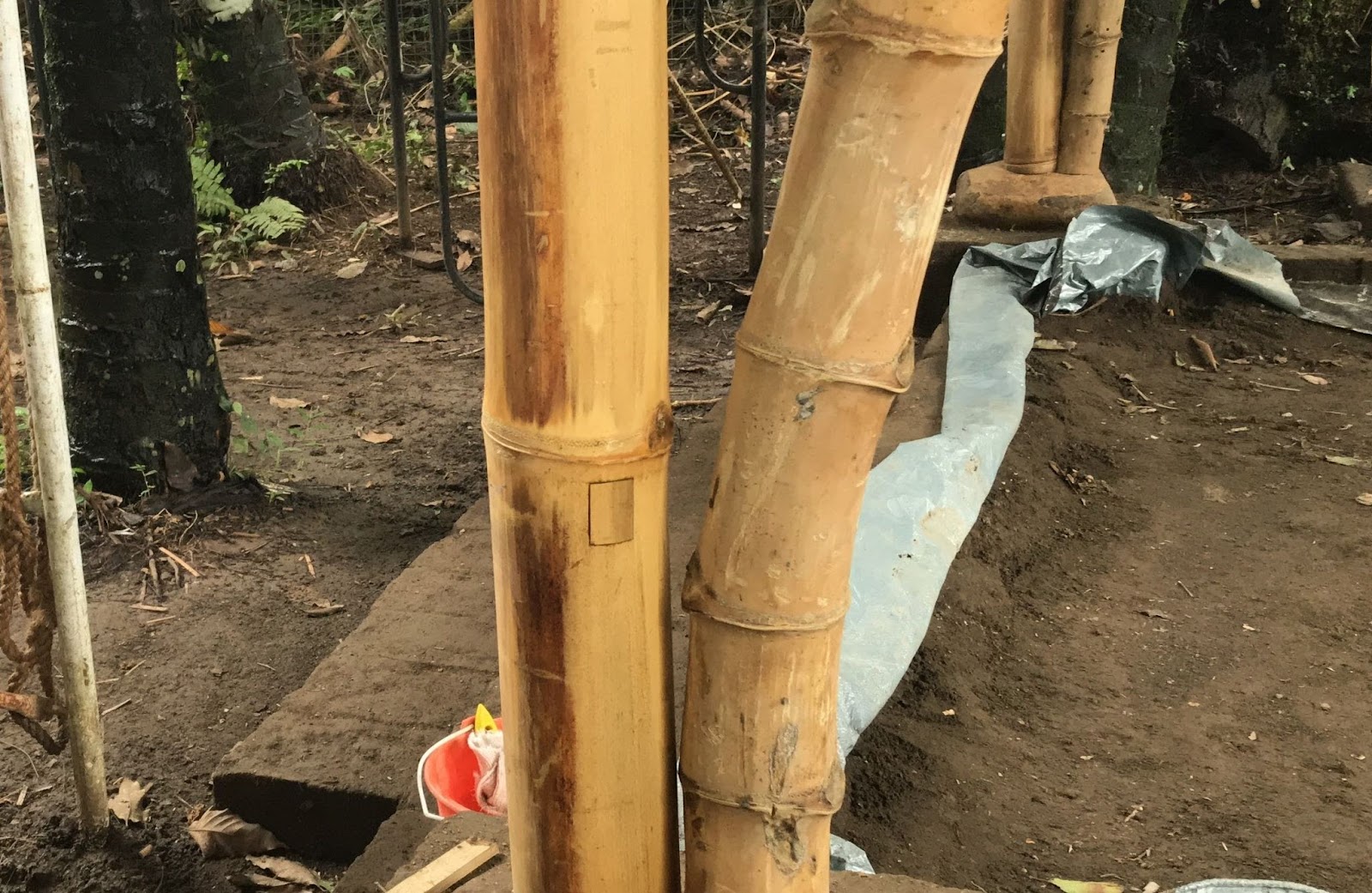
To do this, carve a small hole in the side of the bamboo, around 50cm from the base of the bamboo. Prepare a mixture of concrete grouting, using a ratio of 1 cement: 2 sand : 3 gravel, and an appropriate amount of water to combine the mixture.
Using a funnel, pour the concrete up to the level of the hole. Then, using a hammer knock on the side of the pole to encourage the concrete to settle in the bottom and remove any air pockets. After the concrete is poured, seal the hole with bamboo.


2. Cleaning and Detailing
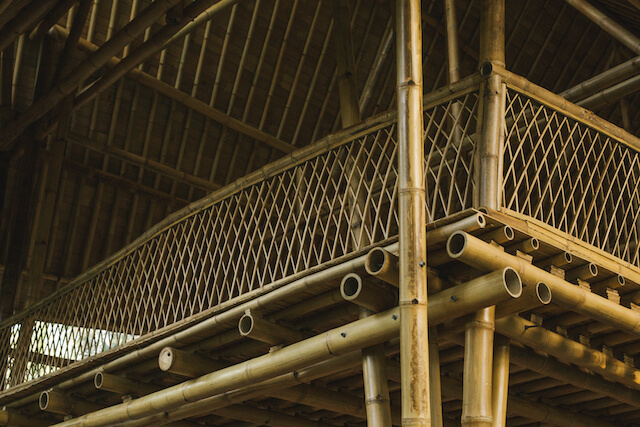
The second step is to clean and tidy up the structure by removing excess bamboo pins and steel threaded rods from each joinery point. Once this is done you can add covers over the nuts to protect them from corrosion.

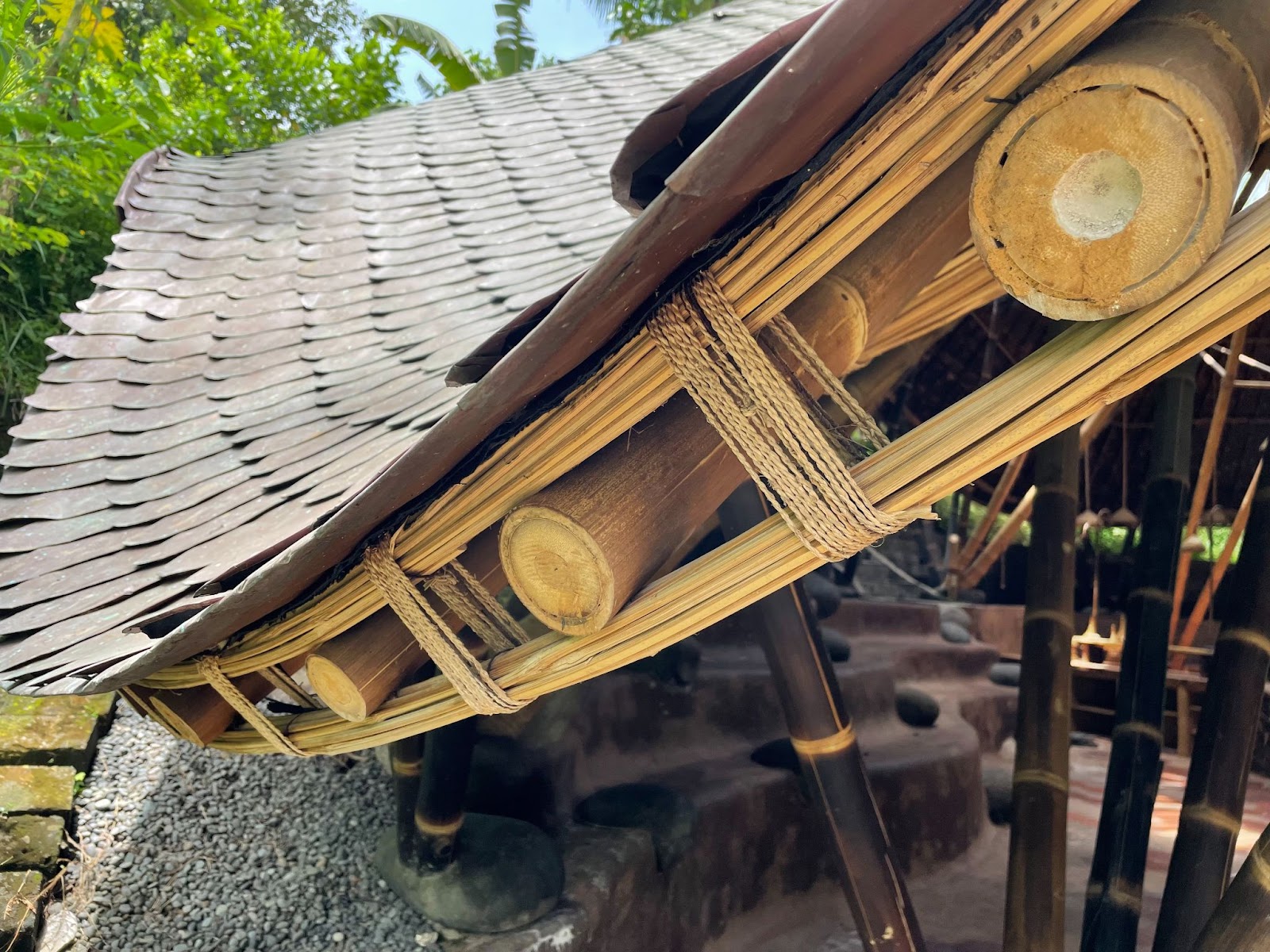
Covering the metal clamps with ropes properly also adds an aesthetical element to the building.

Plug any open-ended holes and gaps using bamboo to avoid creating a habitat for insects and other unwanted creatures.

Finally, clear the construction site and make it dust-free before adding the final coating because the dust might be blown onto the structure and stick onto the varnished bamboo.
3. Final Coatings
Once the site is cleaned, the final step is to add the final coating. This provides extra protection for the structure from weathering and gives it a nice polished, well-finished look.
Bamboo poles need to be sanded with sanding paper to help make the poles nice and smooth to the touch and also to remove any dirt that accumulated during construction.

The next step is to apply sodium over the bamboo pole, this helps to remove any stains and mold that may appear over the bamboo. The surface of each pole is then cleaned with water and dried with a cloth. Once it is dried the entire surface of the bamboo structure is coated with a wood finish. We recommend using a non-shiny acrylic-based coating, as this helps to maintain a naturally pleasing visual appearance. This coating helps protect the poles from weathering and extends the longevity of the building. We recommend that a bamboo structure is re-finished every 3 to 5 years.

These small and critical details of finishing a bamboo structure protect the bamboo, add aesthetic value, and extend the longevity of the building.

Sai was the Research & Development Manager at Bamboo U until 2023. He is also a natural builder and an architect from India. He has managed many mud and bamboo projects over the years.
The 11-Day Build & Design Course
In collaboration with IBUKU
Immersed in the most beautiful and innovative bamboo environment. Meet the pioneers, the visionaries, the designers and builders who took this under-utilized material and transformed it into the most desired natural building material for bamboo structure design.
The Intro to Bamboo Engineering Online Course
Designed specially for structural engineers, this FREE online course has been created in collaboration with the Base Bahay Foundation, based in the Philippines.Join the course to learn how bamboo's innate properties make it a versatile building material, and how these properties can be maximized and applied in structural design.