Women-Designed Bamboo Shelter Systems that Empower Communities after Disasters
By | October 29, 2025 | Exploring Bamboo -
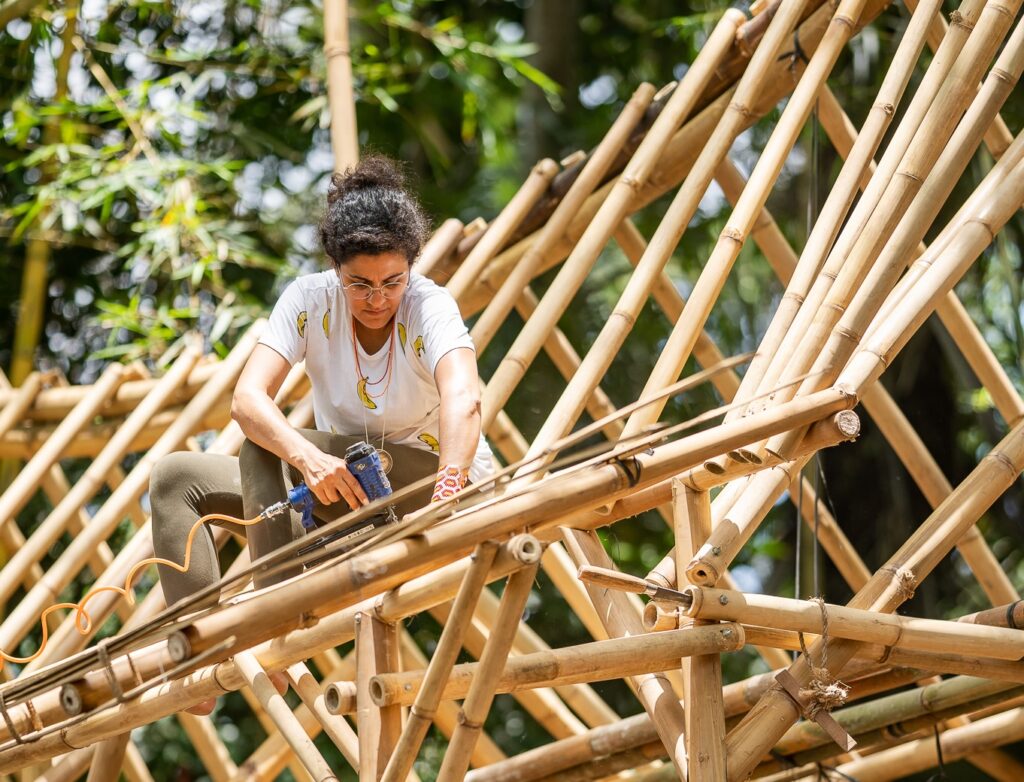
Bamboo is an excellent material for creating shelters, This is exemplified through the work of two great women, Yasmeen Lari and Marina Tabassum, who are architects from Pakistan and Bangladesh, respectively.
As an architect, it is essential to find inspiration and learn from references. Personally, I have found two architects, Yasmeen Lari from Pakistan and Marina Tabassum from Bangladesh, especially inspiring. They have embraced bamboo as a tool to empower low-income and exposed communities that faces big consequences from both natural and man made disasters. This article will focus on the systems they employ to make a bamboo shelter and the infrastructures around these initiatives which make it possible to scale their operations.

Related: Bamboo’s Potential in Rural and Informal Communities
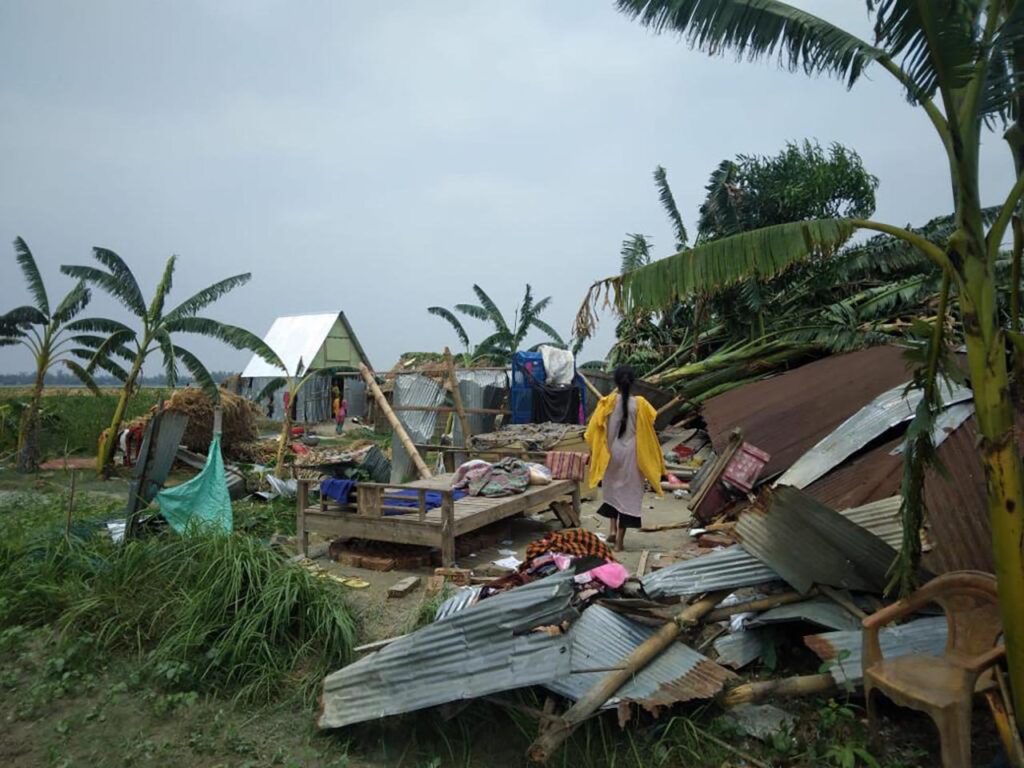
Before diving into how to optimize disaster shelters, it is important to think about how we can prevent damage to existing structures. In November 2013, the Philippines was hit by the devastating typhoon Yolanda which killed over 6300 people. After the tragedy, Shelter Cluster Philippines, together with the Department of Social Welfare and Development, came together to inform the population about how to build back their houses in a safe way and to prevent damage for the next disaster.
The document which they released included 8 main points of focus:
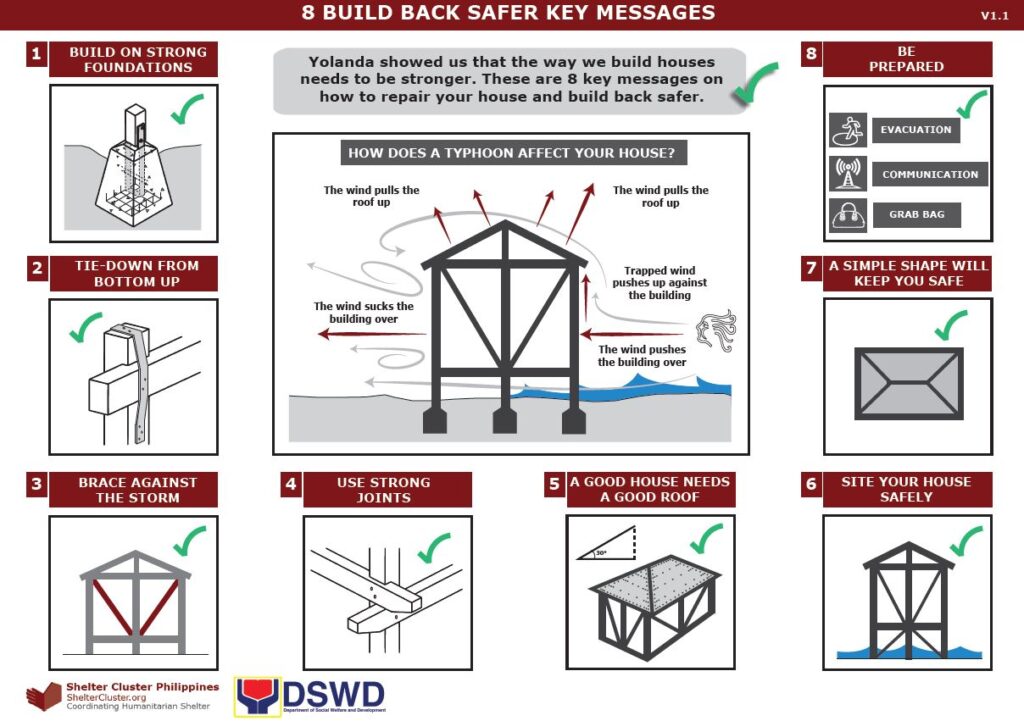
The tips given by Shelter Cluster Philippines are solid designs concepts that will increase the likelihood for a structure to survive natural disasters, specifically typhoons. On the other hand, immediately after misfortune strikes, there are desperate moments where people are disoriented. During this time when the victims of a disaster needs a shelter, factors like speed, accessibility and ease of construction are essential properties for a material to be useful. Since bamboo grows rapidly and is readily available in several countries that are prone to natural disasters, it works well as a resource for building shelters after a disaster.
Yasmeen Lari is a famous architect from Pakistan. She won the RIBA royal gold medal in 2023 and the lifetime award at the Lisbon Triennale 2025. She started her architecture career doing commercial work for high-profile clients. In 1980, she founded the Heritage Foundation of Pakistan with her husband. In the year 2000, she retired as an architect since she no longer wanted to continue commercial work.
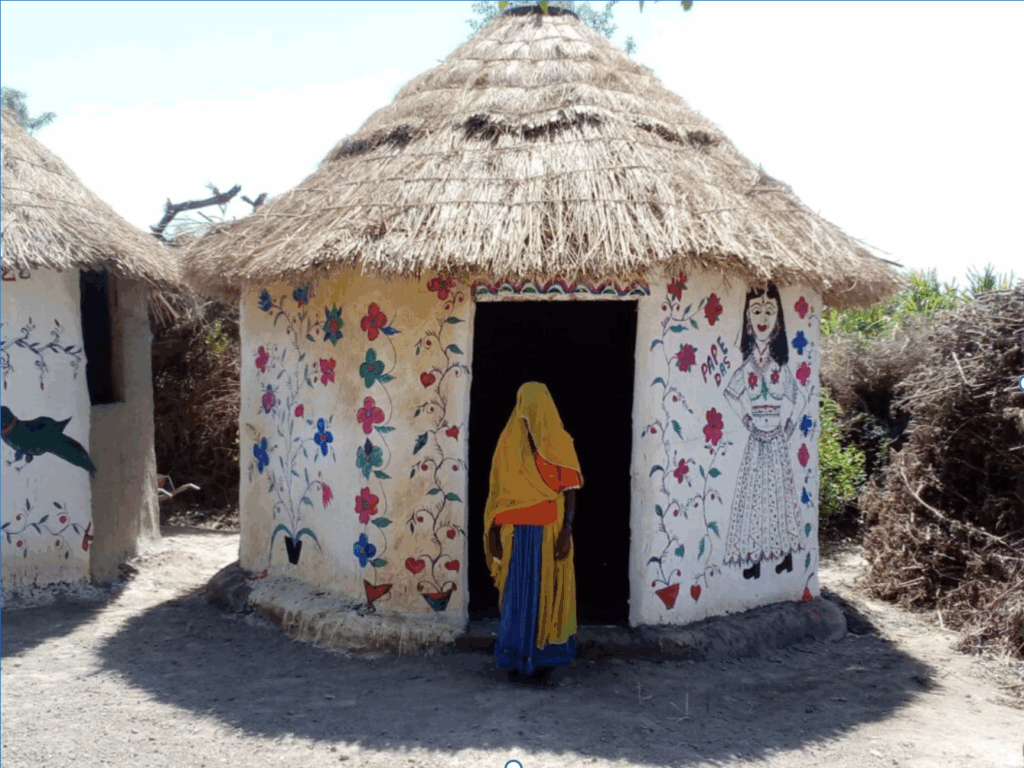
Lari eventually returned to architecture after a devastating earthquake in 2005. Inspired by similar values as Egyptian architect, Hassan Fathy, she decided to use her skills to support and empower poor communities. In recent years, Lari has often used bamboo to help build shelters, including after the Awaran Earthquake in 2013, and flooding in 2010 and 2022. Her designs utilizes mainly bamboo and mud, which she identified as the most optimal materials because of their local abundance.
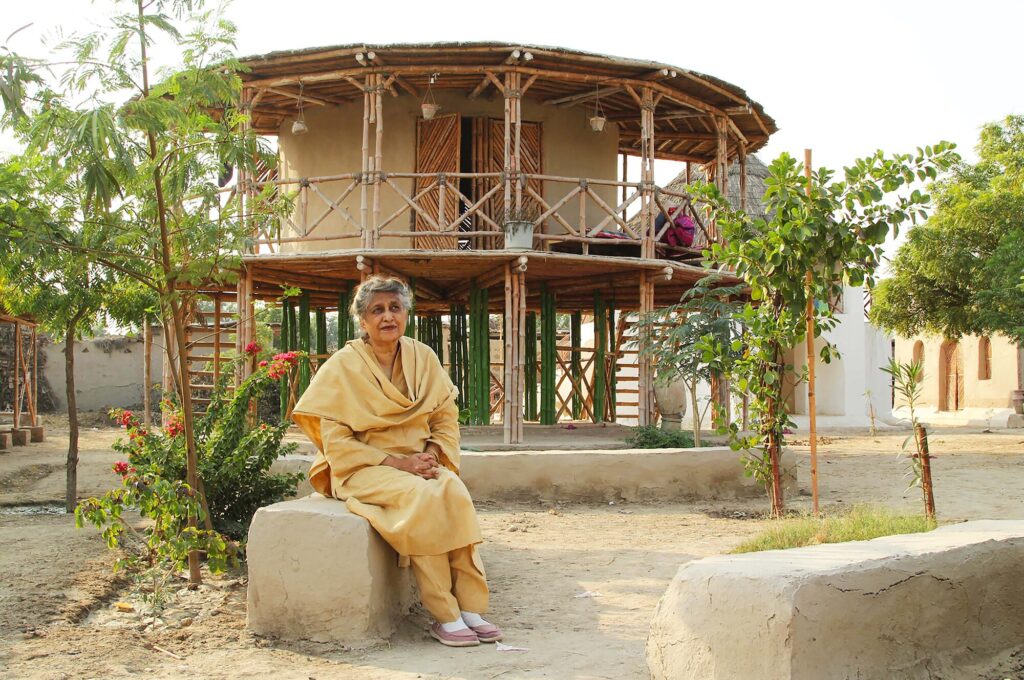
One important strategy that Lari developed over time was to reinforce the mud structures with bamboo, against earthquakes. This was done by adding bamboo in the corners and along the perimeter and center of the mud walls. Another important element was the roof. She advised roofs to be built out of lightweight materials to lower the risk of harm to inhabitants, in case of collapse. Lastly, thinking about flood prone areas, she built structures that were two stories.
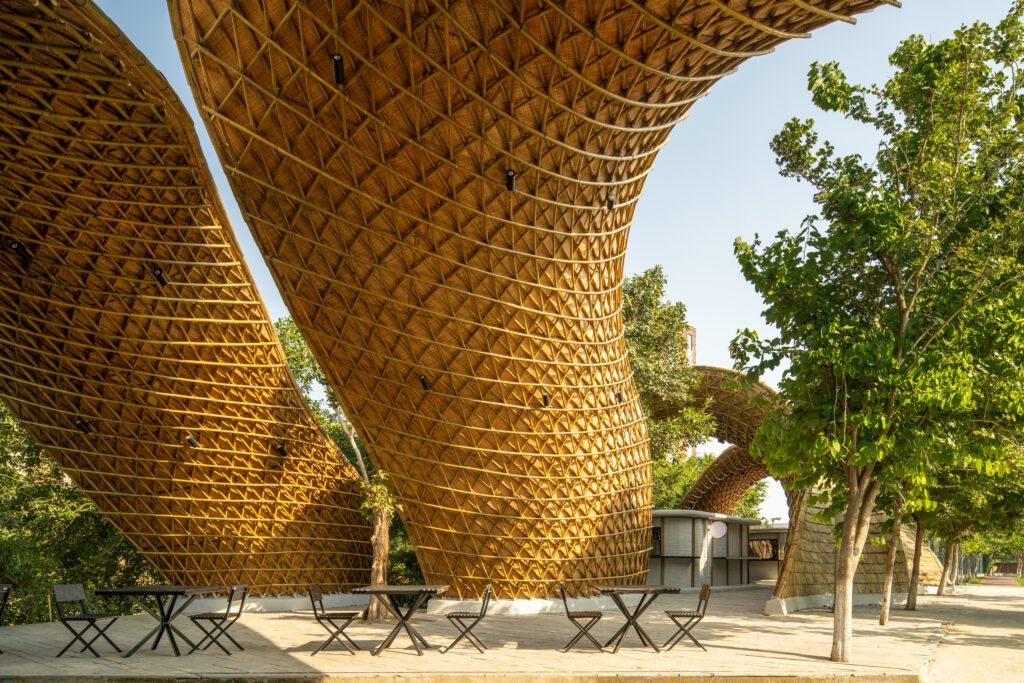
Lari has also taken bamboo in to a bigger scale, as seen in the example of the Zero Carbon Cultural Center built in 2016. This covered space, with beautiful bamboo facade patterns, hosts various activities where sustainability is the main focus. This includes construction and material workshops for local communities. Those who gain skills about bamboo construction, are empowered to share that knowledge with other communities. This ensures the need for external aid is reduced.
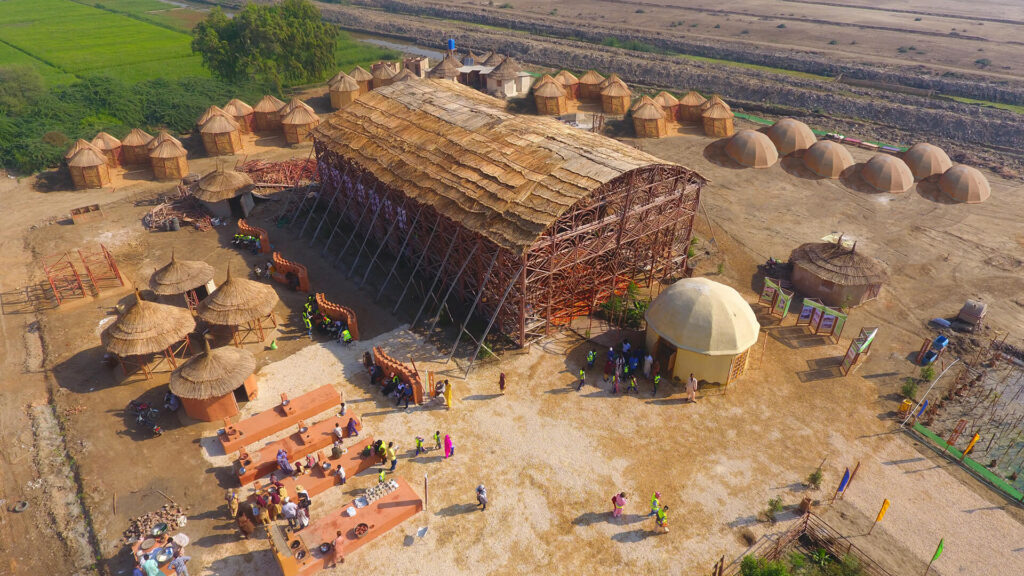
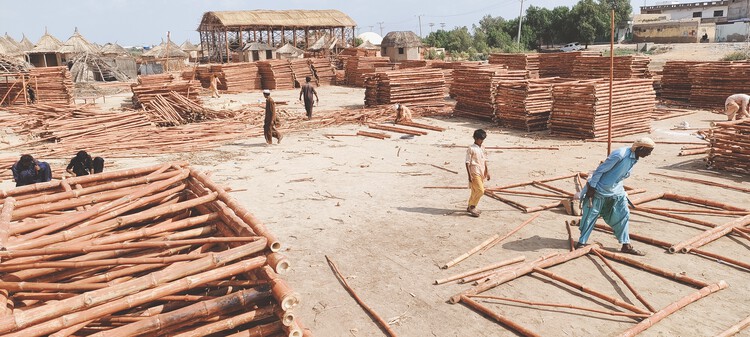
To make the process of constructing shelters easier, Lari created a system known as Lari OctaGreen (LOG). The system is centered around utilizing prefabricated bamboo frames, to create an octagonal shelter. In fact, this prefabrication process is also taught at the Zero Carbon Cultural Center. The LOG system can quickly be set up after a crisis. It consists of a system that connects the bamboo frames with lightweight mats to form the walls. It can also be made permanent by adding clay/mud around the bamboo frames in the facade.
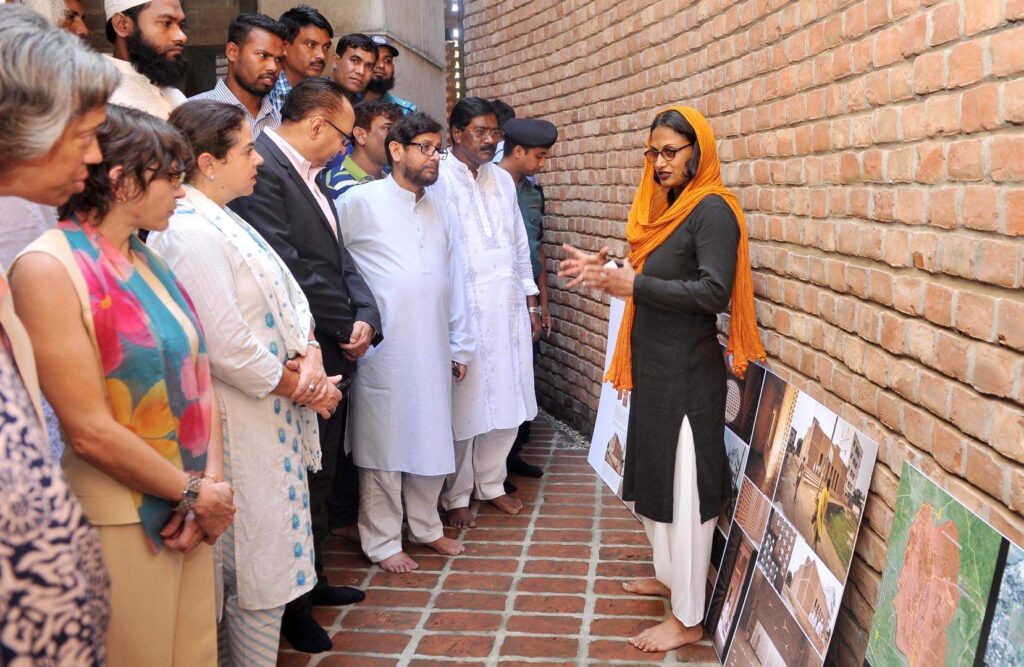
Marina Tabassum is a Bangladeshi architect, who has also recently gotten a lot of a international recognition through winning the Soane medal in 2021, the design of the Serpentine Pavilion 2025, and the Aga Khan Award for Architecture in 2016 and 2025. She has created several important buildings in Bangladesh, like the Museum of Independence and the Bait Ur Rouf Jame Mosque. These are heavier structures that investigate what contemporary architecture influenced by the local context can look like.
Working in Bangladesh requires a necessity of understanding the geographical context. Bangladesh undergoes significant and rapid land changes due to the numerous volatile rivers that originate in the Himalayas. Along the rivers there are areas called “chars”. Some of these areas may remain stable for several years, while others fluctuate multiple times per year. A lot of people live around the chars, and floods affects them severely. Marina Tabassum Architects (MTA) saw this as an important task for architects to engage with, so they developed a construction system called Khudi Bari.
The Khudi Bari is a two-storey bamboo structure with steel connections. The first floor is a flexible space for the inhabitants. Meanwhile, second floor is a sleeping space, which is raised to protect against river floods. The system is intended to be a better alternative to current options like “Flat-pack Houses”. This is especially regarding the costs which can be thousands of dollars, which is too expensive those that live in the char areas. The first Khudi Bari prototype had a cost of 250 dollars, where the majority of the cost went into creating the steel connections.
The idea behind the Khudi Bari is that if there is a change of a river’s water level, the structure can quickly be disassembled and relocated. The most essential part of the structure are the steel connections. This way, if there is not enough time to transport the bamboo as well, it is not a major problem, since new poles are not difficult or expensive to source. The steel connections can also be passed from generation to generation. This makes the Khudi Bari system a long-term investment for rural families.
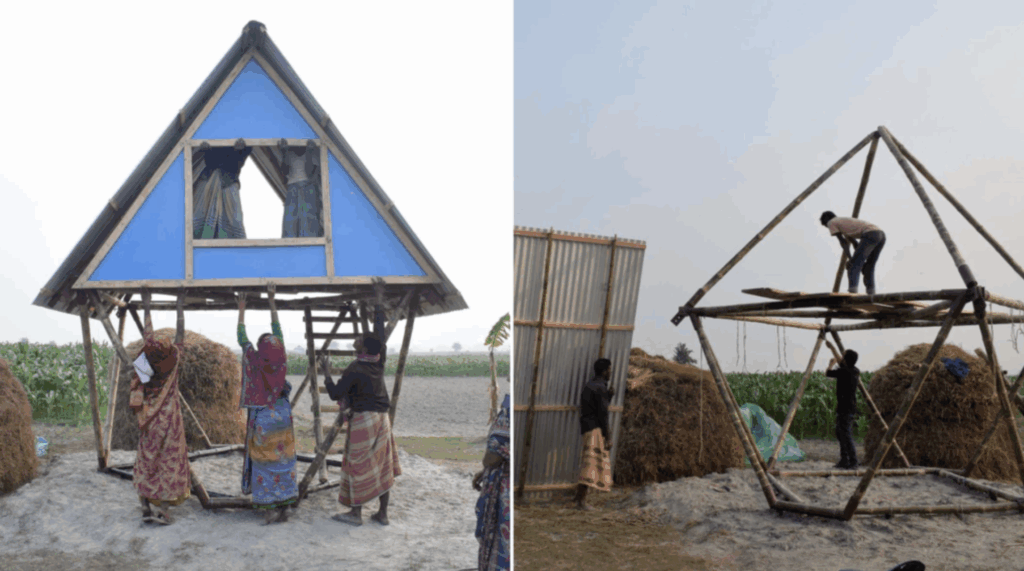
To continue developing the system, MTA created a non profit foundation called The Foundation for Architecture and Community Equity (FACE). Through this initiative, they have also made other larger, communal projects using the Khudi Bari construction system. These include the Woman-Led Community Center (WLCC) and the aggregation centers in Teknaf. Recently, the Khudi Bari system has received even more recognition, as it was selected as a winner for the Aga Khan Award for Architecture in mid-2025.
Thinking of the 8 tips from Shelter Cluster Philippines, there are similarities to the systems created by both Lari and Tabassum. They both have simple shapes (Focus Point #7), Lari with the Octagon and Tabassum triangle shape. We see that Tabassum’s system is very much centered around strong joints (Focus Point #4), with their investment into the metal connections. Meanwhile, Lari has investigated ways to use bamboo inside mud walls to reinforce the structure. They also both work around the community involvement and training. This might overlap with the point of being prepared (Focus Point #8), where communication and knowledge about safe evacuation is important.
Both architects discussed in this article are well-known women architects. They both also work consciously with how to accommodate for, and involve women in the aftermath in areas struck by disaster. This can be seen in the construction practices and training, where women in communities are leading forces. In fact, Lari also talks about how important the toilet infrastructure is for women. She says, “hygienic sanitary rooms that ensure privacy enable women in particular to live in dignity and security” (Lari, Page 133).
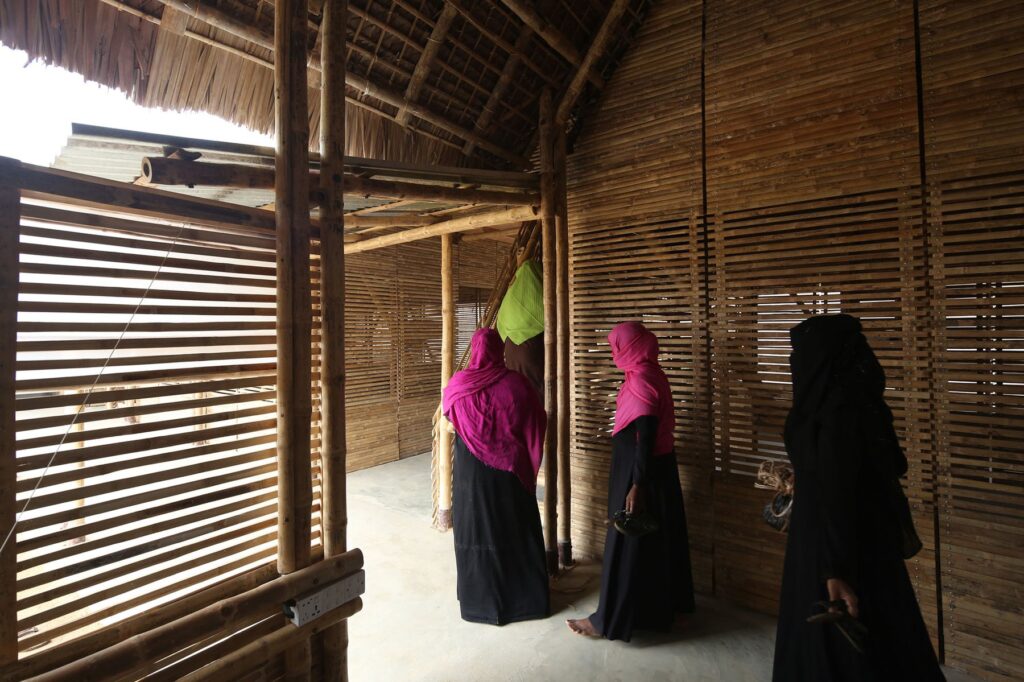
The development of structures that focus on the well being of women are also seen in both practices. In Lari’s work we see it with the Green Women’s center in Darya Khan Sheikh and the Zero Carbon Cultural Center. Here, many of the activities focus on empowering women in the communities. In Tabassum’s work we see it in the Woman-Led Community Center, built in the largest refugee camp in the world. This space is built using the Khudi Bari system, and the program consists of spaces for counseling, rest, child-care and facilities like kitchens and toilets.
7 Women Leading Sustainable Change In The Bamboo Industry
Bamboo proves itself to be a versatile material with great potential in disaster prone areas. It can help build up large amounts of shelters quickly after a natural disaster, or to be used for a flexible system where the structure can be disassembled with ease and haste. Both Lari and Tabassum developed systems which are easy to learn, practical to build with. The shelters can then be built by the local people who need it with the correct guidance.
Sources
Fitz, Angelica, Elke Krasny, Marvi Mazhar, and Architekturzentrum Wien. Yasmeen Lari, Architecture for the Future. Cambridge: The MIT Press, 2023.
Shelter Cluster Philippines, “8 Build Back Safer Key Messages.” Global Shelter Cluster. July 27, 2025. https://sheltercluster.org/pacific/documents/8-build-back-safer-key-messages-english.
Steingräber, Cristina. Marina Tabassum, Architecture: My Journey. Berlin: ArchiTangle, 2023.
All images belong to the original owners.
Want to learn how to work with bamboo? Join one of our courses HERE!
Learn to design and build with bamboo in Bali.
Join the 11-Day Bamboo Build and Design Course: hands-on building alongside experts, architects and makers from around the world.
Explore the 11-Day CoursePrefer to start online?

The 11-Day Build & Design Course
In collaboration with IBUKU
Immersed in the most beautiful and innovative bamboo environment. Meet the pioneers, the visionaries, the designers and builders who took this under-utilized material and transformed it into the most desired natural building material for bamboo structure design.
The Intro to Bamboo Engineering Online Course
Designed specially for structural engineers, this FREE online course has been created in collaboration with the Base Bahay Foundation, based in the Philippines.Join the course to learn how bamboo's innate properties make it a versatile building material, and how these properties can be maximized and applied in structural design.