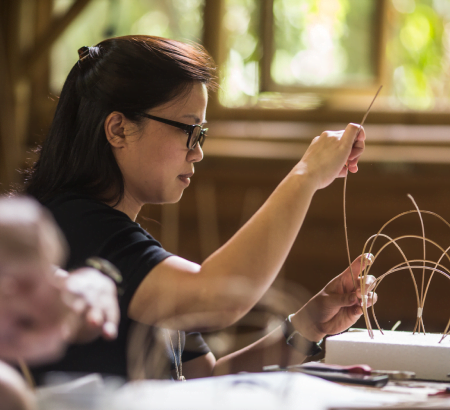
The Powerful Role of Bamboo as a Multi-Sensory Medium in Balinese Culture
By | September 16, 2025 | Exploring Bamboo -
Explore how bamboo shapes Balinese life: In ceremonies, music, architecture, and the Tri Hita Karana philosophy of harmony with nature and spirit.
In Balinese culture, bamboo is more than just a versatile material. It serves not only as a building material or as a tool for religious ceremonies, but also as a living language to express humanity’s relationship with nature and spirituality. This notion is evident in its involvement in all aspects of Balinese life. Bamboo serves as a medium for self-expression, ritual, and harmony. It seems to “speak” through sound, manifesting itself in visual symbols, and being felt in social spaces.
Related: Bamboo’s Potential in Rural and Informal Communities
In the medium of sound, bamboo appears as the soft rindik and the pounding jegog. These two traditional musical instruments are made from bamboo and often played at thanksgiving ceremonies, weddings, and sacred rituals. The instruments symbolize balance: Light yet firm, simple yet profound.
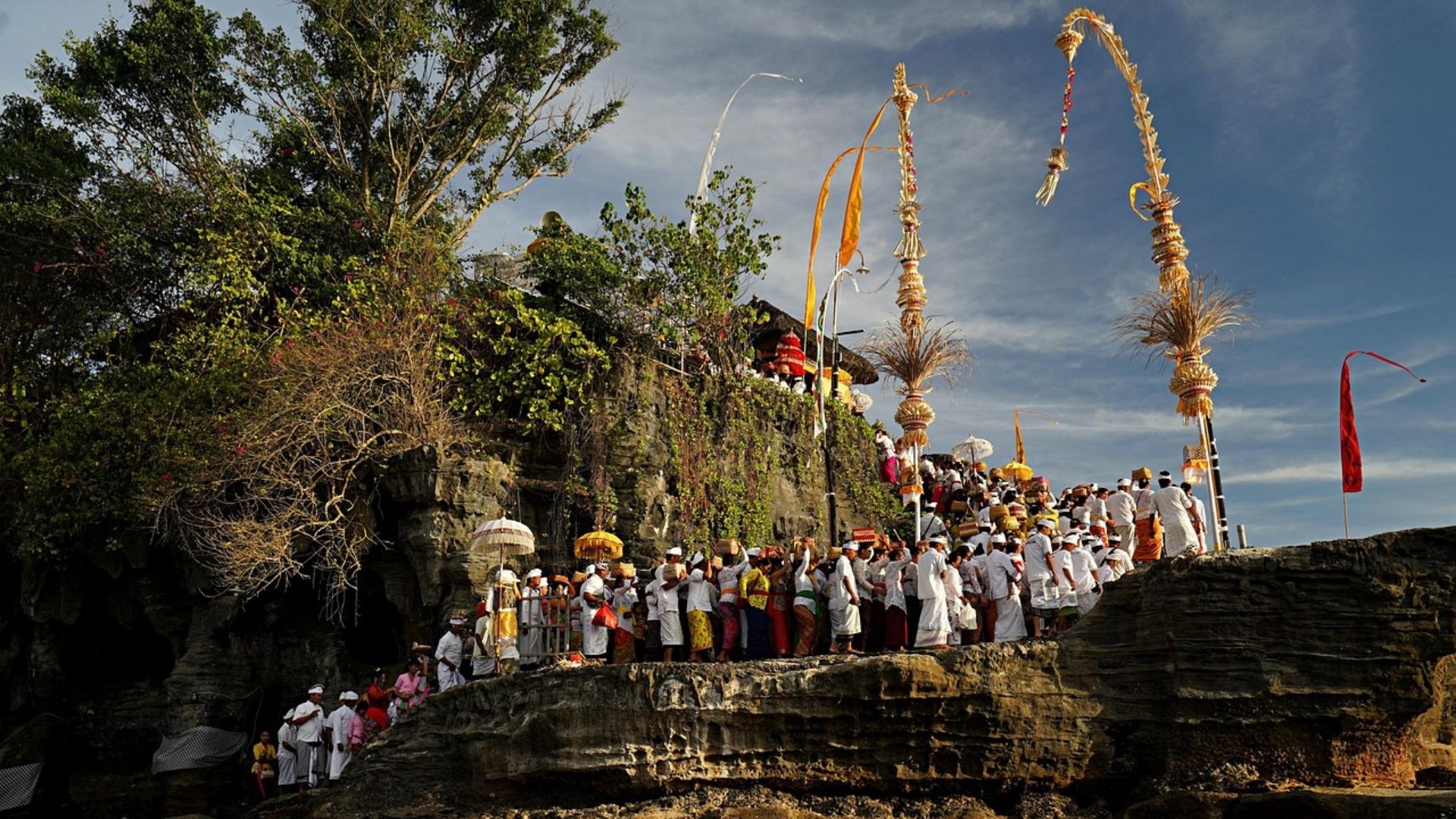
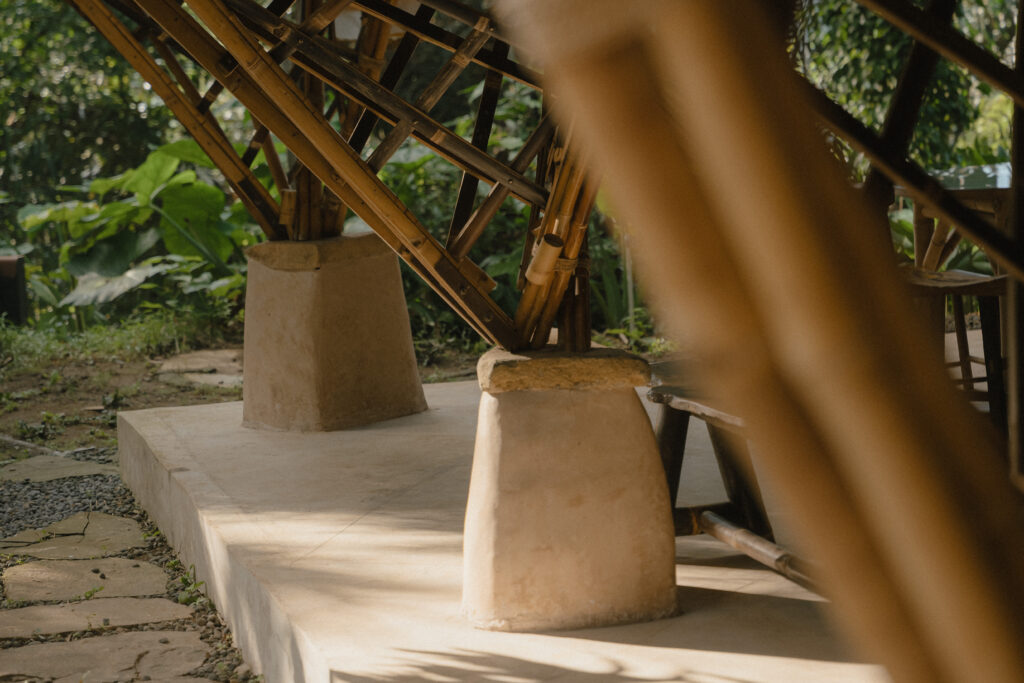
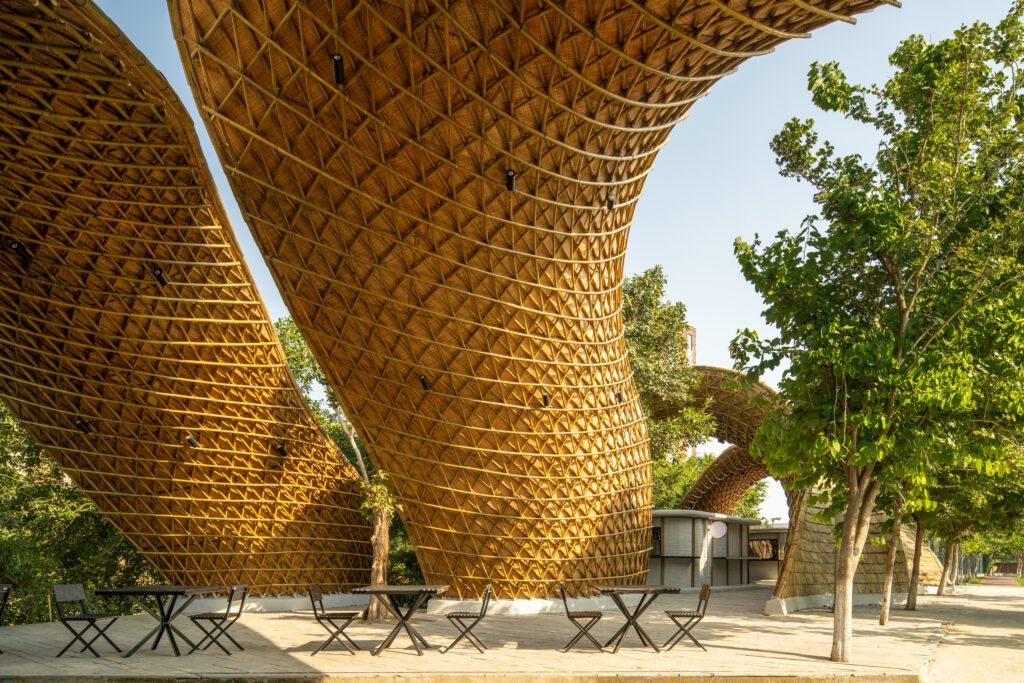
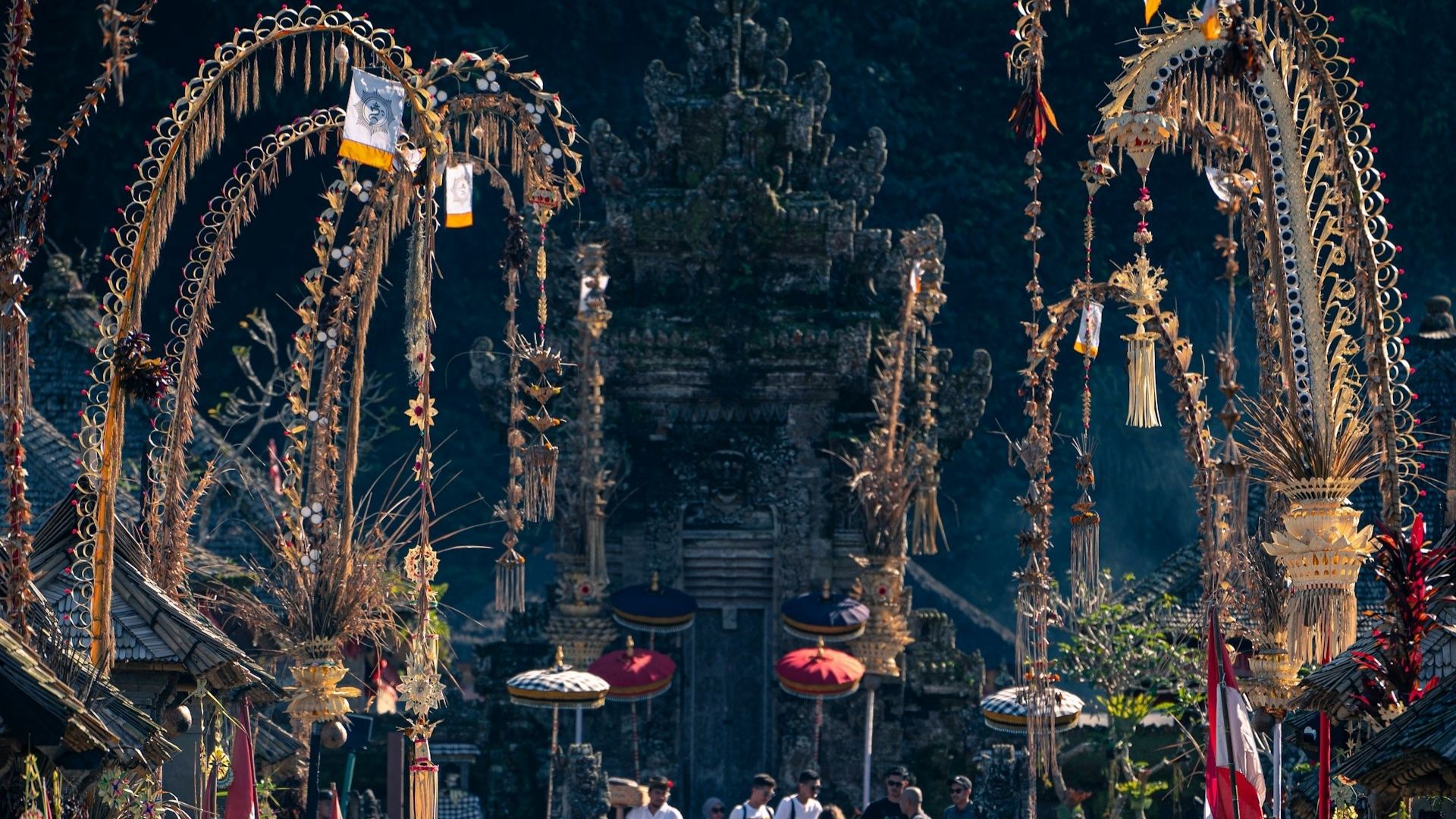
Bamboo is also present in every religious ceremony. From the Penjors (decorated bamboo poles) that mark the festival of Galungan, to temple decorations, from the wayang kulit (shadow puppet shows) to the construction of the bale banjar (community space). Bamboo is no longer merely an aesthetic accessory in the Balinese culture. Every curve, weave, and decoration is steeped in Balinese Hindu cosmology. The presence of bamboo in the community visually reminds them of the mountain (symbolizing fertility), the tree of life, and the cosmic cycle.
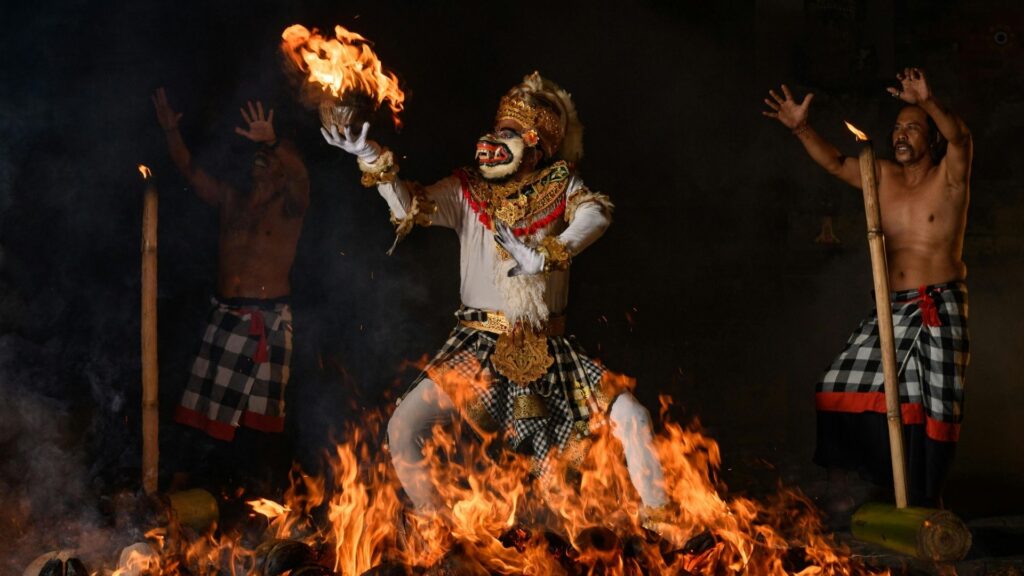
Furthermore, bamboo also serves as a direct tactile medium. For example, the jegog drummers feel every vibration of the bamboo: From the craftsmen who made the instrument to the footsteps of the dancers.
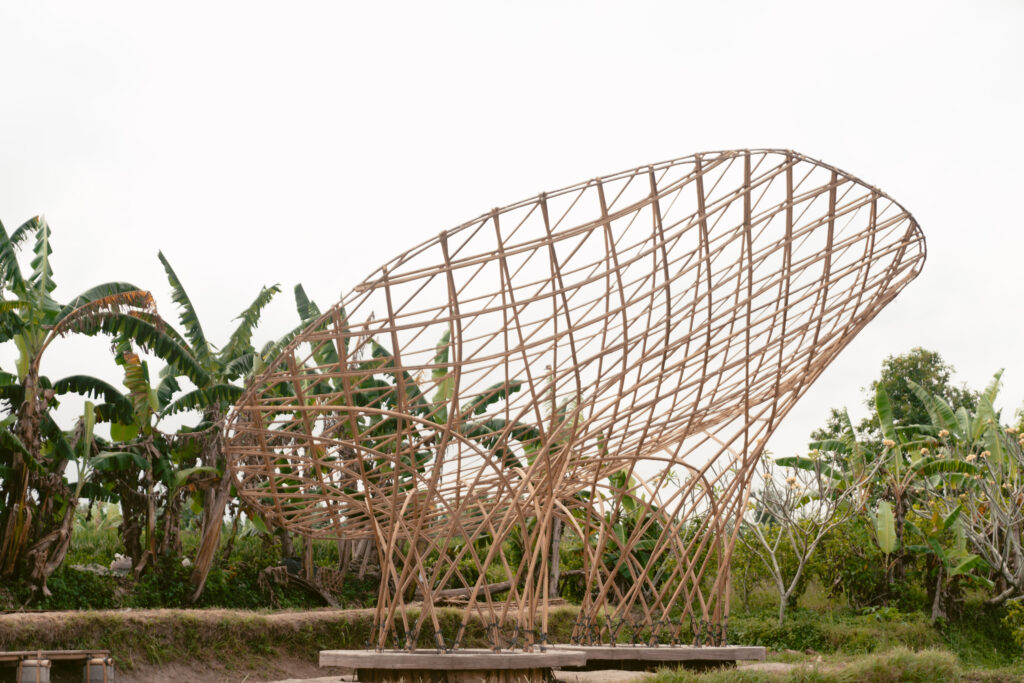
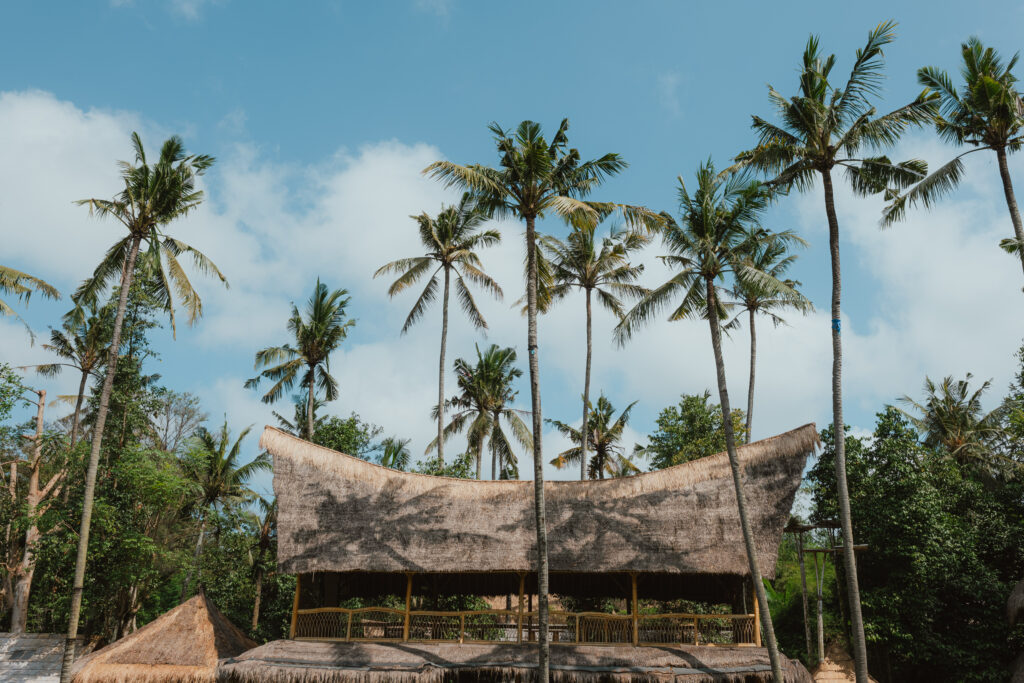
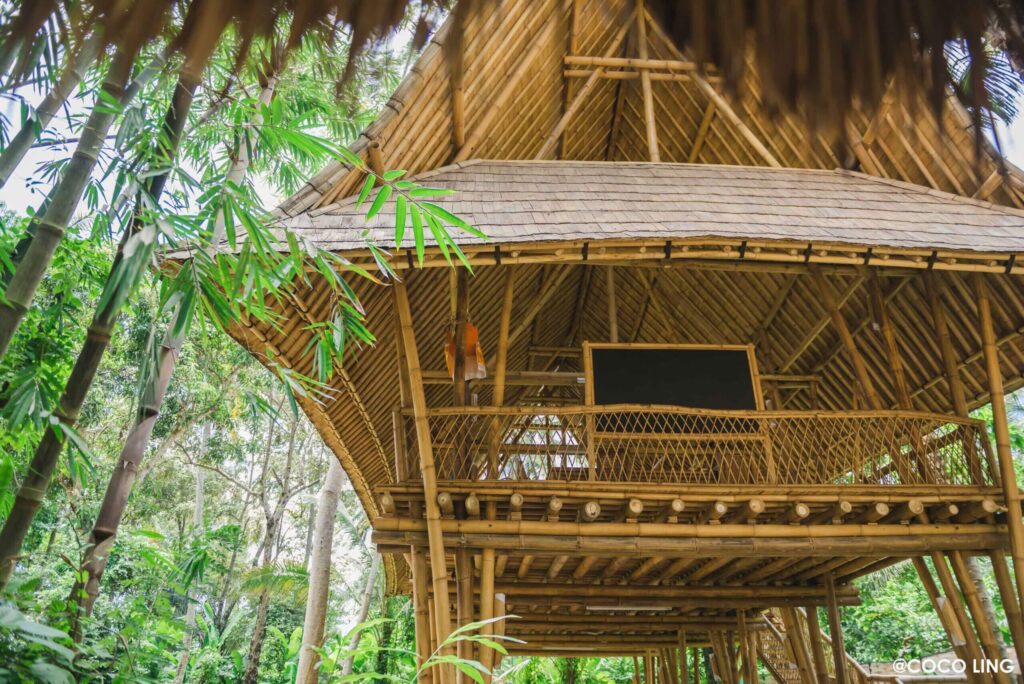
Bamboo also plays a role in social interaction, such as the Wantilan (traditional bamboo pavilion) and the Bale (community gathering space), which bridge relationships among Hindus in Bali.
Related: How Bamboo is Used for Ceremonies in Bali
In Balinese Hindu belief, there is the concept of Tri Hita Karana, namely the three sources of harmony. This encompasses the relationship between humans and God (Parahyangan), humans with each other (Pawongan), and humans and nature (Palemahan). This concept has been preserved and passed down from generation to generation, becoming a key part of the culture.
From the Balinese Hindu perspective, bamboo also serves as a medium that embodies all three aspects of Tri Hita Karana:
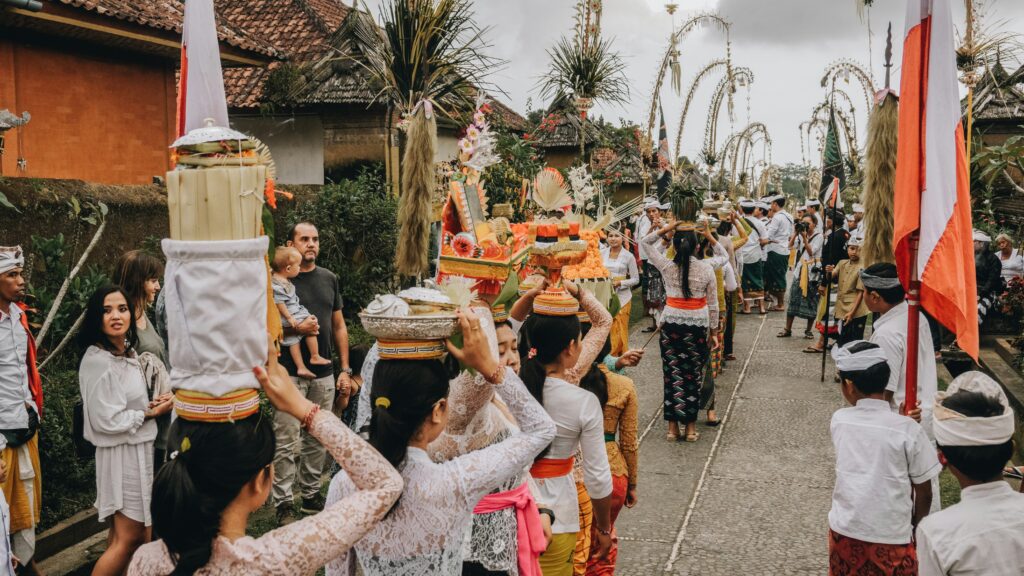
In Balinese culture, bamboo is more than just an architectural material; it is a part of life, a multi-sensory medium that sustains connection. Through auditory, tactile, and visual means, it reminds us of the harmony and balance of life. Furthermore, through the concept of Tri Hita Karana, bamboo embodies both material and philosophy, shaping how we live, build, and belong in the world.
Ultimately, building with bamboo is not merely “building” something for the Balinese; It also symbolizes a profound connection with God and our fellow human beings.
Bamboo lies at the heart of Balinese rituals, art, and design. Here at Bamboo U, we bring all of that together. In our 11-Day Build and Design Immersion, you’ll learn directly from master craftsmen, explore the possibilities of bamboo architecture, and see how culture and sustainability come together through design.
Join the 11-Day Bamboo Build and Design Course: hands-on building alongside experts, architects and makers from around the world. Explore the 11-Day Course
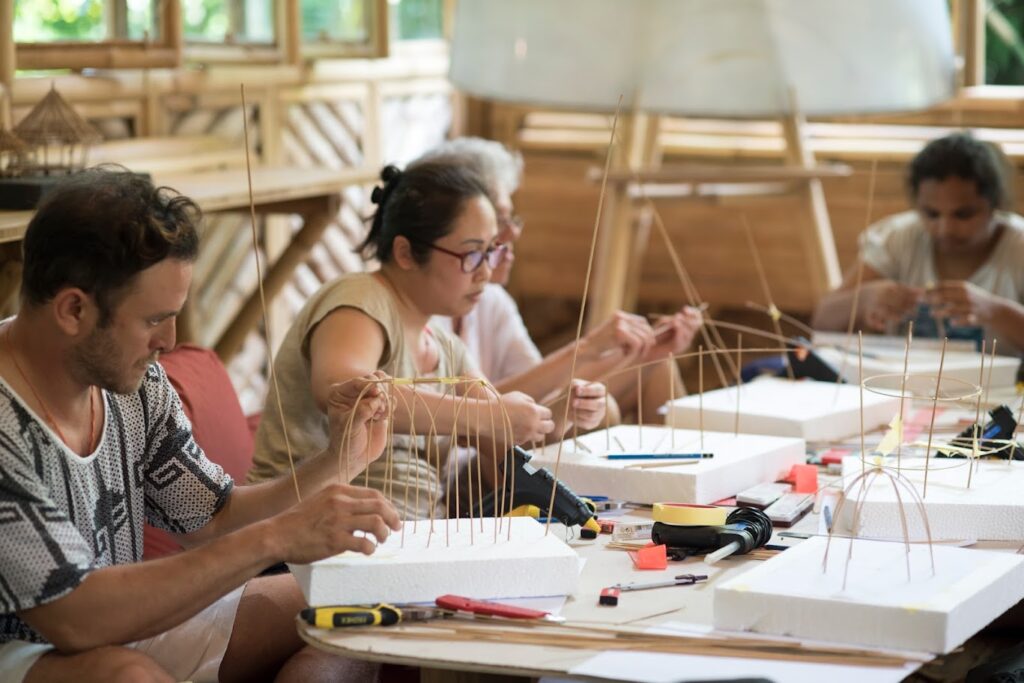
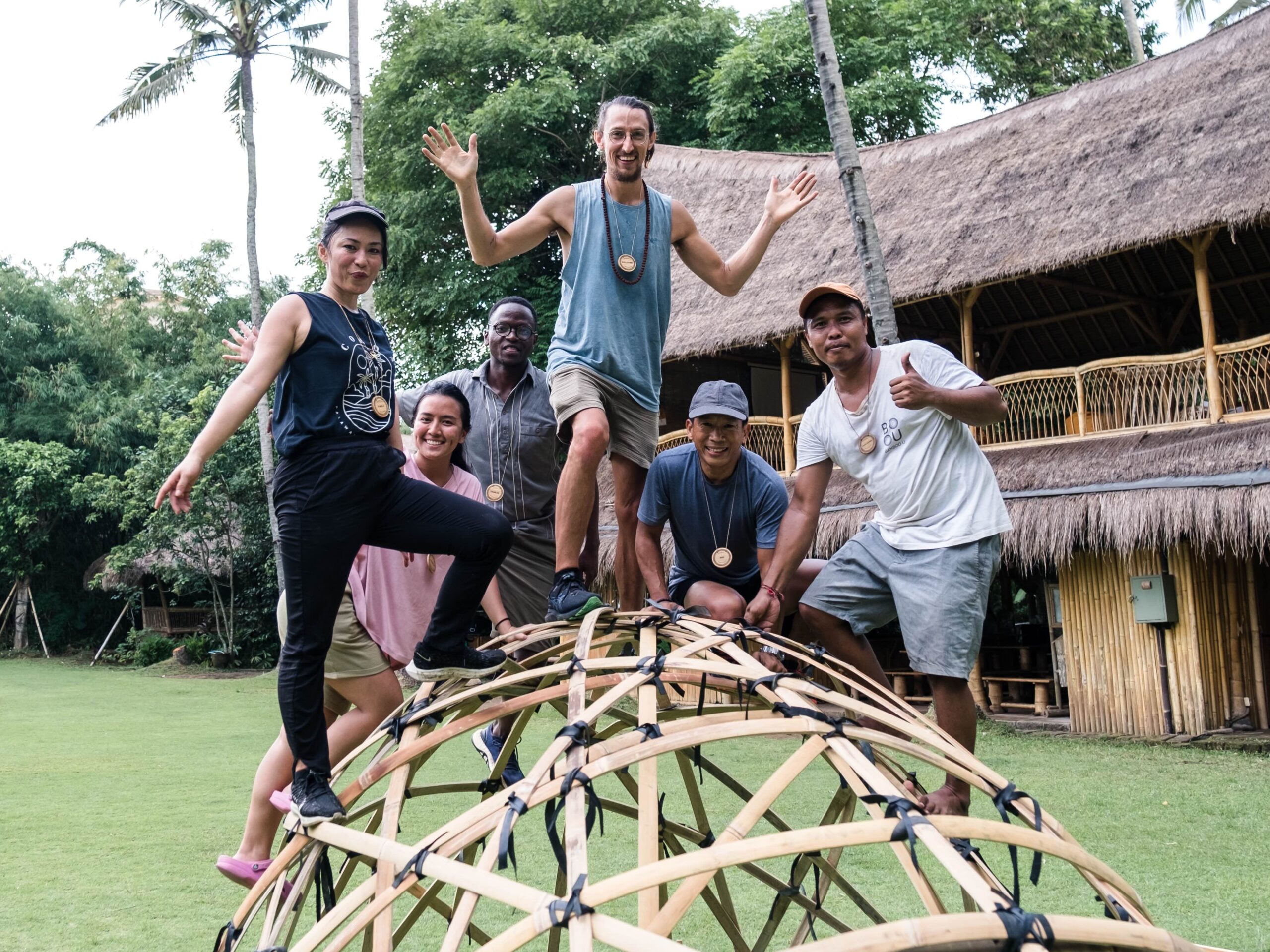
The 11-Day Build & Design Course
In collaboration with IBUKU
Immersed in the most beautiful and innovative bamboo environment. Meet the pioneers, the visionaries, the designers and builders who took this under-utilized material and transformed it into the most desired natural building material for bamboo structure design.
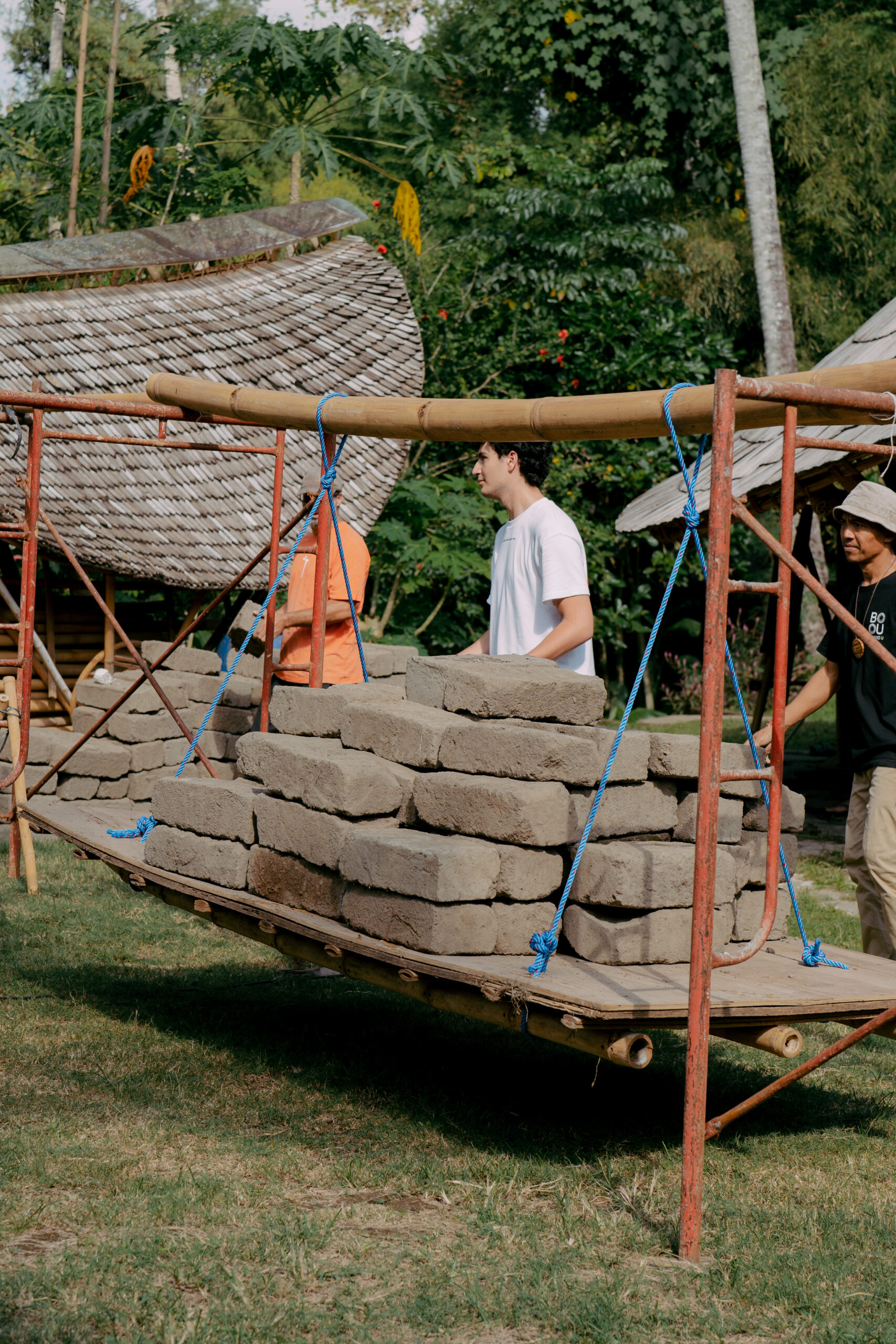
The Intro to Bamboo Engineering Online Course
Designed specially for structural engineers, this FREE online course has been created in collaboration with the Base Bahay Foundation, based in the Philippines.Join the course to learn how bamboo's innate properties make it a versatile building material, and how these properties can be maximized and applied in structural design.