Augmented Construction in Taiwan: Crafting the MemutAR Pavilion
By | November 13, 2025 | External Bamboo Projects -
Have you ever imagined how technology could merge with traditional skills?
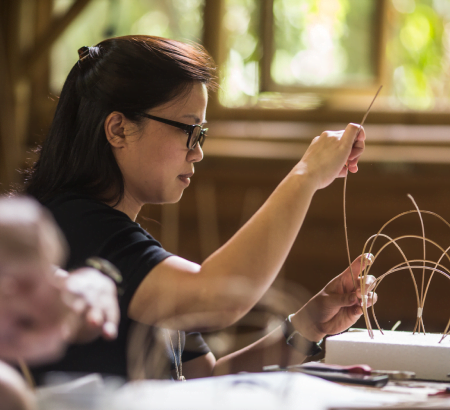
In Bali, most bamboo craftsmen still maintain traditional techniques passed down through generations. This is certainly not something to be abandoned. In fact, it serves as a strength that enriches local identity. However, these traditional skills are now finding a new partner: Digital technologies. This is where Augmented Reality (AR) emerges as a bridge between the two worlds: The traditional and the digital.
In 2023, Bamboo U’s sister company, PT Bamboo Pure, collaborated with Dr. Kristof Crolla, architect and founder of the Laboratory for Explorative Architecture & Design (LEAD), to bring a design research project called MemutAR, to life.
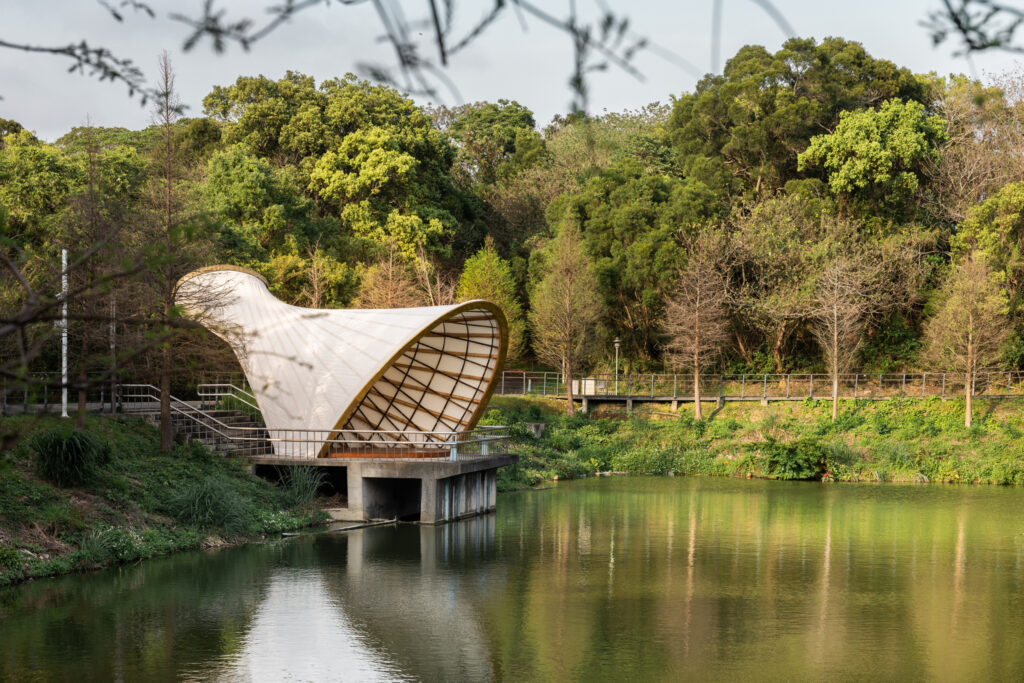
The elegant bamboo pavilion is built on the edge of a small lake on a university campus in Hsinchu, Taiwan. The space explores the concept of digital craftsmanship, global networks in the design and construction process, and the fusion of human skill and digital precision, through the integration of parametric design, AR technology.
MemutAR symbolizes digital craftsmanship, a new way of working. Local craftsmanship is not abandoned but rather expanded (or augmented) with the help of digital technology.
Related: It’s Time for Architects to Rediscover Natural Materials
MemutAR was designed by Dr. Kristof Crolla and the Bamboo Pure team in Bali, then executed by local bamboo craftsmen experienced in building organic structures. After the prefabrication process, all components were shipped to Taiwan for reassembly by local contractors with the aid of AR guidance.
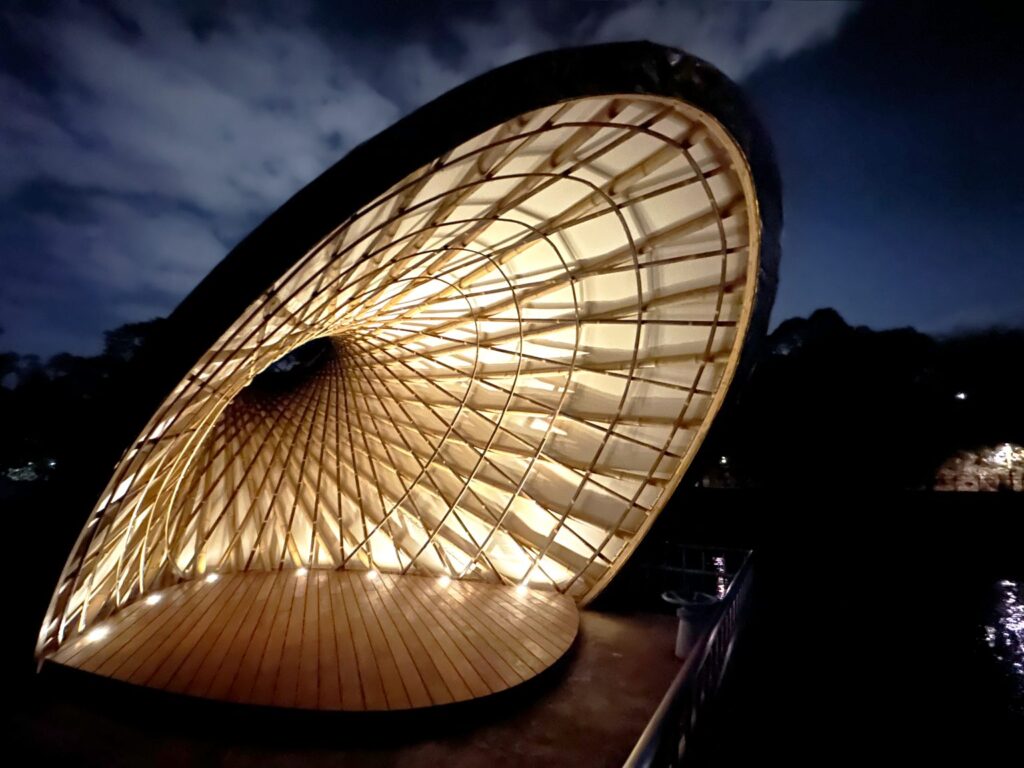
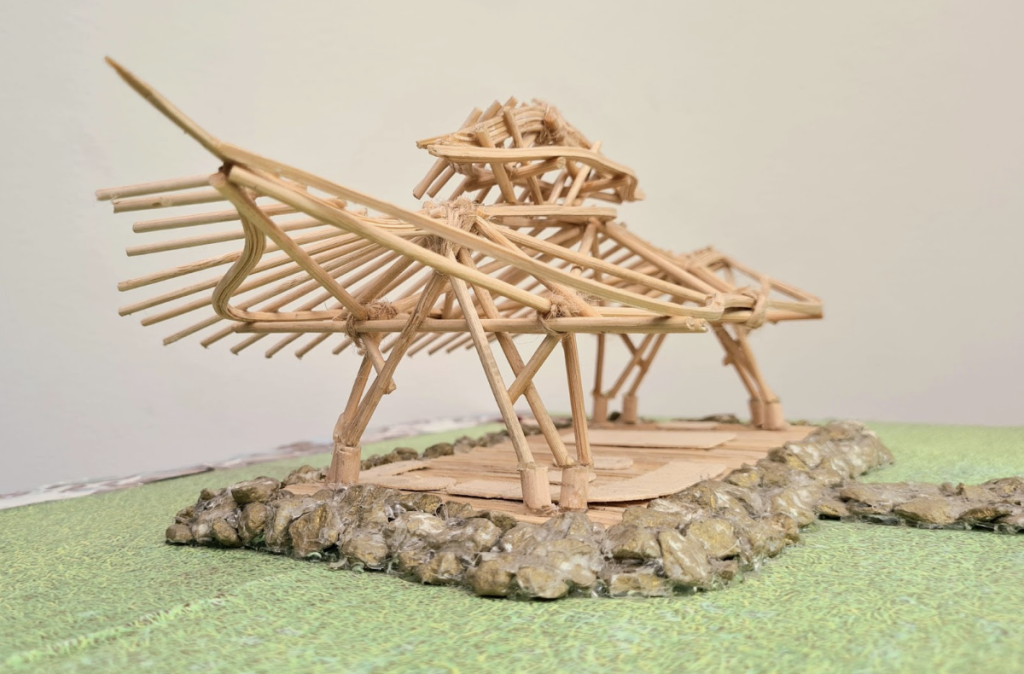
The structure features 29 large, pre-treated Dendrocalamus Asper (Bambu Petung) culms, arranged to form a slanted hyperbolic paraboloid structure. Then, it was reinforced with laminated bamboo split beams. The combination of natural materials and digital precision creates a visual impression that is light, flexible, yet structurally sound.
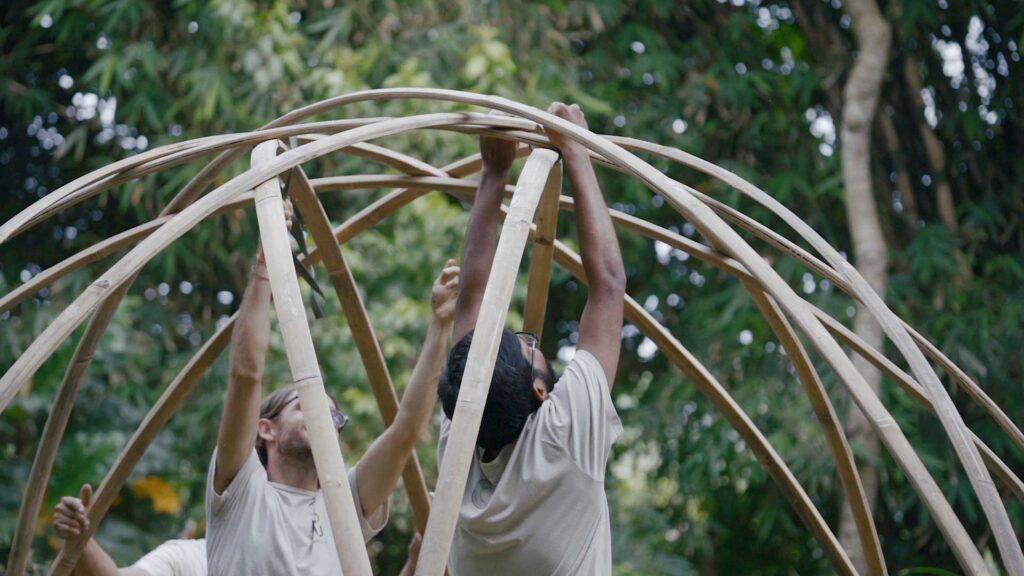
The pavilion’s design features the complex geometry of a tilted hyperbolic paraboloid gridshell. This is a geometric form that is difficult to achieve manually without precise guidance. In this context, AR acted as a “second hand”. It guided the contractors during the construction process, bridging the gap between the digital model and the physical reality on the ground.
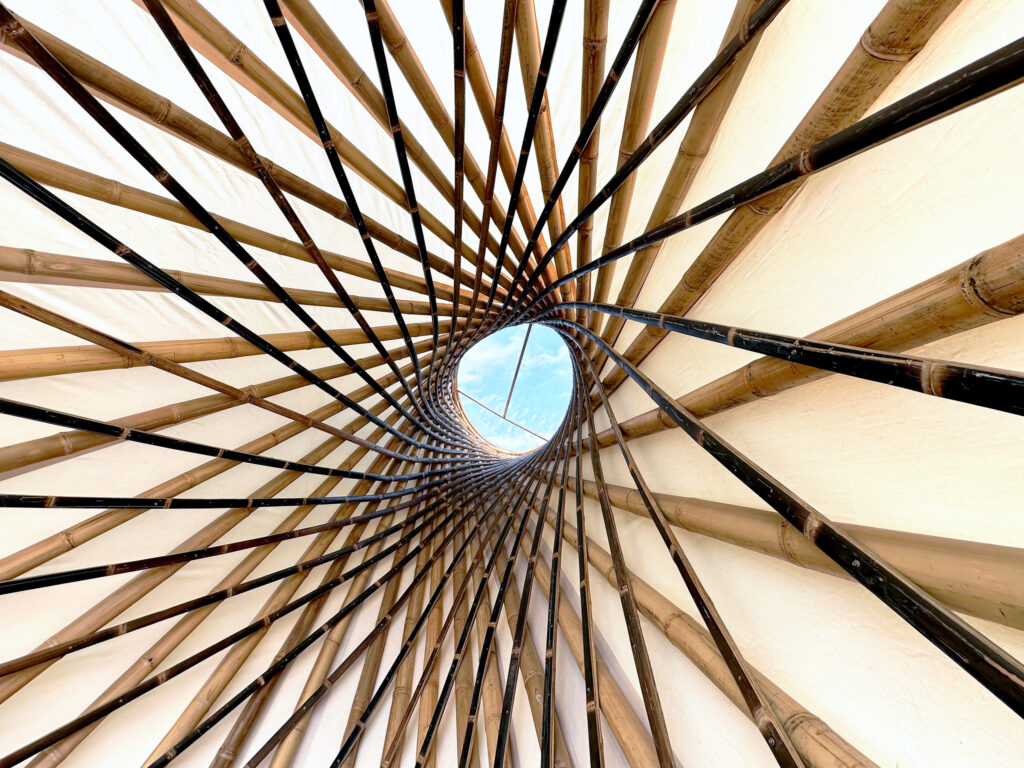
Augmented Reality (AR) technology was used throughout the building phase to project holographic construction instructions. These helped to determine the position of each bamboo culm to match the digital model. With this assistance, the assembly process was executed with high degrees of accuracy without the direct presence of specialist craftsmen from Bali.
One of the most compelling aspects of this project is how AR creates a shared language between the design team and the craftsmen. For designers, AR provides a medium for visually conveying complex geometry. For the craftsmen, AR provides an intuitive guide. They no longer need to read complex technical drawings; they simply follow the visual projections in real space. Through this language, AR unites the world of pixels and sculpture, enabling cross-cultural collaboration without the barriers of language or distance.
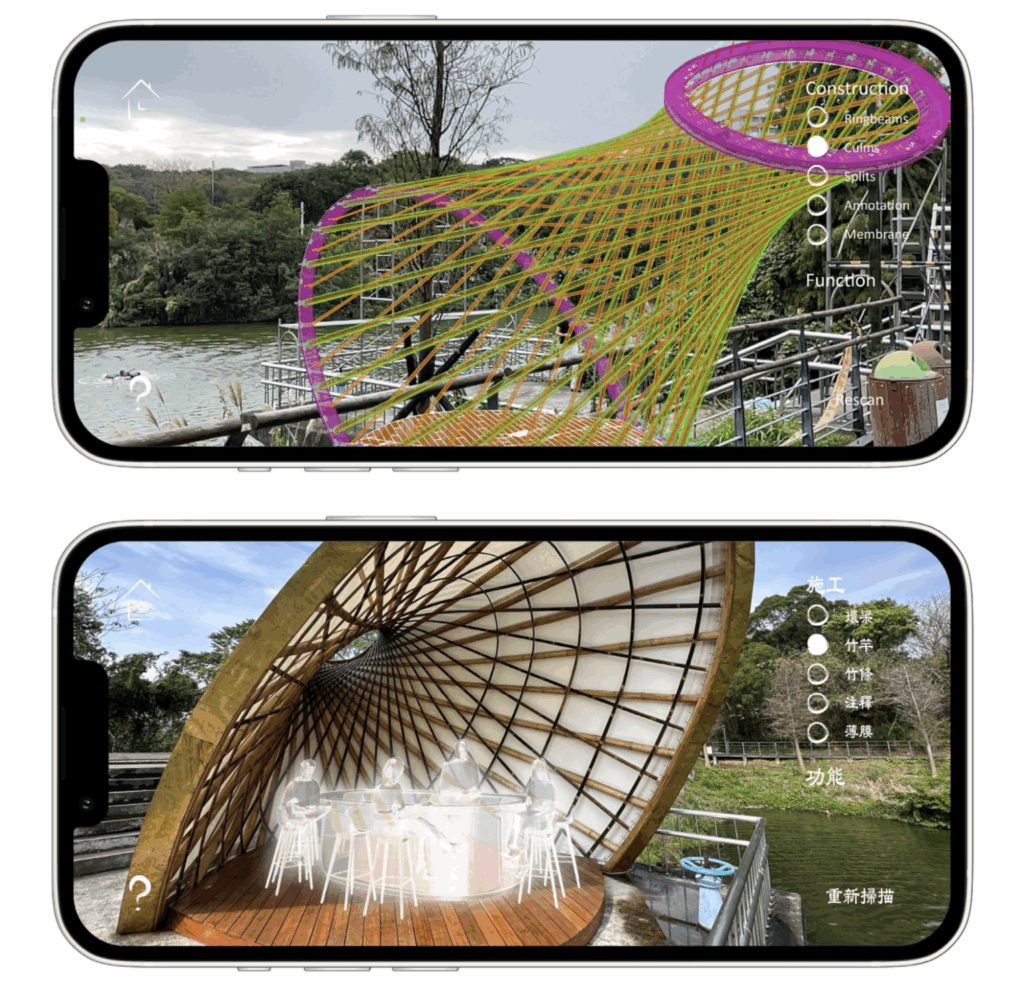
The use of AR in the MemutAR project yielded several tangible benefits:
Furthermore, this technology demonstrates that architecture based on natural materials can still be developed with the same precision as modern architecture.
Of course, this process wasn’t without challenges. From calibrating AR in the open field, to adapting craftspeople to new tools, and even overcoming technical limitations were all part of the learning journey. However, this project’s experience demonstrates that when technology is presented with a human-centered approach, the results are not only efficient but also enrich our cultural values and the way we build.
Related: Buildings that Wouldn’t Exist Without Digital Tools – Part 1
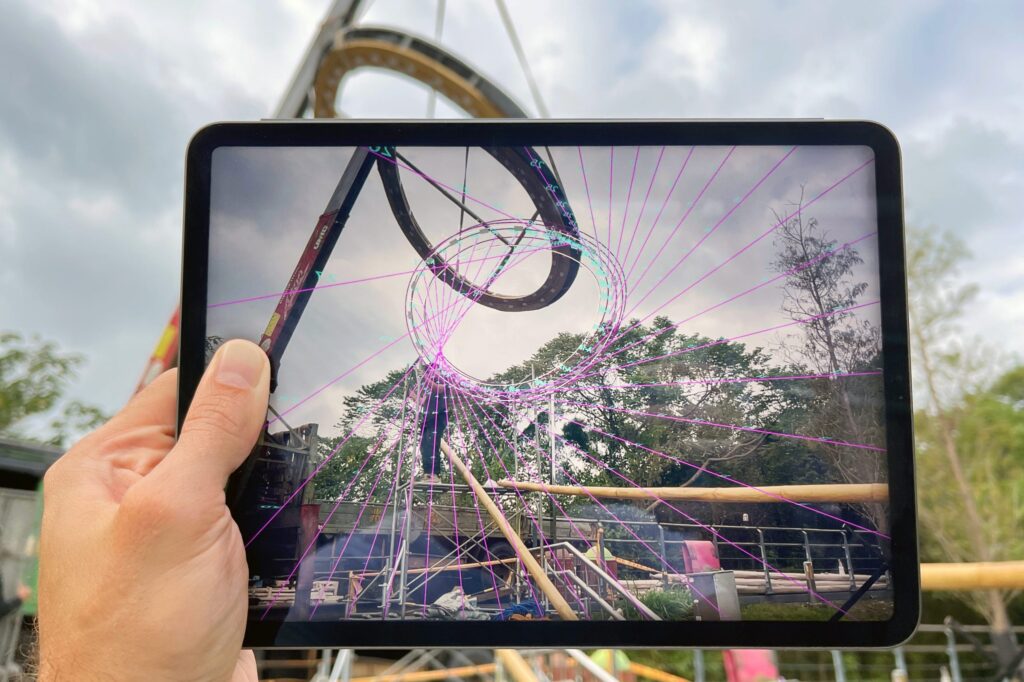
Through the MemutAR collaboration, we can see the enormous potential of integrating AR into sustainable architecture. Organic designs with natural materials can now be created more efficiently, and can be scaled and replicated across regions without losing their local character.
AR not only accelerates construction but also expands the space for collaboration between technology, culture, and people.
Ultimately, Augmented Reality technology doesn’t replace local skills, but rather, it expands them. Through AR, the expertise of Balinese craftspeople can now be translated across the world without losing its original touch. MemutAR is proof that the future of architecture isn’t just about algorithms and data, but about how technology and humans can work hand-in-hand to create something beautiful, precise, and yet human.
Through MemutAR, we can see how bamboo architecture combines technology and manual skills. It demonstrates that digital design is more than just screens and software. Rather, it’s about new ways of understanding materials and building processes.
Are you interested in deepening this approach and learning how digital design can truly come to life in the real world? Our Digital Design for Bamboo online course offers a space to explore and practice directly with experts.
Click HERE to enroll now and translate your ideas from concepts to reality.
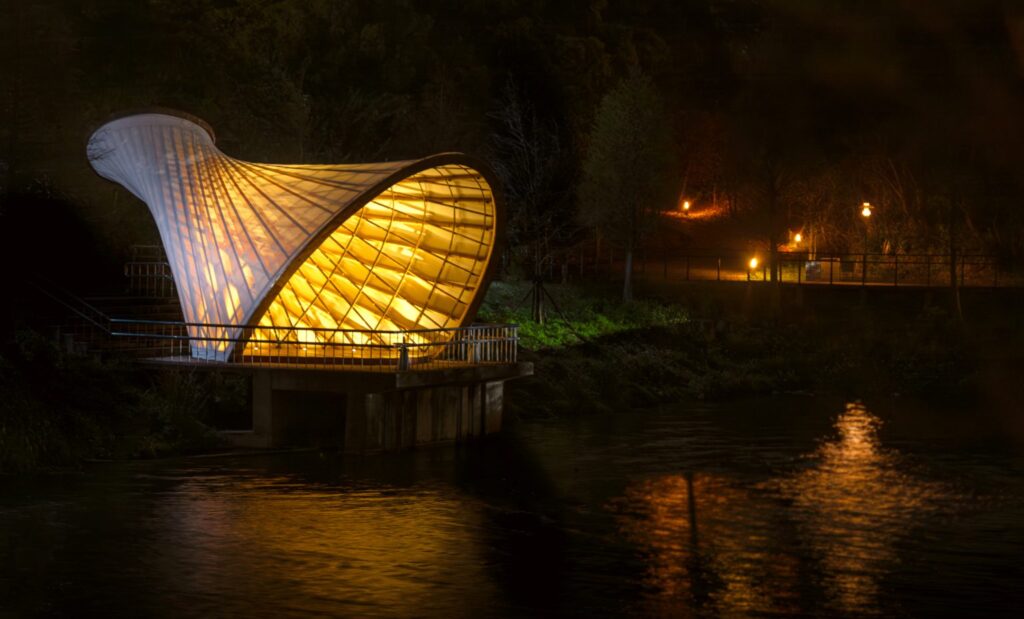
All images belong to the original owners, sourced from: MemutAR
For more information about the pavilion, please visit the Bamboo Pure and Laboratory for Explorative Architecture & Design (LEAD) websites.
Learn to design and build with bamboo in Bali.
Join the 11-Day Bamboo Build and Design Course: hands-on building alongside experts, architects and makers from around the world.
Explore the 11-Day CoursePrefer to start online?
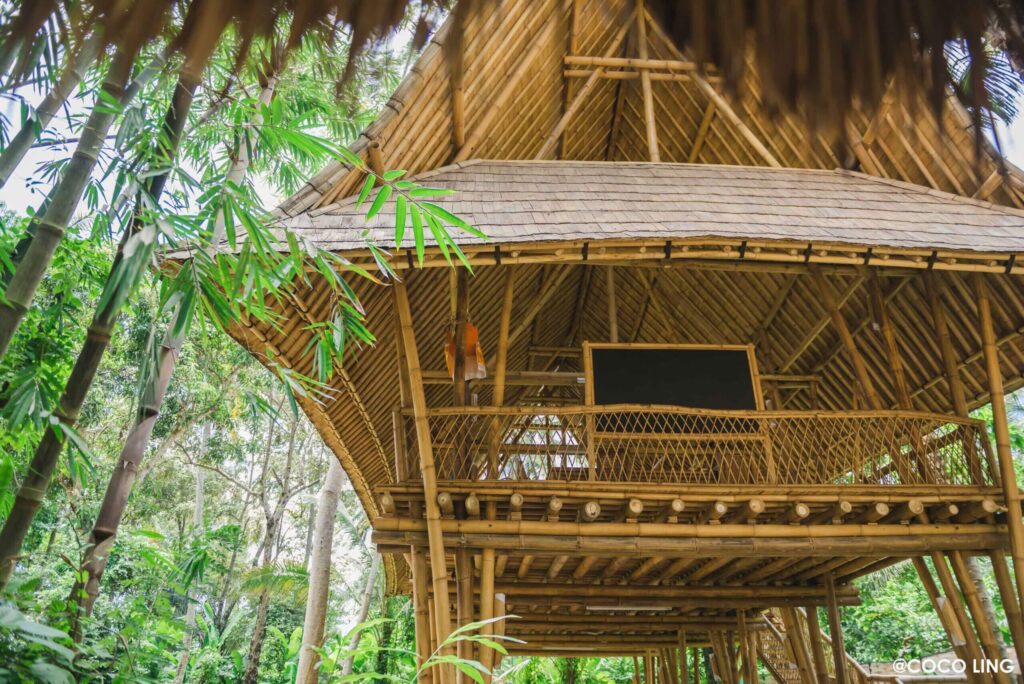

The 11-Day Build & Design Course
In collaboration with IBUKU
Immersed in the most beautiful and innovative bamboo environment. Meet the pioneers, the visionaries, the designers and builders who took this under-utilized material and transformed it into the most desired natural building material for bamboo structure design.
The Intro to Bamboo Engineering Online Course
Designed specially for structural engineers, this FREE online course has been created in collaboration with the Base Bahay Foundation, based in the Philippines.Join the course to learn how bamboo's innate properties make it a versatile building material, and how these properties can be maximized and applied in structural design.