Embracing Bamboo’s Natural Curves to Craft a Unique Bar Stool
By | August 14, 2025 | Student Work -
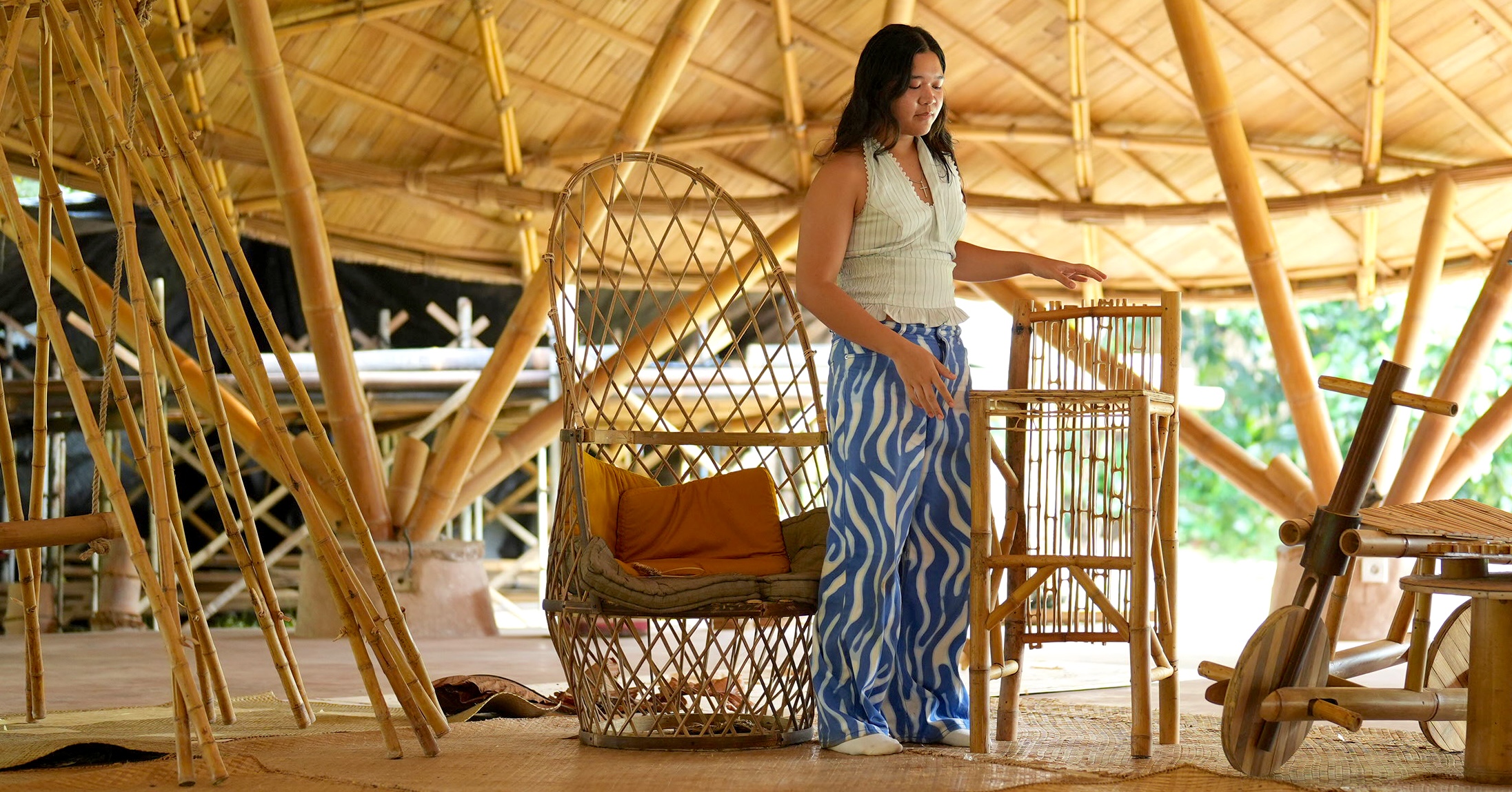
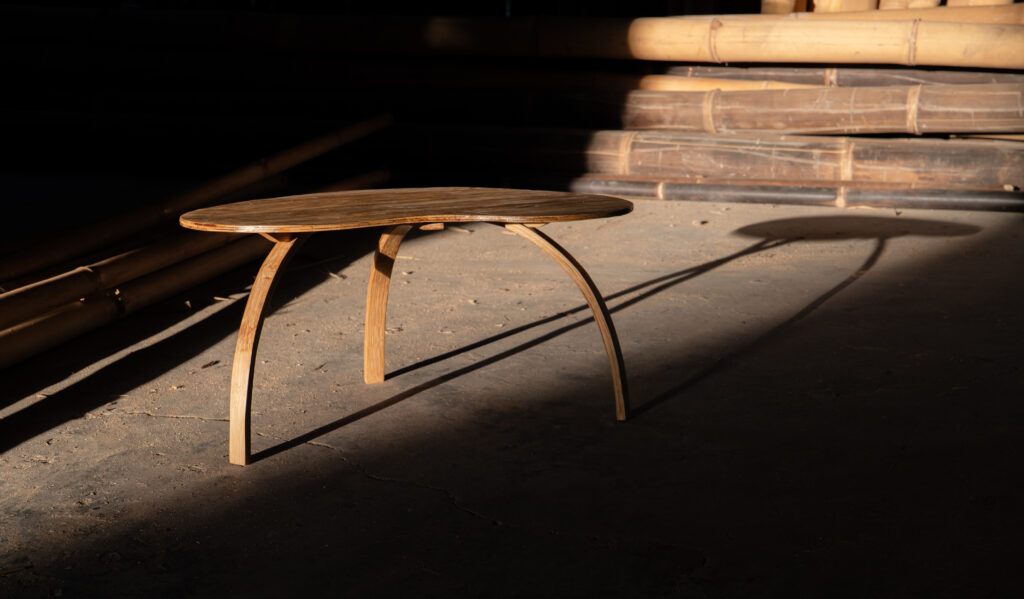
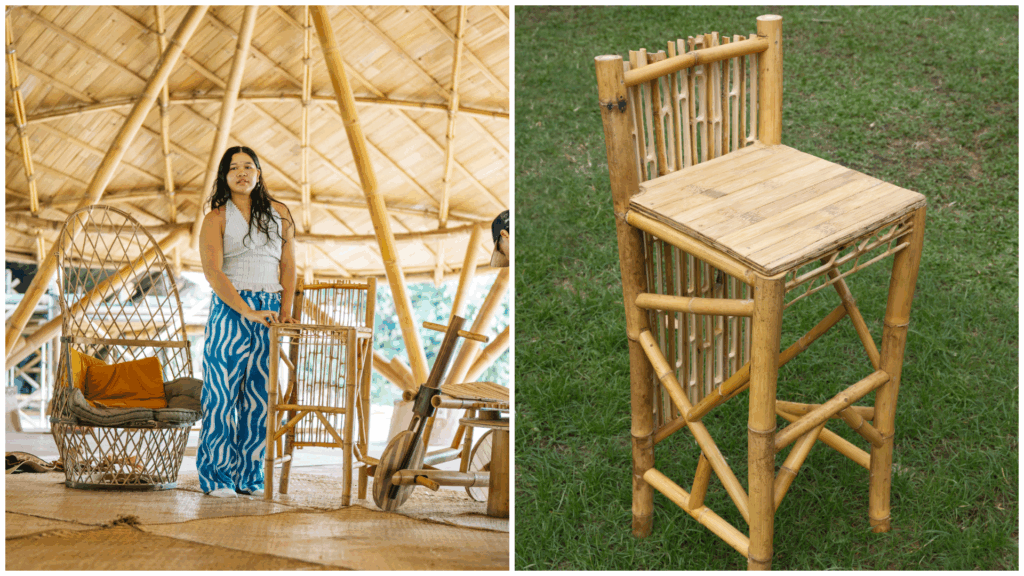
Inspired by bamboo’s natural curves and resilience, Dean designed a bar stool using various bamboo species, carefully considering each one’s unique qualities and behavior. This thoughtful approach allowed her project to evolve organically throughout the design and creation process.
Hi, I’m Dean (you can call me Dey!) and I’m from Indonesia. I’m currently a student at the Nanyang Academy of Fine Arts in Singapore. During the Bamboo Build and Design course at Bamboo U, I made a bar stool. It’s something that I can use everyday.
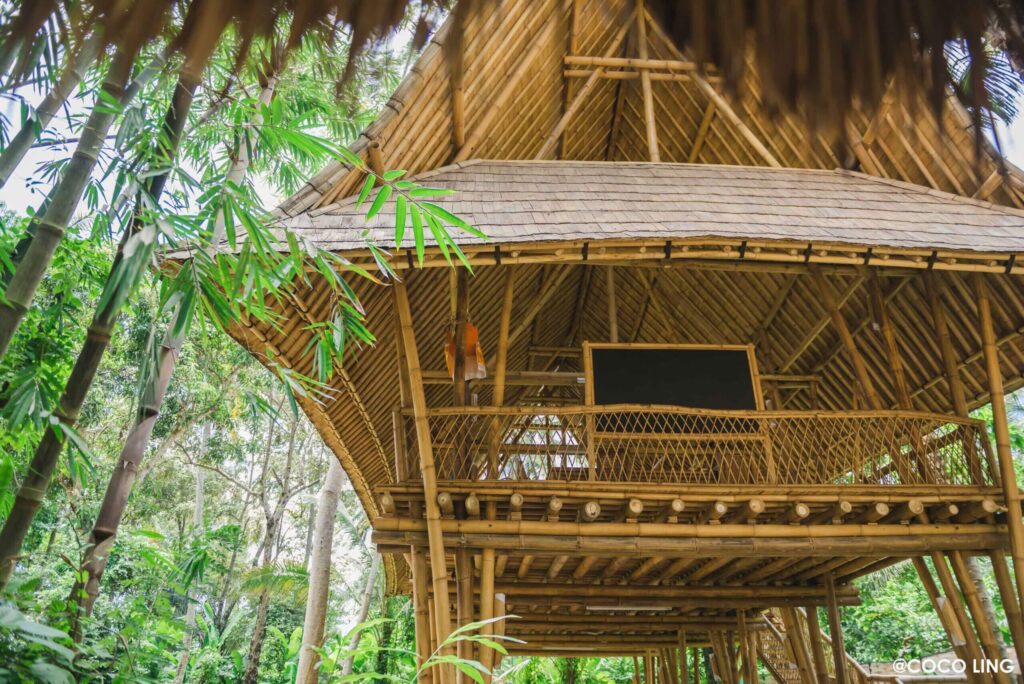
I wanted to create something personal and practical, something that would remind me of my time at Bamboo U in a visceral way. Sitting in the Bamboo Dome at the Kul Kul Farm gave me a deep, grounding feeling and I wanted to create that experience through my own design and bring it back home.
Related: An Elegant Balcony Chair Made from Bamboo Rings
My inspiration came from the hidden strength of bamboo, specifically the rhizomes and bamboo bone. Rhizomes are what connect bamboo together underground, an unseen network of support and resilience. There’s just something impactfully beautiful in how these roots silently communicate and spread.
I also studied the intricate bamboo bone patterns. I’m so amazed by how such patterns are found in nature. This one in fact, is was unusually irregular. That unique imperfection reminded me of how you can’t force bamboo to be a certain way. As Luis would always remind us throughout the course, “Let the bamboo teach you.” And so I just let the bamboo lead the way.
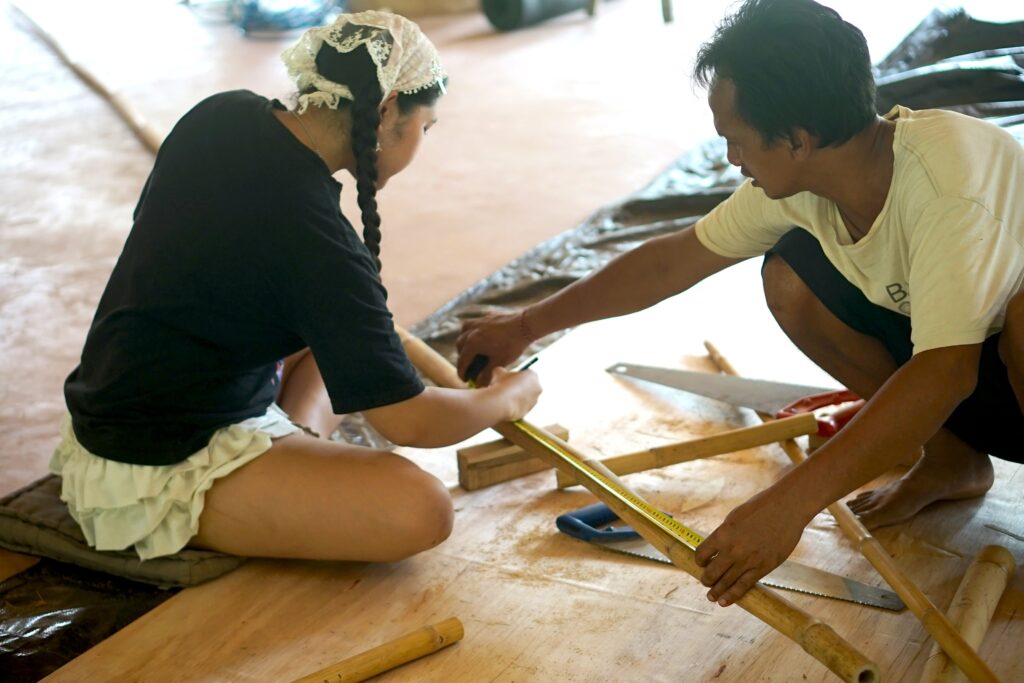
To craft the bar stool, I used three main species of bamboo.
To create the overall frame of the bar stool, I used Bambu Jajang, known as Gigantochloa aya. Using this medium-sized species of bamboo, I was able to practice different forms of Balinese joinery, including the cross leg joint, hole joint, and half fish-mouth joint (angle joint). Then, to craft the seat, I used splits of Bambu Petung (Dendrocalamus asper). Finally, to create the intricate back support, I used Bambu Jakarta (Thyrsostachys siamensis), which brought the whole piece together.
Looking back, I can definitely say that my design evolved a lot throughout the process of putting together the project. This was something I actually anticipated because bamboo is a very living and responsive material. I also intentionally chose the pieces of bamboo with natural curves. I was drawn to their beauty and I loved embracing the material’s organic nature in my design.
Related: Crafting a Beautiful Indian-Inspired Punkah Fan
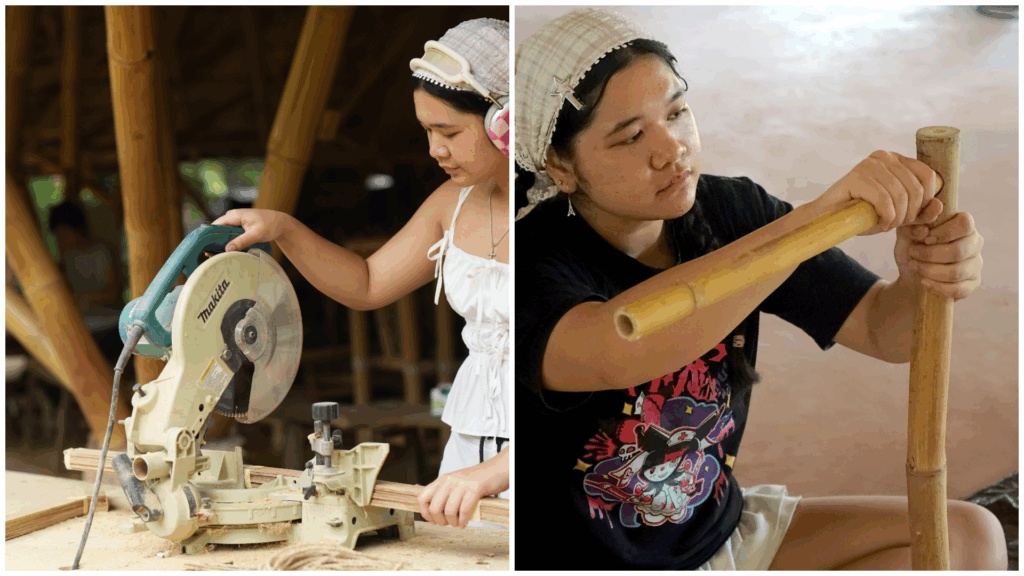
I learned that working with bamboo requires patience and the ability to truly listen to the material. Bamboo has its own character, from beautiful bamboo bone patterns to the way it decides to bend in unexpected ways. Throughout the course, and especially when crafting my own project, I learned to respect its nature and work with it, not be against it.
Want to craft your own bamboo project? Join us for an online or in-person course HERE!
Learn to design and build with bamboo in Bali.
Join the 11-Day Bamboo Build and Design Course: hands-on building alongside experts, architects and makers from around the world.
Explore the 11-Day CoursePrefer to start online?


The 11-Day Build & Design Course
In collaboration with IBUKU
Immersed in the most beautiful and innovative bamboo environment. Meet the pioneers, the visionaries, the designers and builders who took this under-utilized material and transformed it into the most desired natural building material for bamboo structure design.
The Intro to Bamboo Engineering Online Course
Designed specially for structural engineers, this FREE online course has been created in collaboration with the Base Bahay Foundation, based in the Philippines.Join the course to learn how bamboo's innate properties make it a versatile building material, and how these properties can be maximized and applied in structural design.