How to Make Bamboo Fireproof
By | October 15, 2026 | Exploring Bamboo - Treatment -
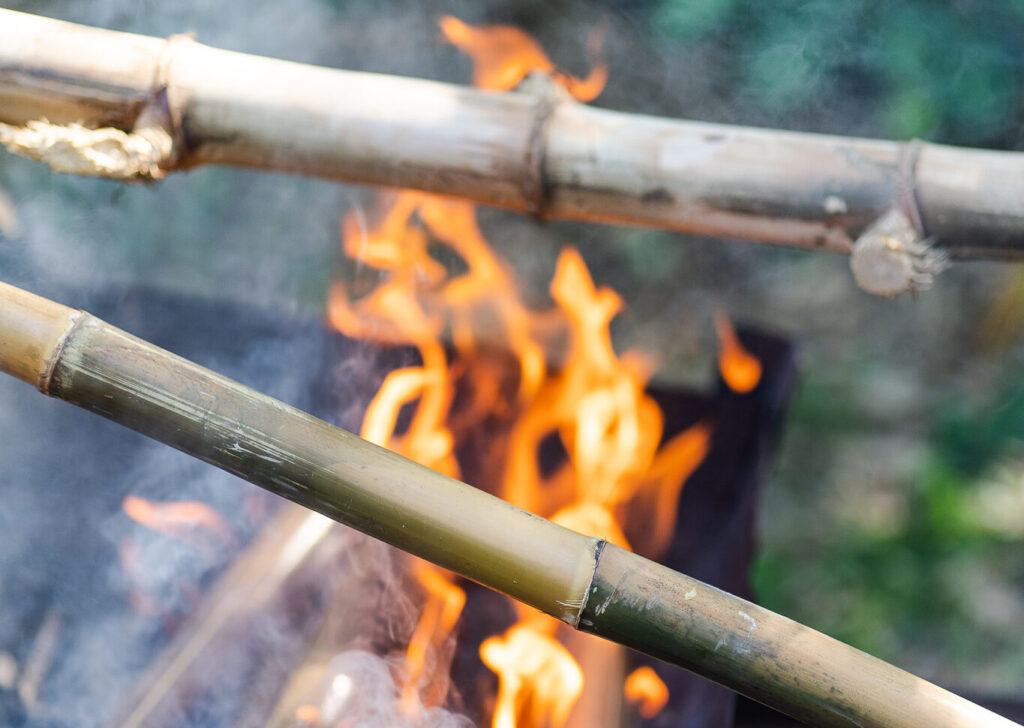
How can we deal with the issue of fire in a bamboo building? It is one of the questions we get asked most at Bamboo U, and it points to a real hurdle for using bamboo at scale: fire safety. Before bamboo can be used in public buildings, it has to meet strict fire standards. The good news is that it can. Here, French bamboo designer, craftsman and educator Jean-Baptiste Dubois, who has over a decade of experience working with bamboo, explains how it is done in France and Europe.
Fireproofing materials is a crucial issue in design projects for public buildings. Bamboo, increasingly used for its aesthetic, technical, and environmental qualities, is naturally subject to these regulatory requirements.
When used in spaces subject to fire safety standards, bamboo must demonstrate an appropriate level of fire resistance, generally certified by a fire classification report. This level depends on several criteria: the type of use of the material (furniture, lighting, decorative cladding, partitions), its location in the space (wall, ceiling, or other support), as well as the category of the building, whether it is a school, a train station, a museum, or a commercial space. Defining the required level of fire resistance can be complex; it is most often specified by the inspection agency in charge of the project.
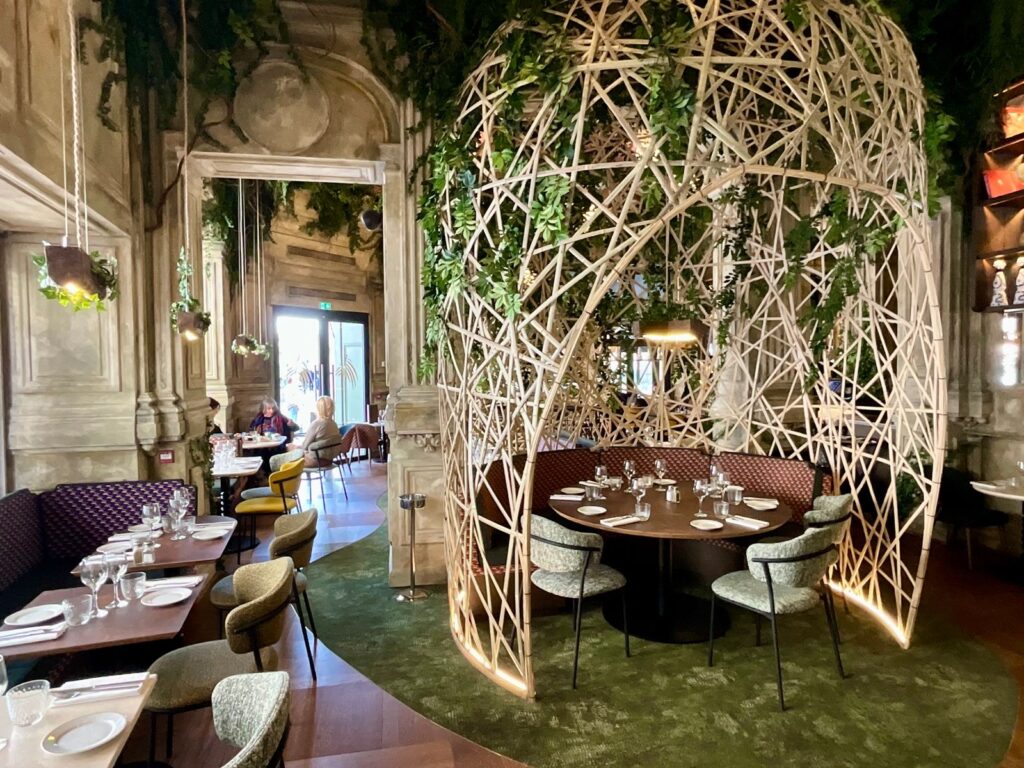
In France, materials can be classified according to the former French standard, from M0 for non-combustible materials to M4 for highly flammable materials. They can also be assessed according to European standards, known as Euroclasses, which range from A1 to E using a similar system. Depending on the nature of the project and the applicable regulatory requirements, either classification may be required. Comparison tables allow for comparison between French and European classifications.
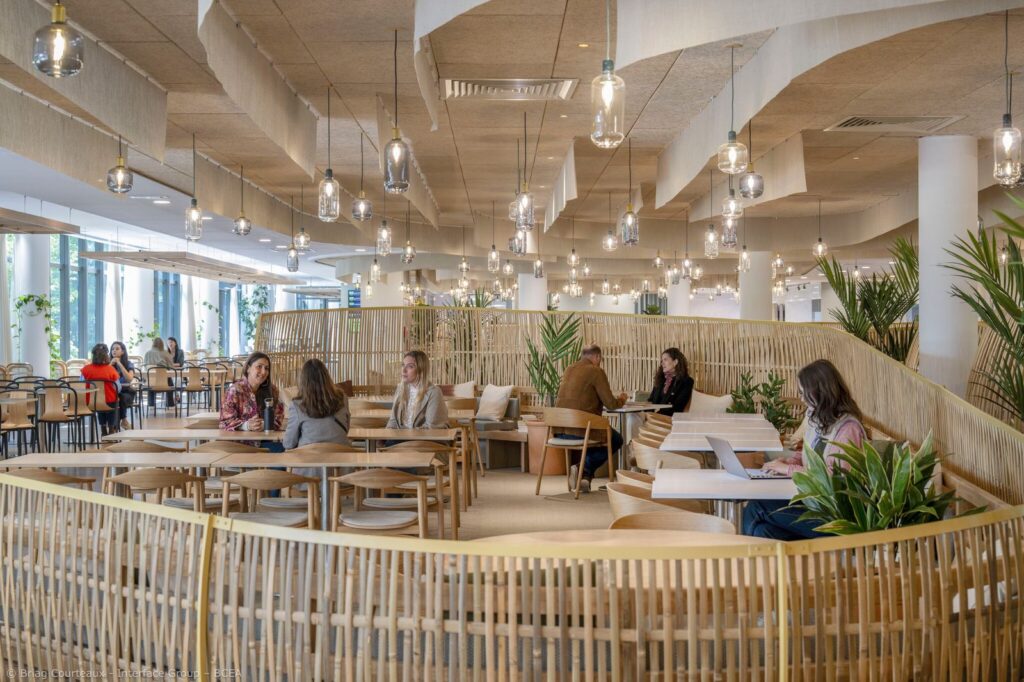
The fire resistance of bamboo varies depending on its form. Raw bamboo canes naturally offer greater resistance, particularly due to their hard, smooth outer surface. Bamboo strips, on the other hand, ignite more quickly and therefore require more intensive treatment. In all cases, to meet the requirements of public spaces, bamboo must generally achieve a certain classification level (M2 or M1 in France and Euroclass B in Europe).
Related: Vernacular Methods of Treating Bamboo You Should Know
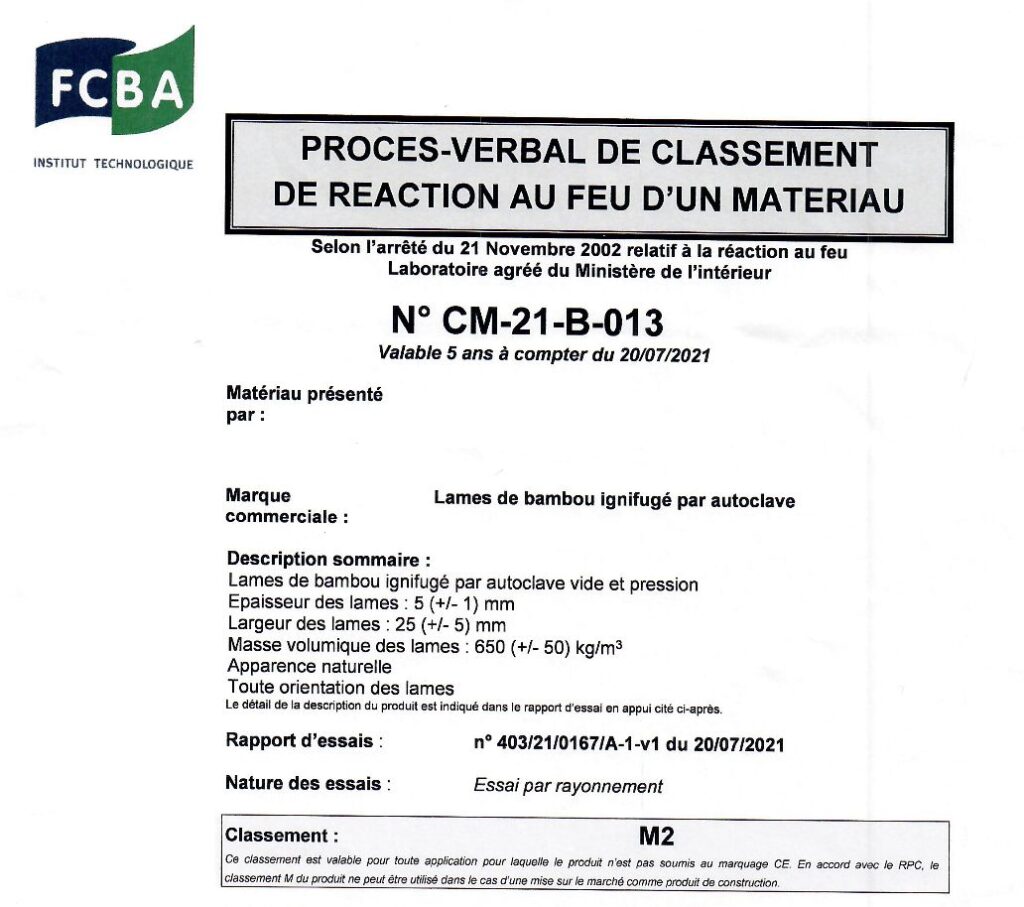
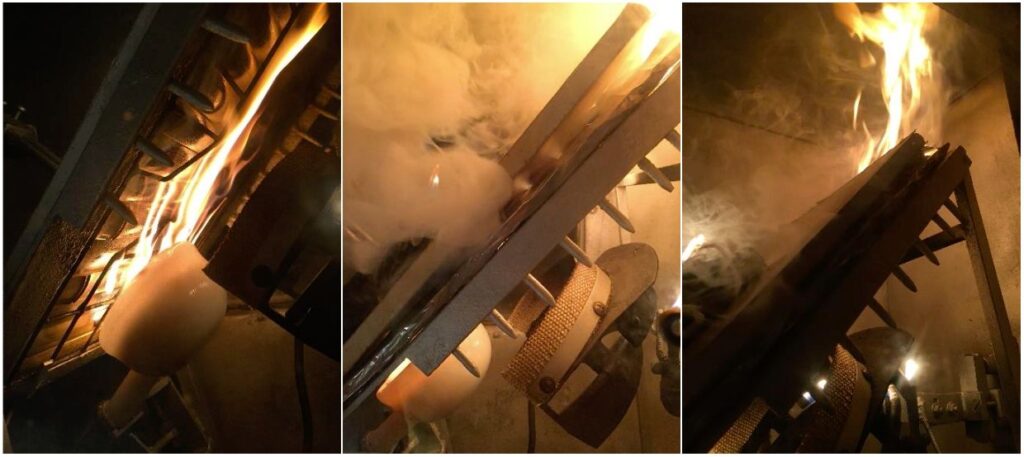
Over the past decade, the fireproofing of bamboo in France has seen significant progress. Initially, available solutions relied primarily on treatments applied by brushing, the effectiveness and validity of which could be questioned. Several bamboo industry players, including Les Pépinières de la Bambouseraie, atelier Déambulons, and Big Bamboo, collaborated with research laboratories to develop, test, and validate more reliable fireproofing processes, notably using autoclaves.
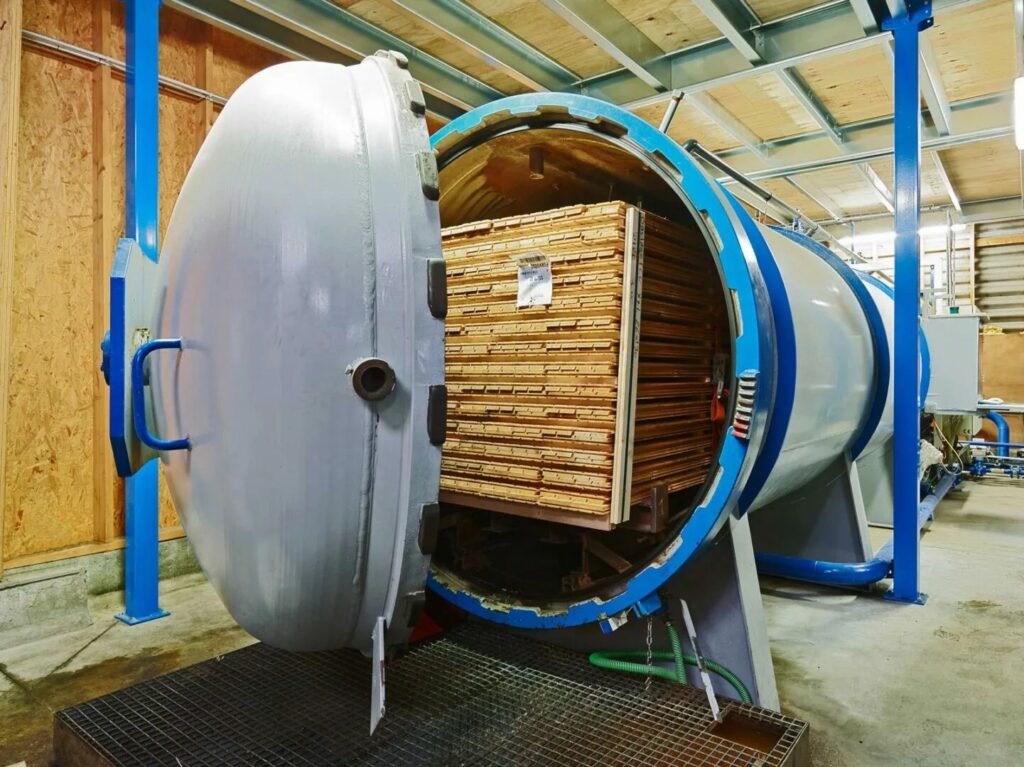
Autoclave treatment is an industrial process that involves forcing a protective agent deep into the material under pressure within a sealed vessel known as an autoclave. Treating bamboo in this way requires outsourcing the process to an industrial specialist, typically a wood treatment company, due to the high cost of the equipment. There are significant minimum volume requirements, typically necessitating a minimum of 4 m³ of bamboo for treatment. The treatment does not alter the bamboo’s outward appearance.
Related: How to Treat Bamboo in Your Backyard
Thanks to this work, it is now possible to obtain a treatment for European bamboo canes and strips that meets the requirements of most landscaping projects incorporating bamboo in environments subject to fire regulations.
Want to understand the fundamentals of building with bamboo?
Join our Principles of Bamboo Design to learn how bamboo performs as a building material.
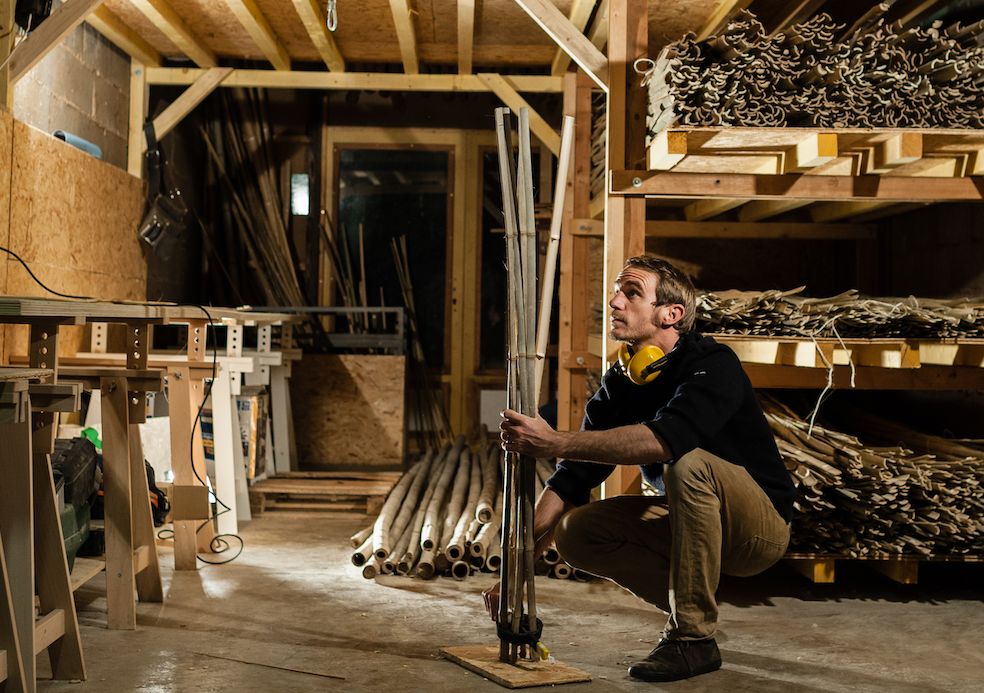
L’ignifugation des matériaux constitue un enjeu essentiel dans les projets d’agencement destinés aux établissements recevant du public. Le bambou, de plus en plus utilisé pour ses qualités esthétiques, techniques et environnementales, est naturellement concerné par ces exigences réglementaires.
Lorsqu’il est intégré dans des espaces soumis à des normes de sécurité incendie, le bambou doit justifier d’un niveau de réaction au feu adapté, généralement attesté par un procès-verbal de classement feu. Ce niveau dépend de plusieurs critères : le type d’usage du matériau (mobilier, luminaire, habillage décoratif, cloisonnement…), son emplacement dans l’espace (mur, plafond ou autre support…) ainsi que la catégorie du bâtiment concerné (Maison individuelle, école, gare, espace commercial…). La définition du niveau d’ignifugation requis peut être complexe ; elle est le plus souvent précisée par le bureau de contrôle en charge du projet.
En France, les matériaux peuvent être classés selon l’ancienne norme française, de M0 pour les matériaux incombustibles à M4 pour les matériaux facilement inflammables. Ils peuvent également être évalués selon les normes européennes, dites Euroclasses, qui vont de A1 à E selon une logique comparable. Selon la nature du projet et les exigences réglementaires applicables, l’une ou l’autre classification peut être demandée. Des tableaux de correspondance permettent d’établir une comparaison entre les classements français et européens.
Le comportement au feu du bambou varie selon sa forme. La canne de bambou brute présente naturellement une meilleure résistance, notamment grâce à sa surface extérieure dure et lisse. Les lamelles de bambou, quant à elles, s’enflamment plus rapidement et nécessitent donc un traitement plus fort. Dans tous les cas pour répondre aux exigences des lieux recevant du public, le bambou dois en général atteindre un certain niveau de classement (M2 ou M1 en France et Euroclasses B en Europe).
Depuis une dizaine d’années, l’ignifugation du bambou en France a connu d’importantes avancées. À l’origine, les solutions disponibles reposaient principalement sur des traitements appliqués par badigeonnage, dont l’efficacité et la validité des procès-verbaux pouvaient être discutées. Plusieurs acteurs du bambou, parmi lesquels Les Pépinières de la Bambouseraie, l’atelier Déambulons et Big Bamboo ont collaboré avec des laboratoires de recherche afin de développer, tester et faire valider des procédés d’ignifugation plus fiables, notamment par autoclave.
Le traitement autoclave est un procédé industriel qui consiste à introduire un produit de protection en profondeur dans le matériau, sous pression, dans une cuve étanche appelée autoclave. Pour réaliser le traitement sur le bambou il est nécessaire de sous-traiter ce procédé à un prestataire industriel car les équipements sont couteux ; en général un prestataire qui traite le bois. Les minimums de volumes sont importants, environ 4m3 de bambou à traiter minimum. Le traitement ne change pas l’aspect extérieur du bambou.
Grâce aux avancé réalisé par plusieurs acteurs en France, il est aujourd’hui possible d’obtenir un traitement des cannes et lamelles de bambou Européen qui permettent de répondre aux exigences de la majorité des projets d’aménagement intégrant du bambou dans des environnements soumis à réglementation incendie.
Master bamboo treatment, online.
Self-paced online course taught by the same experts behind our Bali programs. Start today from Rp 2,300,000 (approx. US$139).
Explore the Treatment CourseSee all online courses




The 11-Day Build & Design Course
In collaboration with IBUKU
Immersed in the most beautiful and innovative bamboo environment. Meet the pioneers, the visionaries, the designers and builders who took this under-utilized material and transformed it into the most desired natural building material for bamboo structure design.
The Intro to Bamboo Engineering Online Course
Designed specially for structural engineers, this FREE online course has been created in collaboration with the Base Bahay Foundation, based in the Philippines.Join the course to learn how bamboo's innate properties make it a versatile building material, and how these properties can be maximized and applied in structural design.