Hyperbolic Towers: Building Tall with Bamboo
By | October 28, 2026 | Exploring Bamboo - Design -
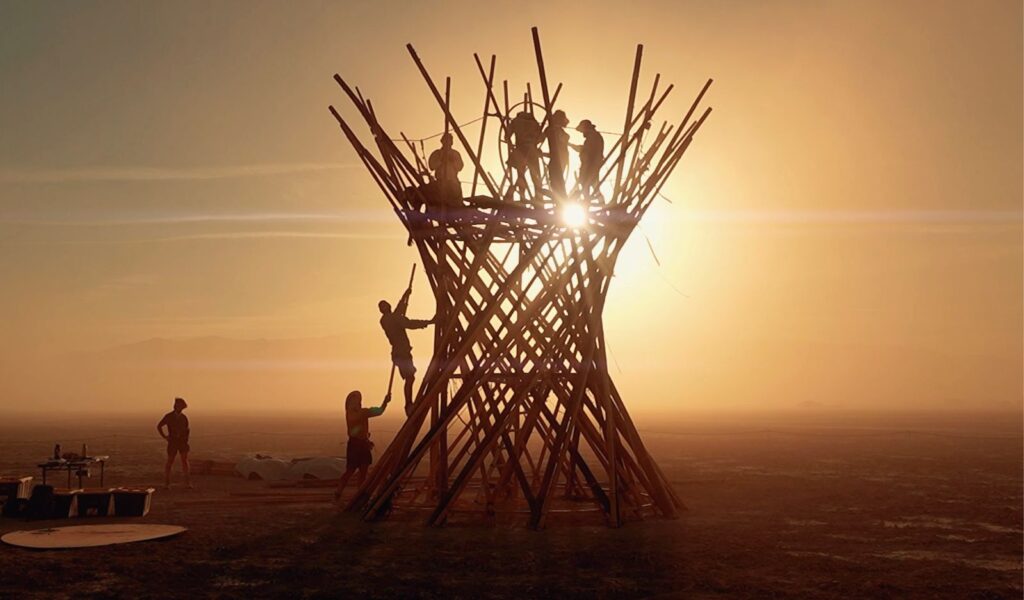
Building with bamboo means thinking about structural systems differently than with other materials. Bamboo grows long, light and mostly straight, so a good way to work with it is to make the most of its natural length, connecting poles together to build a tall structure.
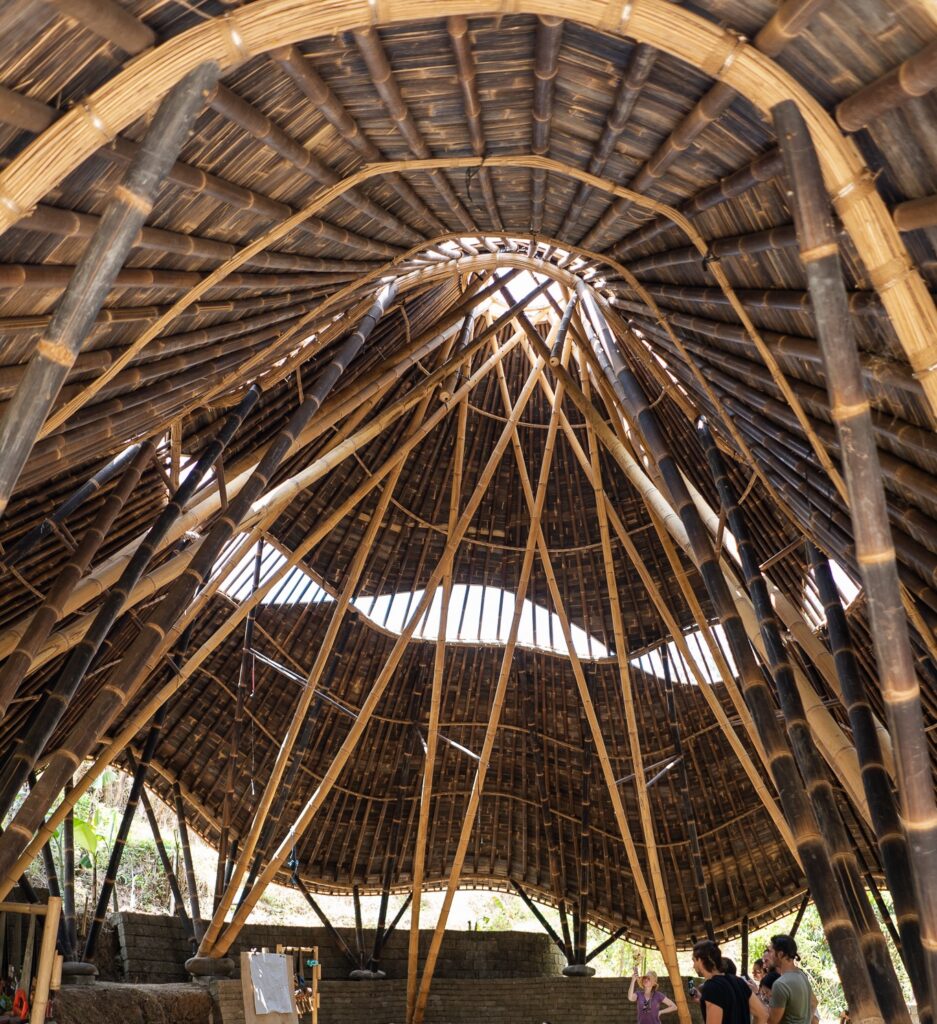
One of the most beautiful ways to do this is with the hyperbolic tower, also known as a reciprocal tower. A ring of straight poles is twisted around a central axis, with one layer leaning one way and a second layer leaning the other way. Where they cross, they are attached and brace against each other, creating a tower that curves inwards at the waist and opens up again at the top.
What makes it strong is all those crossing points. Each pole leans on the others, and rings at the base, waist and top hold them all together. The result is a structure that is braced in every direction, resists buckling, and uses very little material for its height. Bamboo is also light enough that these towers can be raised by hand, without a crane. In Bali, the species most often used is Dendrocalamus asper, which grows to 15 to 30 metres tall.
Related: Bamboo Structural Systems You Should Know, Post and Beam
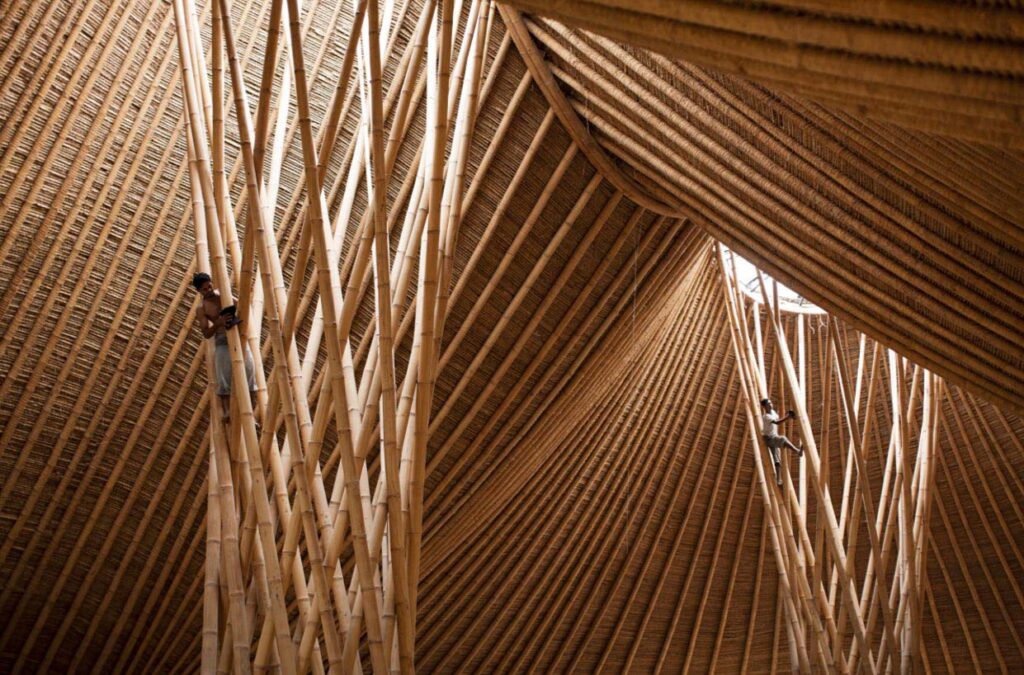
The story of the hyperbolic tower starts in Russia in the 1890s, with an engineer named Vladimir Shukhov. He was looking for a tower design that could carry heavy loads and stand up to strong winds, while using as little material and labour as possible. He built his first lattice tower in 1896, a water tower at Polibino, from straight steel members that crossed each other and were tied with horizontal rings. Others went on to use this hyperbolic shape as a way to efficiently build a strong tower, but mostly using steel and concrete.
Then in 2005 in Bali, master bamboo builder Jörg Stamm tried building the hyperbolic tower with bamboo. At the time, most bamboo buildings in Bali were simple post-and-beam structures. Tiga Gunung, or Three Mountains, which he built with John Hardy, changed that. The building featured three 15-metre towers shaped like Bali’s three volcanoes. It was the start of a new way of thinking about bamboo structures.
The same idea went on to shape the Green School and many of IBUKU’s and Bamboo U’s subsequent buildings.
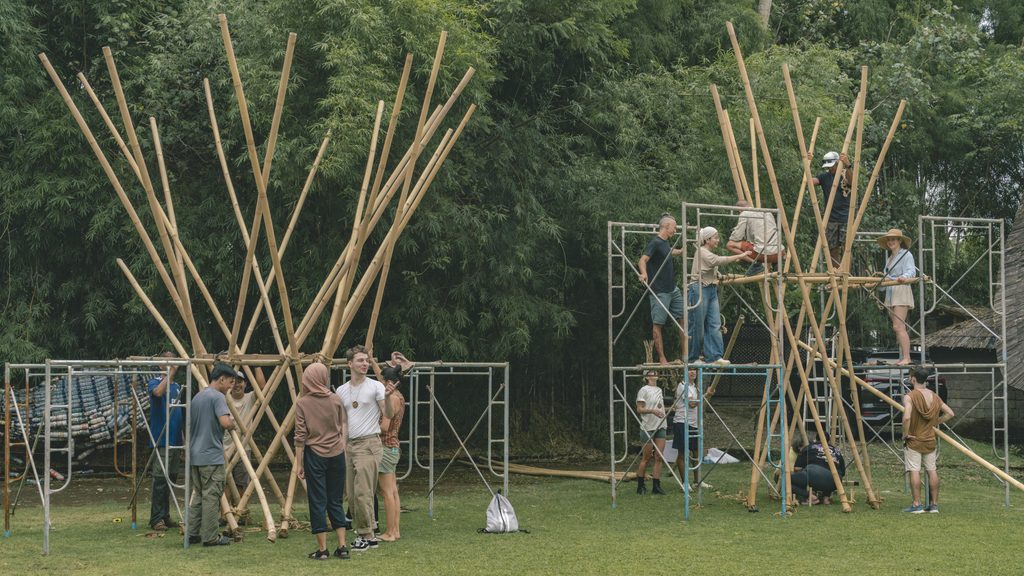
Once you know the shape, you start seeing it everywhere in bamboo buildings in Bali.
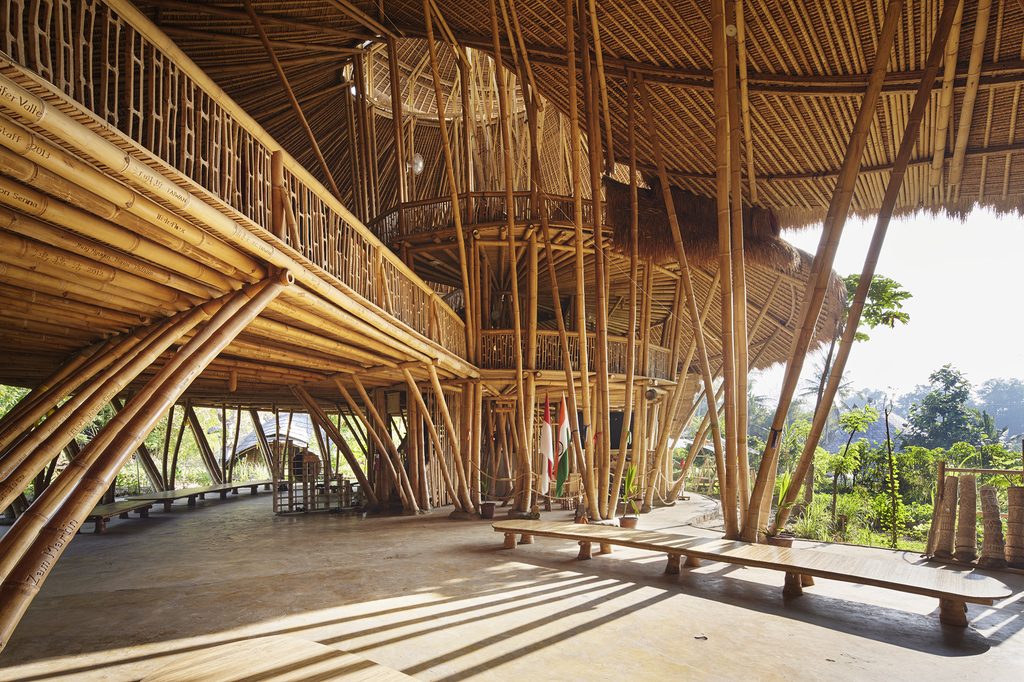
- Heart of School, Green School: three 14-metre towers hold a spiraling roof three storeys high, with a skylight at the top of each tower.
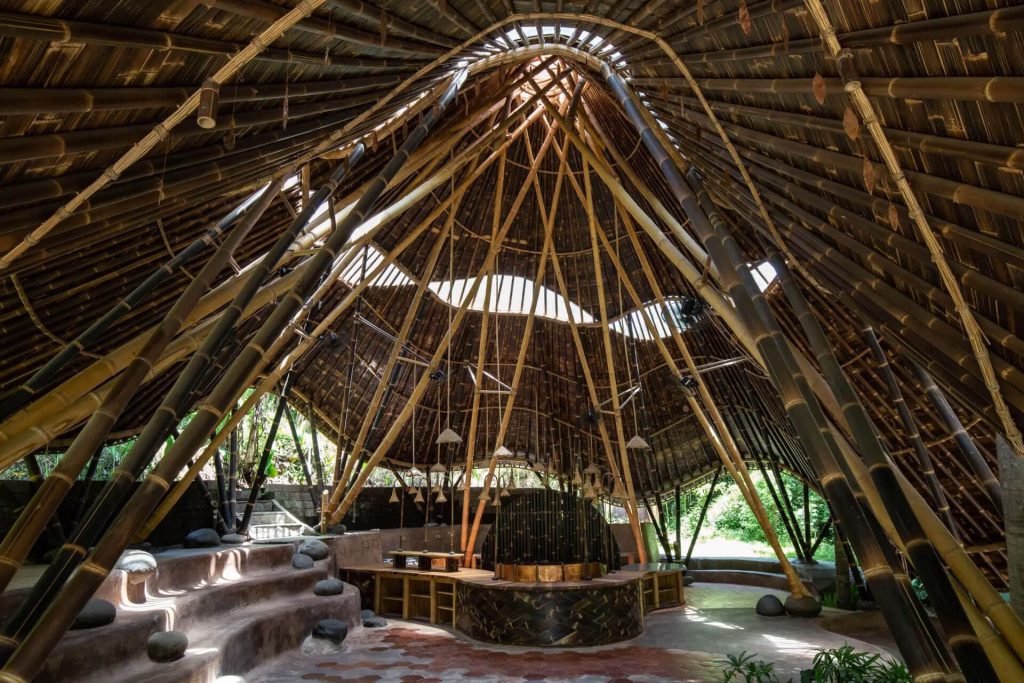
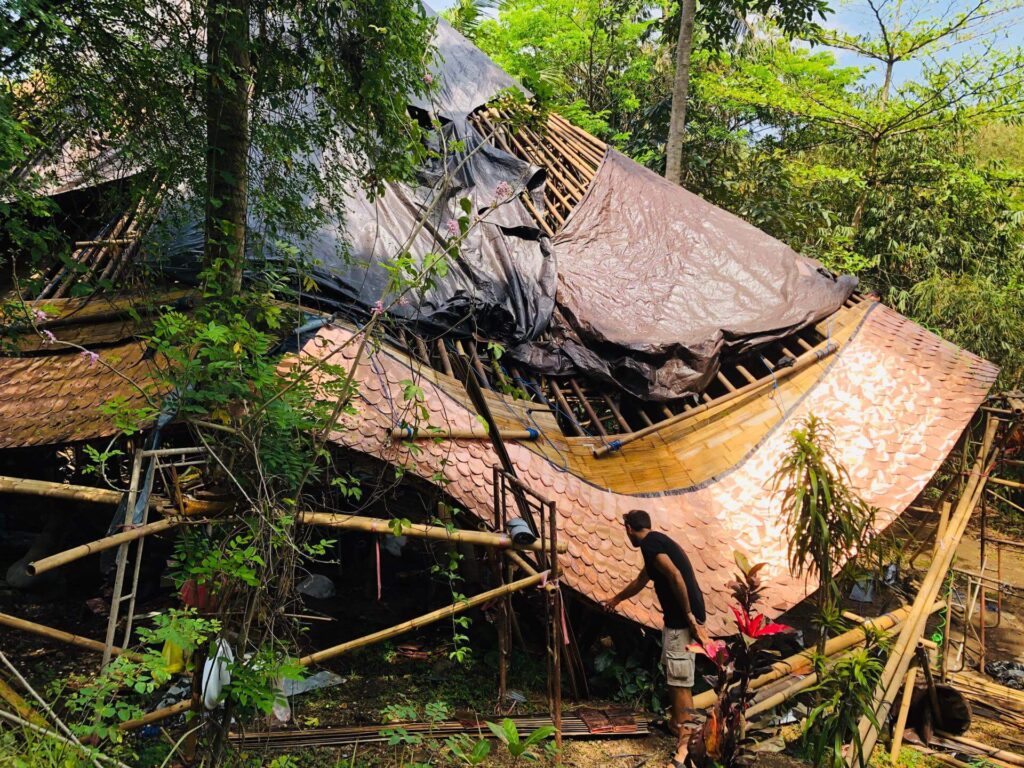
- Dapur Naga, Bamboo U: this structure used to be our kitchen space during the course, and is now part of the Green School. Here the tower is used in a different way, with a narrow neck and a wide, spread-out base that steps down with the levels of the sloping site. Above it, a rippling roof is covered in copper tiles that look like dragon scales, giving the building its name: dapur naga means “dragon kitchen” in Bahasa Indonesia.
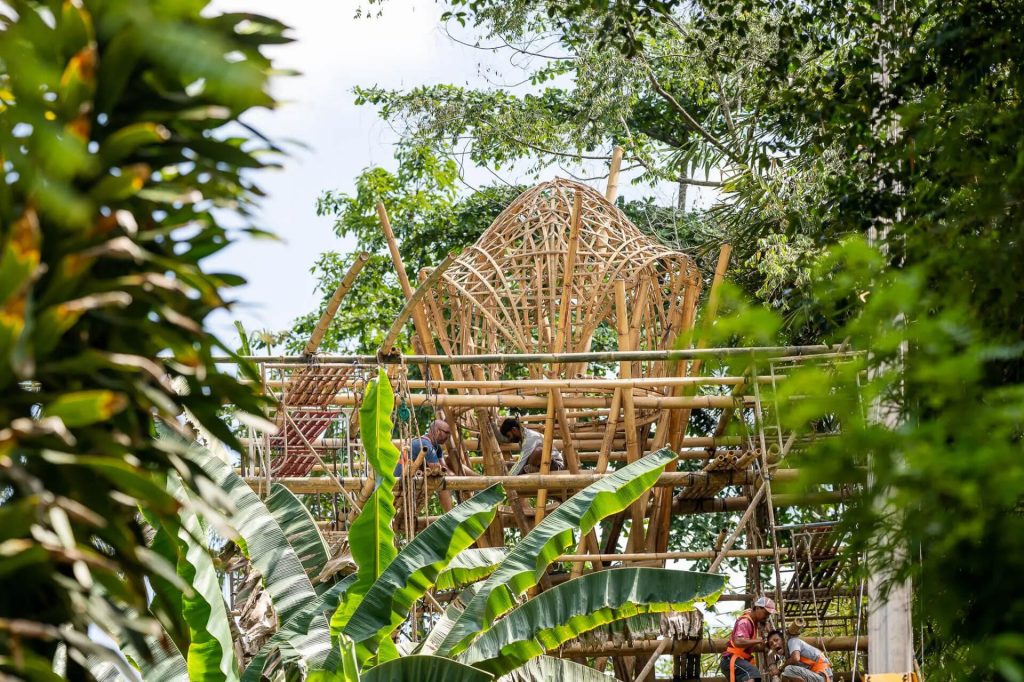
- The Princess Tower: a tall lookout tower built by students on the Bamboo U course, with a gridshell roof at the top, thatched with alang-alang.
In most of these buildings, the tower does the job of a column. It holds up the roof from the centre, freeing up the space around it.
Related: The 3 Ways to Create Amazing Curved Structures Using Bamboo

In August 2026, two Bamboo U alumni and I worked with a group of first-time bamboo builders, the Resonance Art Collective, to create the Resonance Tree for Burning Man.
At the center of the tree is a hyperbolic tower, with the poles doubled up for extra strength. The team built the tower first in Nevada City, with the crossing points tied together with lashing, then we packed it away and shipped it in a container with the rest of the bamboo.
At Burning Man, we opened the tower back up and fixed it to a ring of bamboo splits, which was lag-bolted into the ground. Two steel rings were hoisted into place inside the tower, one at the waist and one at the top. Once it was standing, we added more layers of poles to make it stronger.
Next the roof rafters and branches made from laminated bamboo splits were attached. Lights were hung from the branches, each with its own solar panel. Finally, the we made the entrance and the roots from woven flattened bamboo and splits.
The hyperbolic tower made this possible. It could be built and tested in one place, shipped, and then put back together quickly on site by a team who had mostly never worked with bamboo before. Starting with the tower gave us a strong, simple structure to build everything else around. It also gave Ed, the team’s engineer, confidence that the structure could hold many people during the festival.
Related: Weaving the Karma Map Dome, Building with Bamboo at Tribal Earth
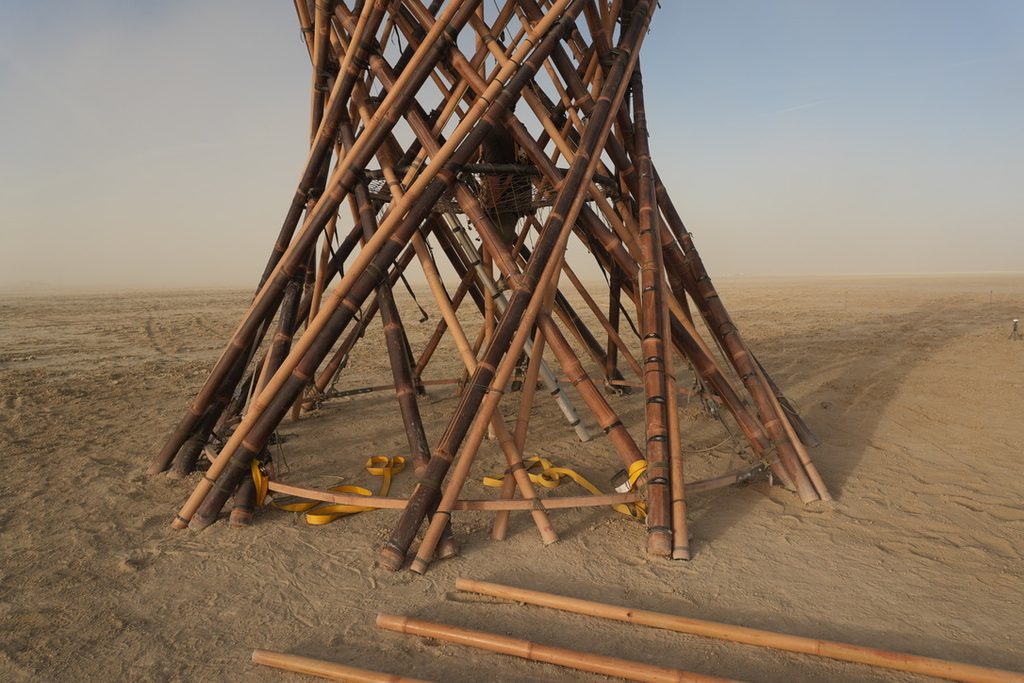
For building tall with whole bamboo poles, hyperbolic towers are one of the most efficient ways we know. They use bamboo the way it grows, long and straight, without cutting or bending it. Every pole is braced by the others, so the tower stays stiff and resists buckling while using very little material. The joints are simple and the poles are light enough to raise by hand. As the Resonance Tree showed, a tower can even be built in one place, shipped, and then expanded and used somewhere else.
For anyone wanting to build tall with whole bamboo poles, the hyperbolic tower is a good place to start.
Want to learn how to build a hyperbolic tower yourself?
We teach how to build them in our 11 Day Build & Design Course in Bali.
Join the 11-Day Bamboo Build and Design Course: hands-on building alongside experts, architects and makers from around the world. Explore the 11-Day Course

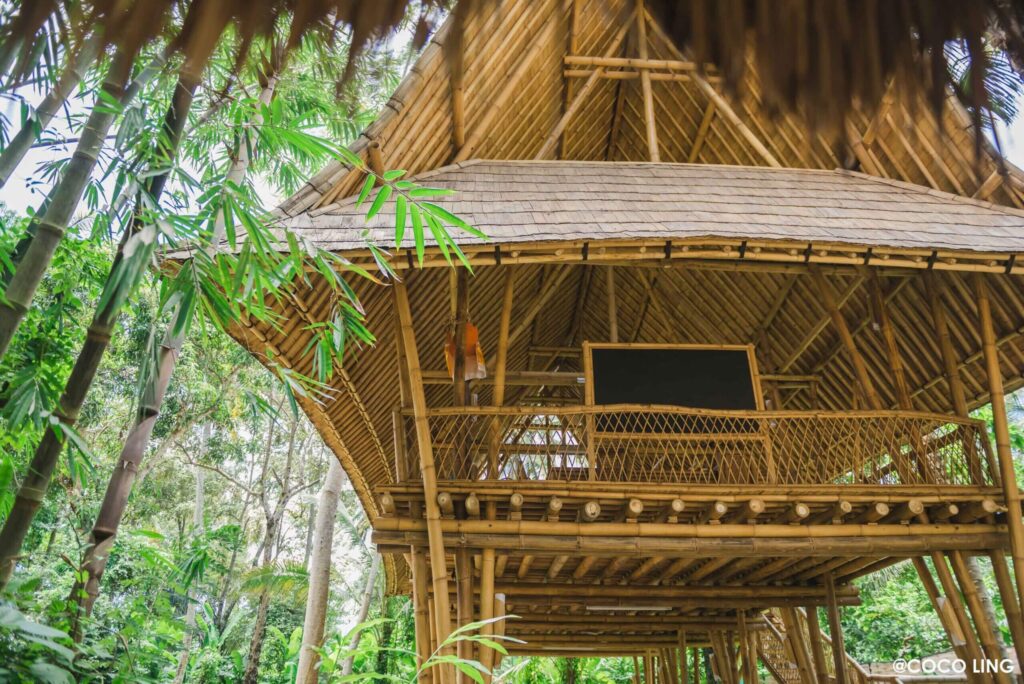

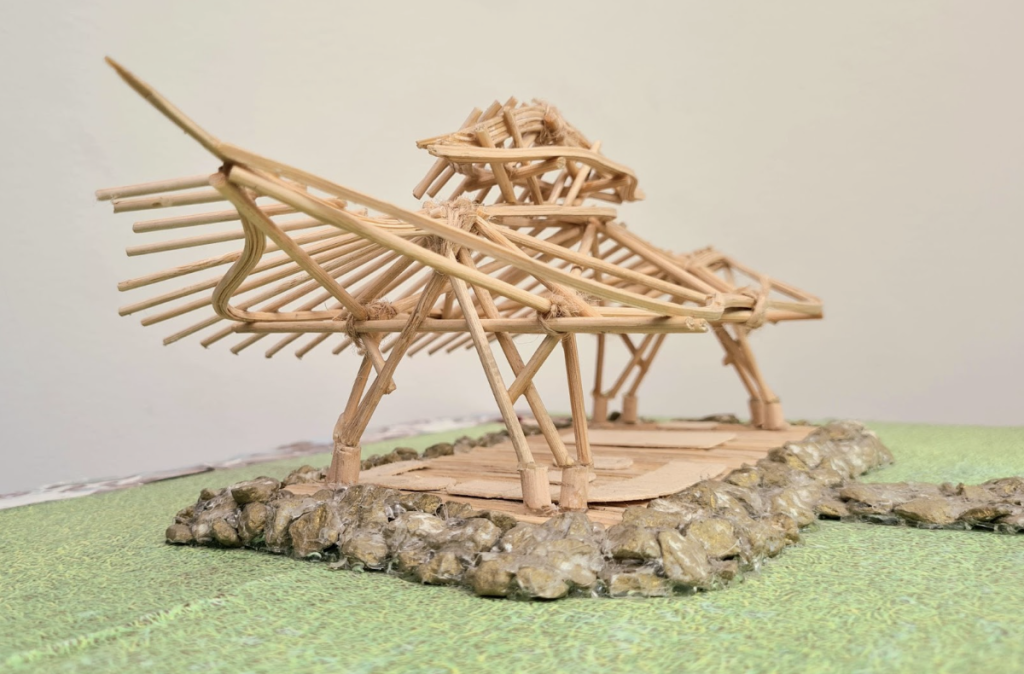
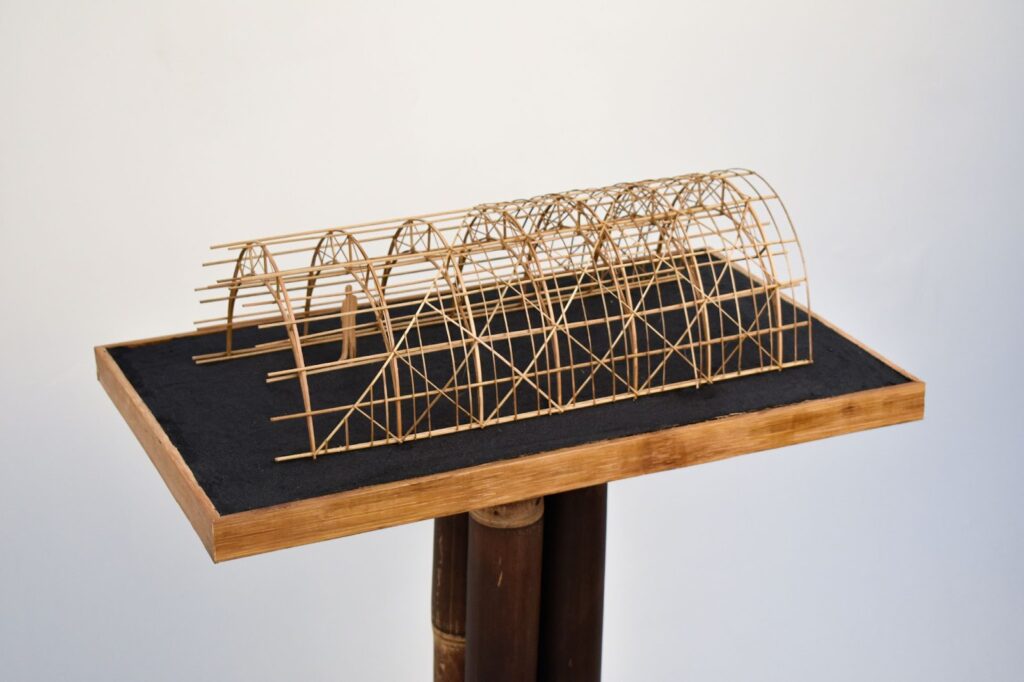
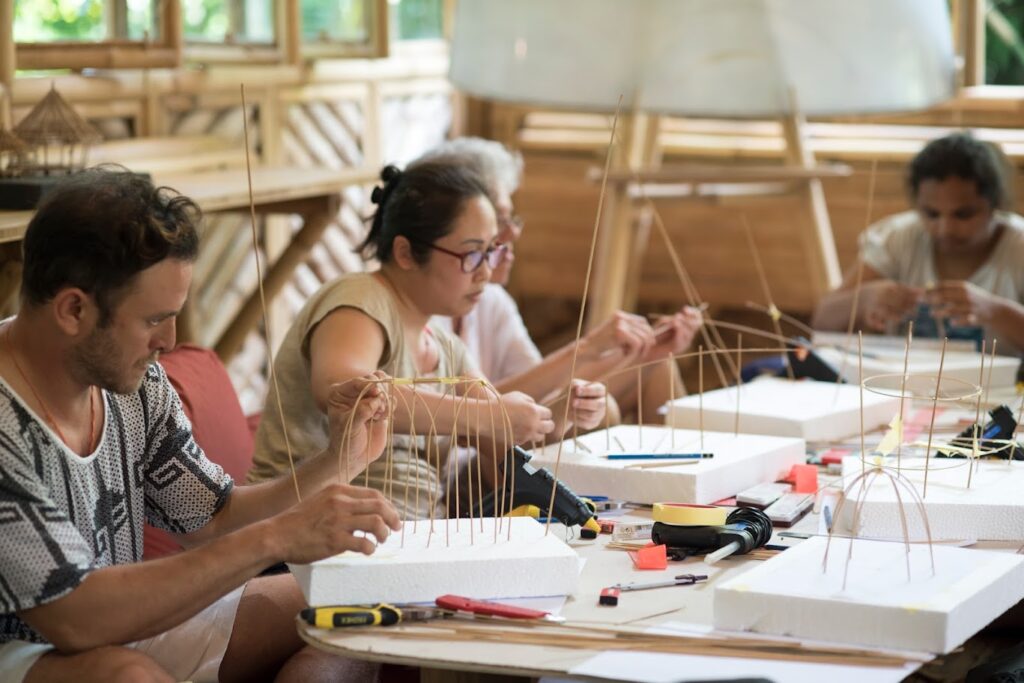
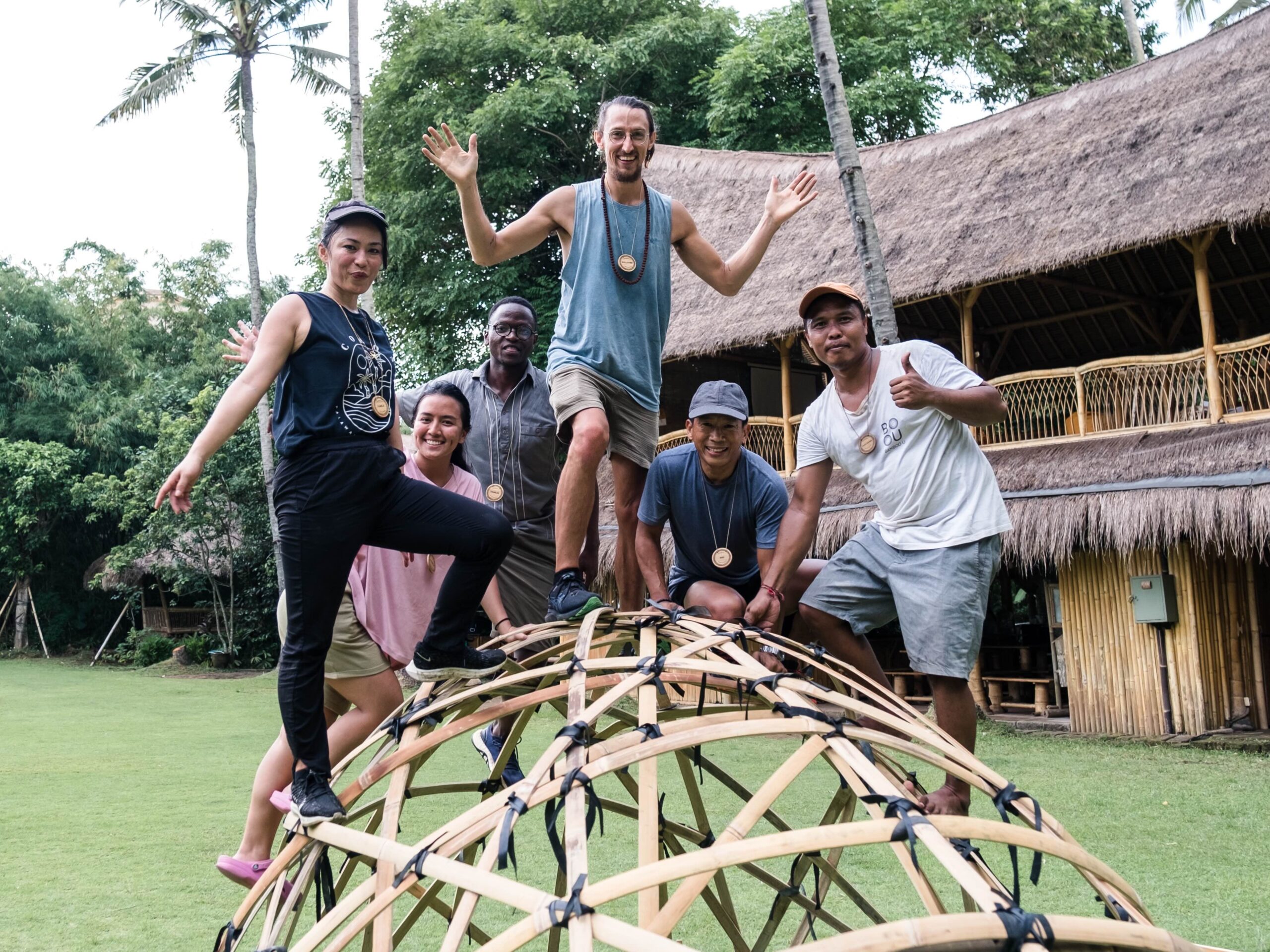
The 11-Day Build & Design Course
In collaboration with IBUKU
Immersed in the most beautiful and innovative bamboo environment. Meet the pioneers, the visionaries, the designers and builders who took this under-utilized material and transformed it into the most desired natural building material for bamboo structure design.
The Intro to Bamboo Engineering Online Course
Designed specially for structural engineers, this FREE online course has been created in collaboration with the Base Bahay Foundation, based in the Philippines.Join the course to learn how bamboo's innate properties make it a versatile building material, and how these properties can be maximized and applied in structural design.