Why a Bamboo Building Feels Cool Without Air Conditioning
By | October 22, 2026 | Alumni Projects and Research - Design -
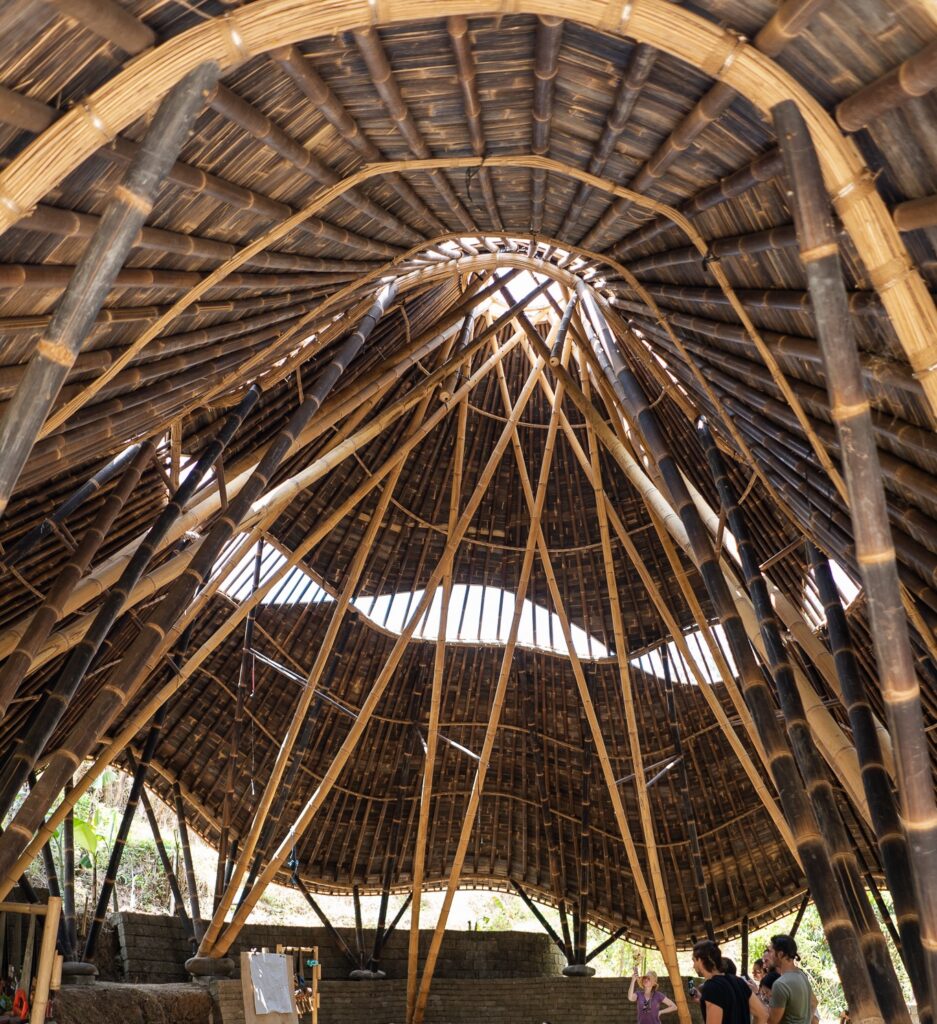
Thermal comfort is often treated as a single temperature to be maintained mechanically and confirmed by instruments. Yet our experience of a space is far richer than that. As Lisa Heschong argues, thermal variation itself can become a source of pleasure. This article explores that idea at Green School Bali, combining on-site thermal measurements with first-hand sensory observation to see how bamboo and other natural materials, together with the design of the spaces, create moments of thermal delight without any mechanical cooling.
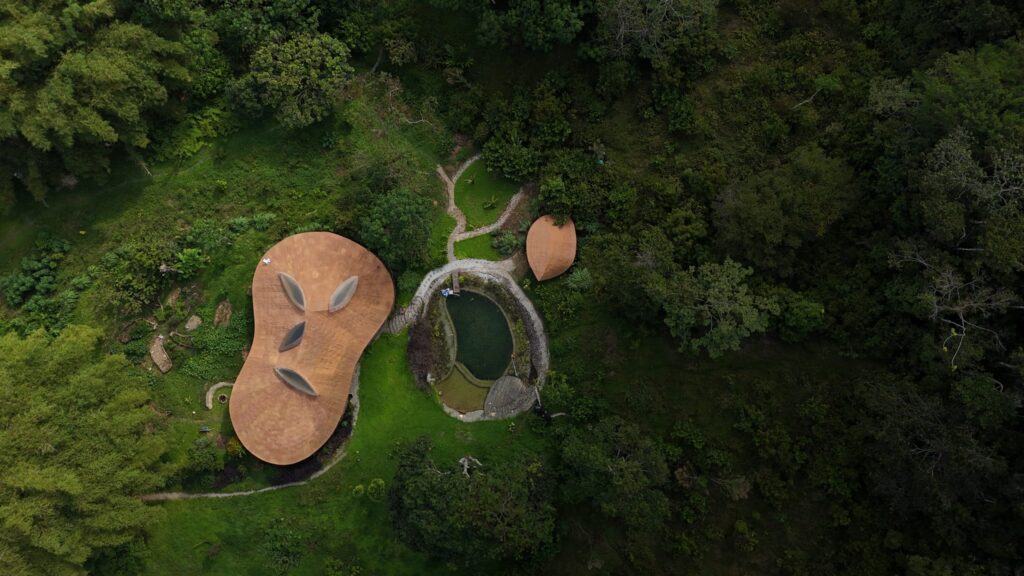
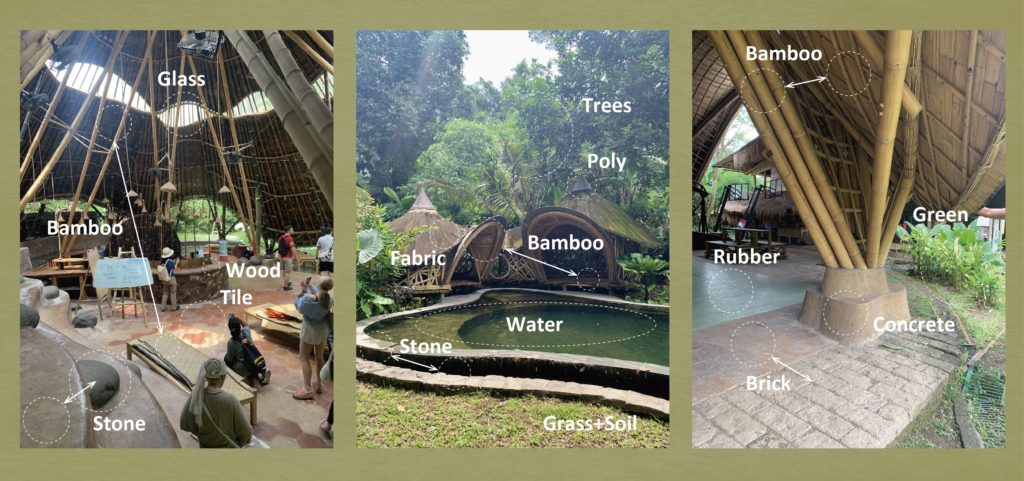
The buildings at Green School are not made of bamboo alone. They incorporate a variety of natural materials and are integrated with rich plantings and landscapes. Together, they create a multisensory learning environment that stimulates all five senses.
In continuation of my previous report, this article shares experiences of thermal delight generated by the combination of bamboo and other natural materials in educational spaces.
Related: Experiencing Thermal Delight in a Bamboo Dome
This study recorded both thermal measurements and my own thermal-sensation experiences in semi-outdoor bamboo structures at Green School Bali. It was observed that the thermal comfort, and the moments of thermal delight, in these spaces were strongly influenced by the natural materials used in their construction.
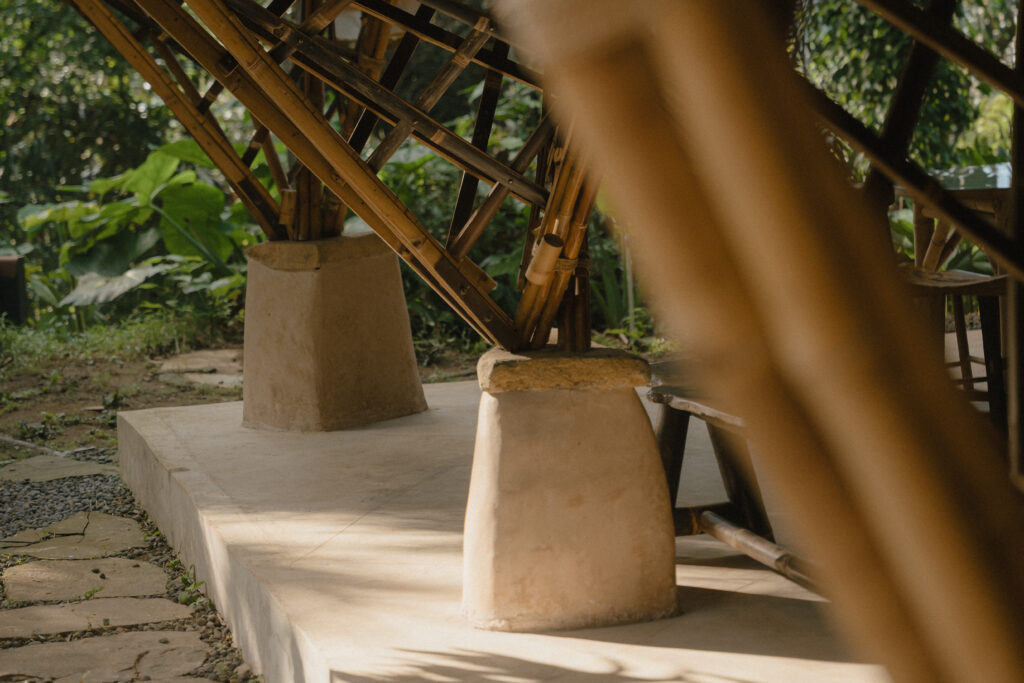
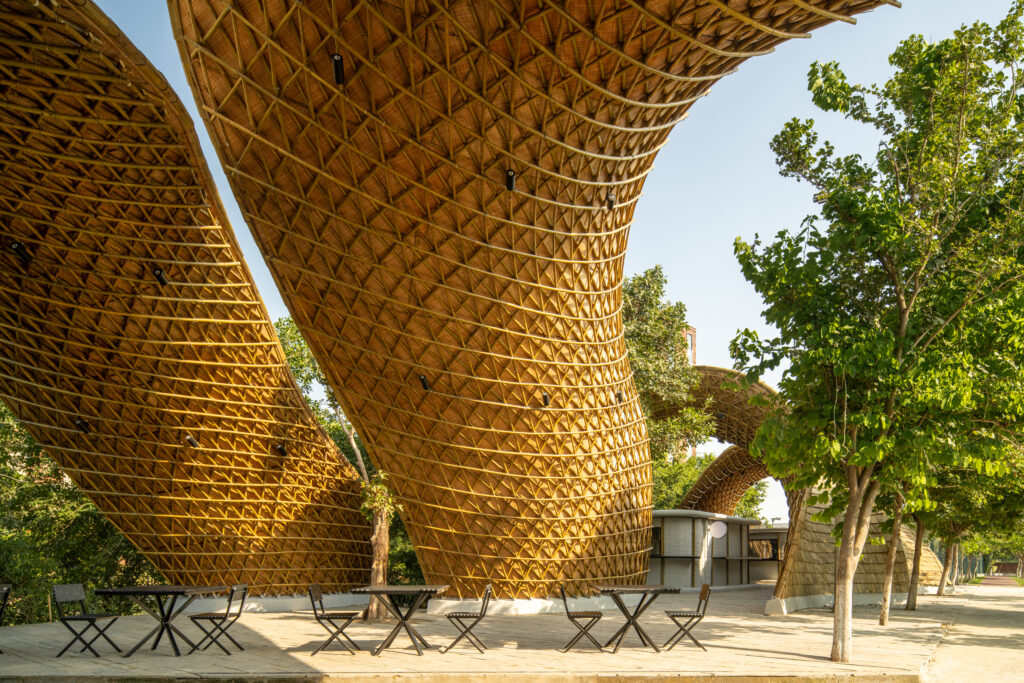
Bamboo, in particular, appeared in many different forms, such as whole culms, split sections and woven patterns, creating spatial variety both visually and tactilely. By understanding and applying the thermal properties of materials, such as thermal conductivity and specific heat capacity, it becomes possible to enhance comfort, or even to create unexpected pockets of thermal delight in otherwise uneven thermal environments.
Basic Indicators of Material Thermal Properties
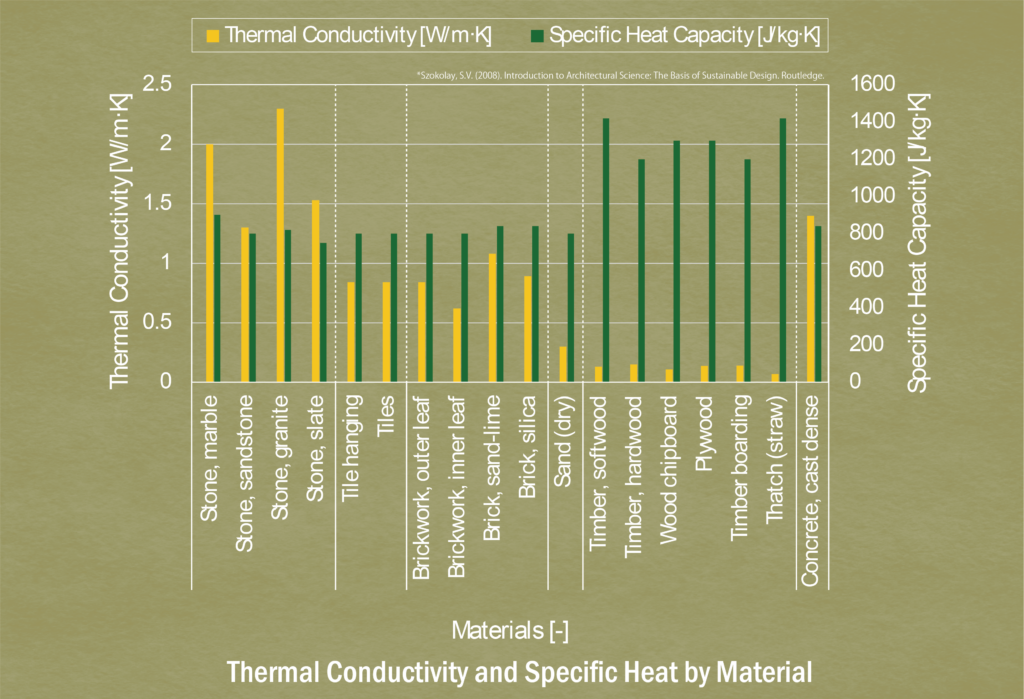
1. Thermal conductivity (λ, W/m·K) measures how easily heat moves through a material.
- High values, such as in metals, transfer heat quickly, so surfaces feel intensely hot or cold.
- Low values, such as in wood, bamboo and insulation, transfer heat slowly, helping to moderate temperature swings and improve stability.
In architecture, thermal conductivity affects the surface temperatures of floors and walls, directly influencing radiant heat and the sensation of contact. It is key to designing features like floors that feel cool or walls that resist heat buildup.
2. Specific heat capacity (c, J/kg·K) measures how much thermal energy a material can store.
- High values, such as in water, soil and concrete, store a lot of heat, so their temperature changes gradually.
- Low values, such as in metal and air, change temperature quickly with only a little heat.
In architecture, materials with high specific heat can store heat during the day and release it at night, reducing daily temperature swings. Natural materials like earth walls and lime plaster help create stable indoor conditions, less affected by the weather outside.
In short: thermal conductivity tells us how fast heat transfers, and specific heat capacity tells us how much heat is stored. Together they explain why, even at the same air temperature, touching stone or tile can feel cold: your skin loses heat rapidly to their high conductivity and density. Let’s keep these principles in mind as we explore the experience of thermal delight.
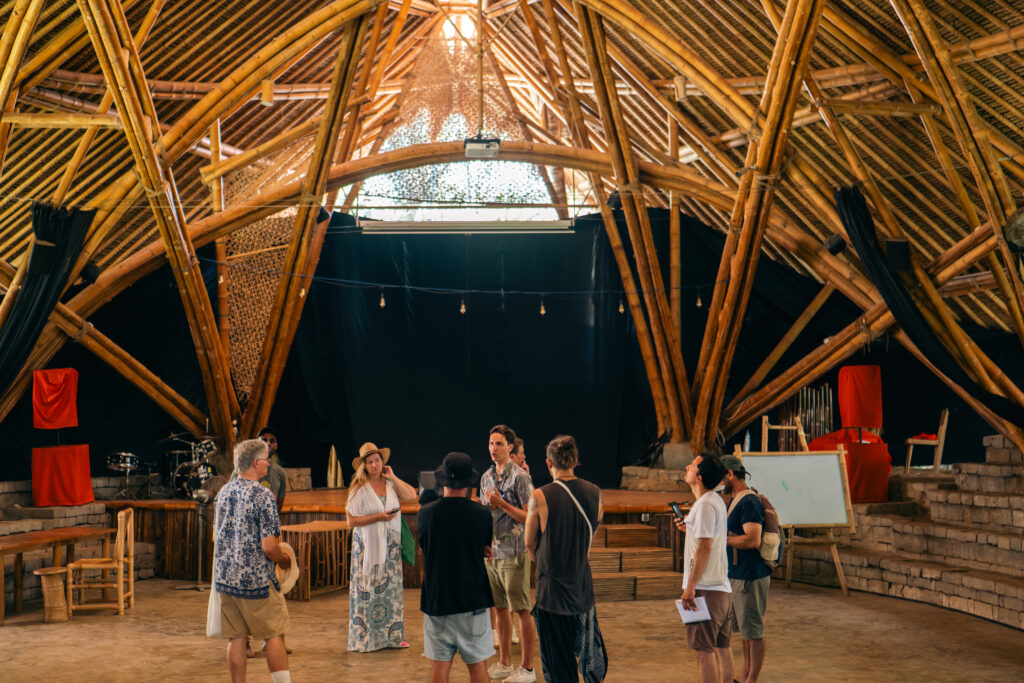
In outdoor conditions of approximately 31°C, we arrived at the Sangkep (gathering hall) after walking outside for about 30 minutes, at an estimated metabolic rate of around 2.0 met.
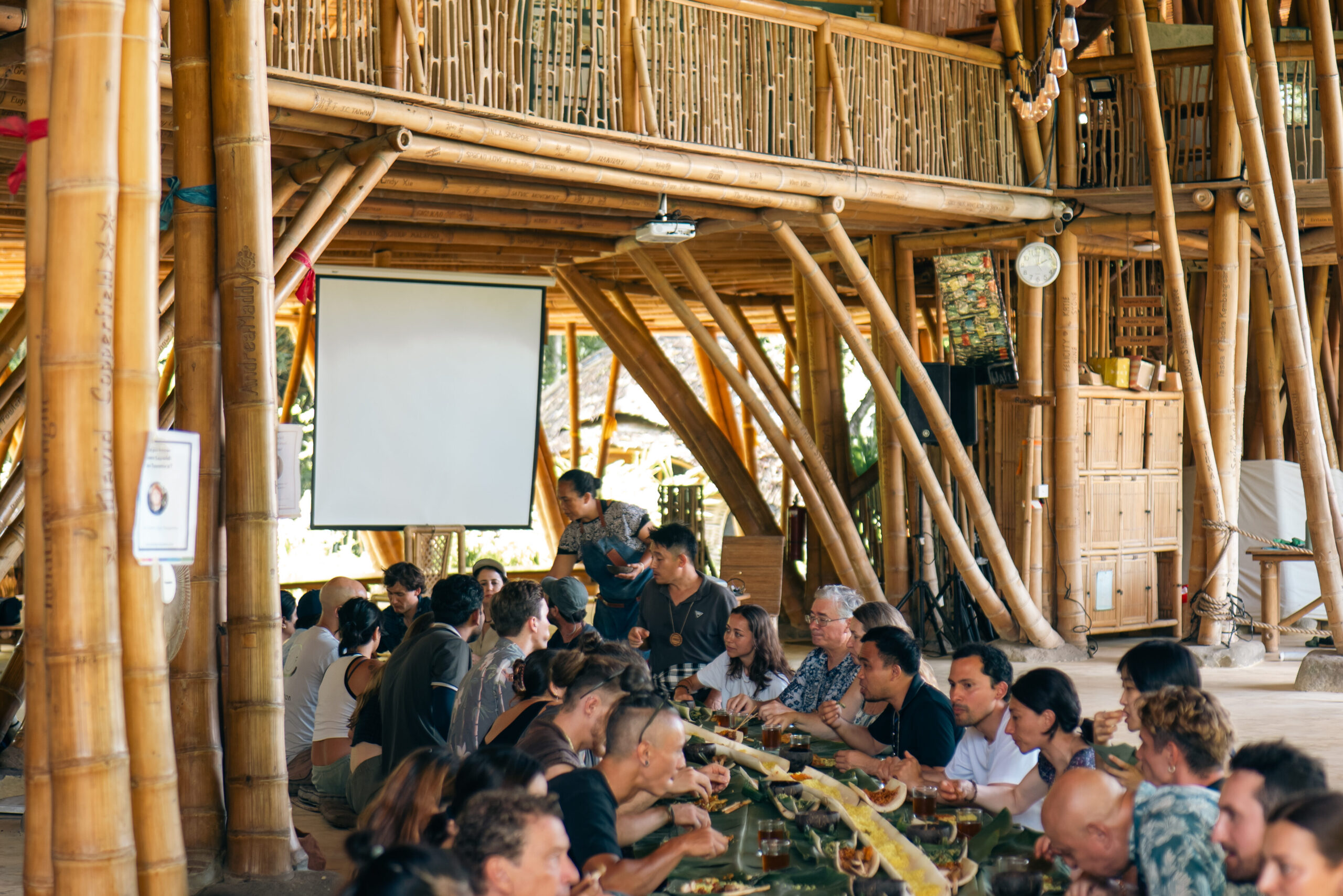
Upon entering the building, I was immediately immersed in a spacious environment with gentle lighting and natural brightness, completely different from the glaring outdoors. What stood out most was the cool sensation that filled the entire space despite the absence of any air conditioning. It was truly an unexpected experience of thermal delight. My friends also exclaimed, “It feels cold!”, a clear reaction of surprise and curiosity to the physical environment created by the materials.
When I sat on the brick staircase, I distinctly felt a lasting sensation of coolness as the seat surface absorbed heat from my body. Brick has relatively high thermal conductivity, allowing heat to transfer quickly on skin contact, which makes a cooling effect easier to feel. Although its specific heat capacity is not as high as that of wood, the cool sensation persisted for about a minute.
This localised cooling prompted active interaction with the space. As the coolness faded, I naturally shifted my sitting position, creating a tactile dialogue between my body and the architecture. Most remarkably, the contact between body temperature and building materials felt like breathing with the space itself.
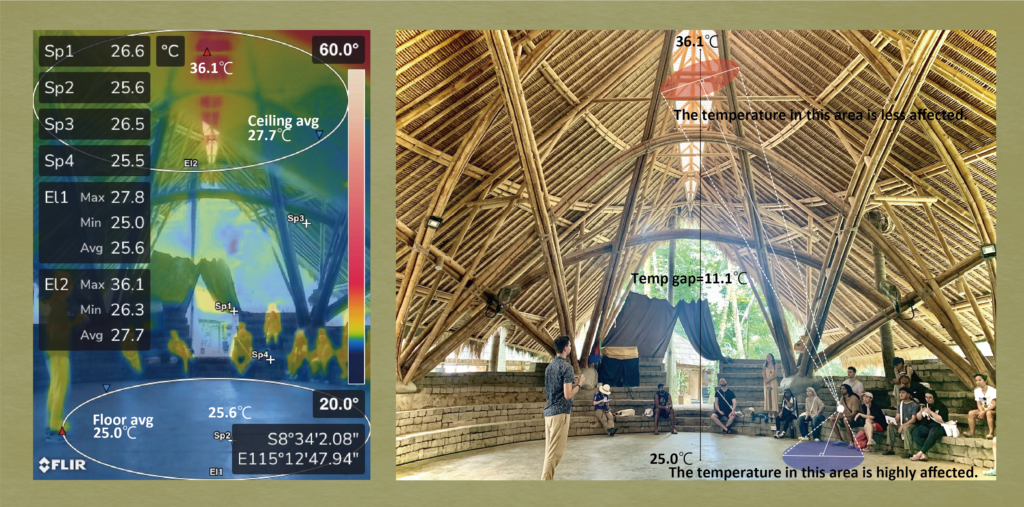
According to the measurements, the floor surface temperature was more than 5°C lower than the ambient air temperature, effectively reducing the mean radiant temperature throughout the space. This cooling effect can be attributed to several factors:
- The large bamboo roof blocks direct solar radiation from reaching the floor.
- High-positioned skylights minimise radiant heat exposure in the occupied zone.
- Natural ventilation and gravity-based airflow promote upward heat discharge.
- The limestone flooring combines high thermal conductivity and high specific heat capacity, so it retains coolness from the night and early-morning air and holds it throughout the day.
In the classrooms, flooring materials included bamboo and limestone, both of which maintained surface temperatures lower than the outdoor air. In Classroom B in particular, thermographic images revealed that the same material showed different temperatures depending on solar exposure, clearly demonstrating how the thermal properties of materials interact with solar conditions.
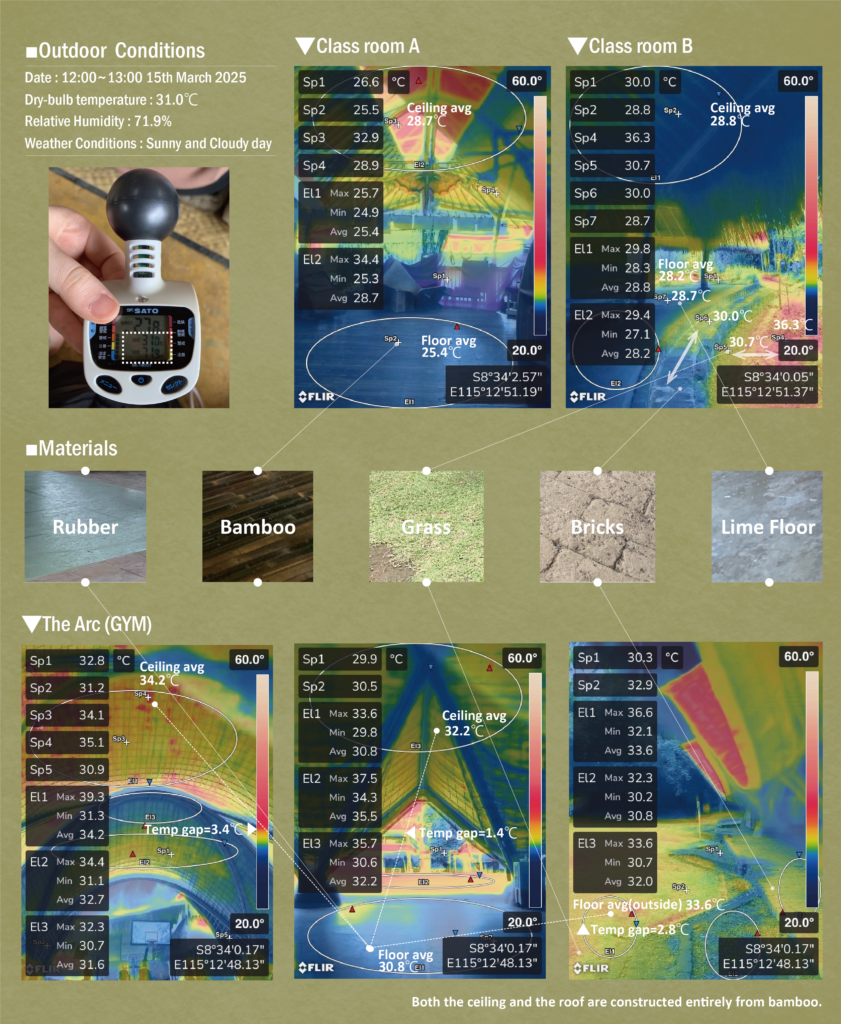
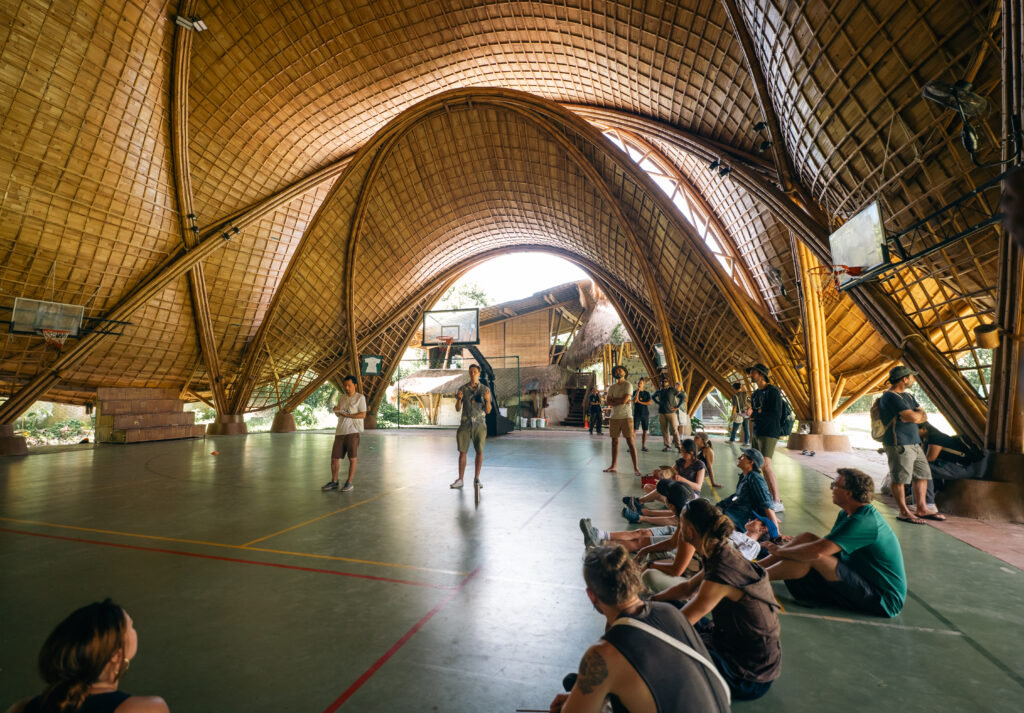
In contrast, the gymnasium (The Arc) had floor surface temperatures nearly equal to the outdoor air, and no distinct cooling sensation was experienced. This is because recycled tyre rubber was used as the flooring material. With very low thermal conductivity (0.13 to 0.25 W/m·K), it is poor at transferring heat and less likely to produce a cooling sensation. However, its high specific heat capacity allows it to release stored heat slowly, creating a thermally stable, even sensation throughout the space.
The use of recycled materials also demonstrates a successful balance between sustainability and functionality, making the building itself a valuable educational tool.
Related: Innovative Flattened Bamboo Roofing for Sustainable Architecture
Interestingly, when I first entered the gymnasium from outside, at an estimated metabolic rate of around 2.0 met, I did not particularly perceive the space as cool. However, after exercising next to the gym for about 30 minutes, raising my metabolic rate to around 7.0 met, I re-entered the same space and distinctly felt it as cool and refreshing, an unexpected delight.
I could also physically sense the gentle movement of air within the large-volume space, air that felt like a single, slow-moving mass of wind. This airflow was not noticeable when my body was at rest, but with heightened metabolic activity my sensitivity to it increased, and I was deeply moved by the expansive feeling of the space and its scale.
This experience reaffirmed for me that differences in human metabolic rate and heat dissipation significantly influence thermal perception, even within the same physical environment. I have often felt that such subtle, context-dependent perceptions tend to be overlooked in conventional environmental engineering evaluations. Yet these realisations, while difficult to quantify, represent a kind of invisible value that can offer important insights for more nuanced and enriching approaches to environmental assessment and spatial design in the future.
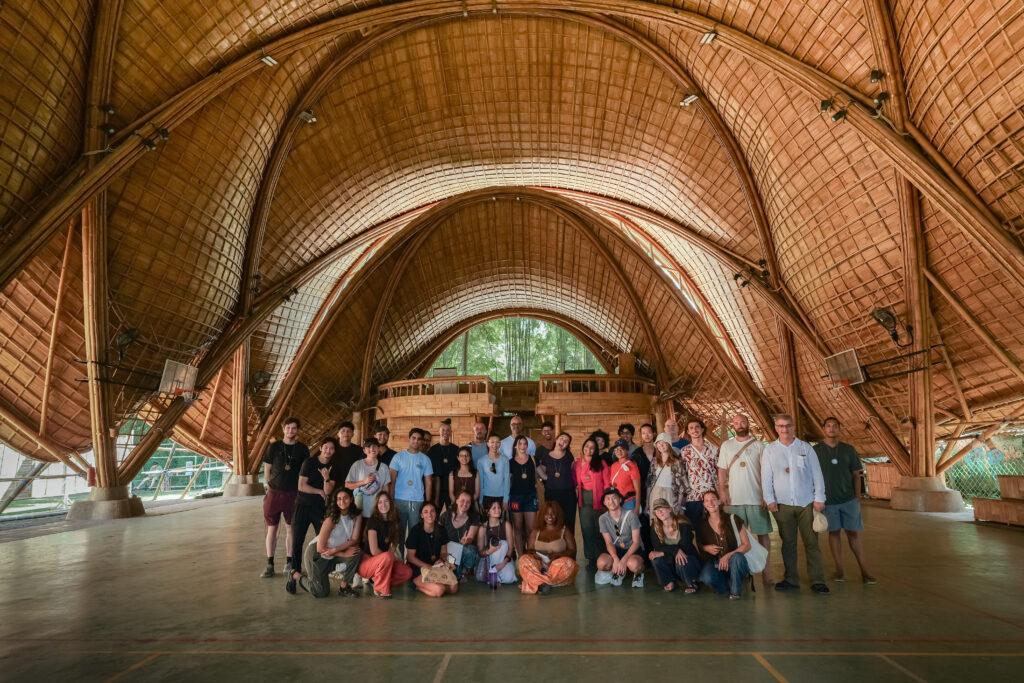
I felt that these experiences of thermal delight, brought about by materials and architectural structure, served as powerful educational tools that connect bodily sensations with spatial experiences.
- Children and visitors can learn about the thermal properties of natural materials through the tactile sensation of coolness.
- The spatial experience of discovering a cool refuge within a hot environment becomes a memorable learning moment.
- As a meeting point between thermal environments and sensory education, such spaces can foster a deeper understanding of climate adaptability through architecture.
Recognising a cool place within the heat leads to a more positive perception of the space. This, I believe, creates educational value that stimulates children’s sensitivity and curiosity, something a thermometer alone could never capture.
Related: It’s Time for Architects to Rediscover Natural Materials
The measurements taken during this visit represent just one part of the whole picture. Yet the 11 days I spent trying to sense the thermal environment, not only through data but also through body and mind, became a profoundly meaningful experience.
As mentioned earlier, the term thermal delight exists in academic literature. But personally, I had only ever felt that sensation in a cold plunge after a sauna, much as Lisa Heschong describes in her book. This time, however, inside an open bamboo structure without any air conditioning, I encountered that same feeling again. It felt like finally reaching a sensation I had long been searching for, and it was deeply moving.
I hope this article serves as an invitation for those about to experience bamboo architecture: not only to admire its visual beauty, but also to close their eyes and tune into the thermal delight it offers. If it helps even one person discover a deeper connection with nature through the physical sensations of a space, I would be truly grateful. May more people come to experience the quiet richness that bamboo architecture has to offer.
Thermal Delight in Architecture by Lisa Heschong.
Visual Delight in Architecture: Daylight, Vision, and View by Lisa Heschong.
Szokolay, S.V. (2008). Introduction to Architectural Science: The Basis of Sustainable Design. Routledge.
Want to experience bamboo architecture for yourself?
Join our 11 Day Build & Design Course and spend time inside these spaces, tuning into the quiet richness bamboo has to offer.
Learn to design and build with bamboo in Bali.
Join the 11-Day Bamboo Build and Design Course: hands-on building alongside experts, architects and makers from around the world.
Explore the 11-Day CoursePrefer to start online?





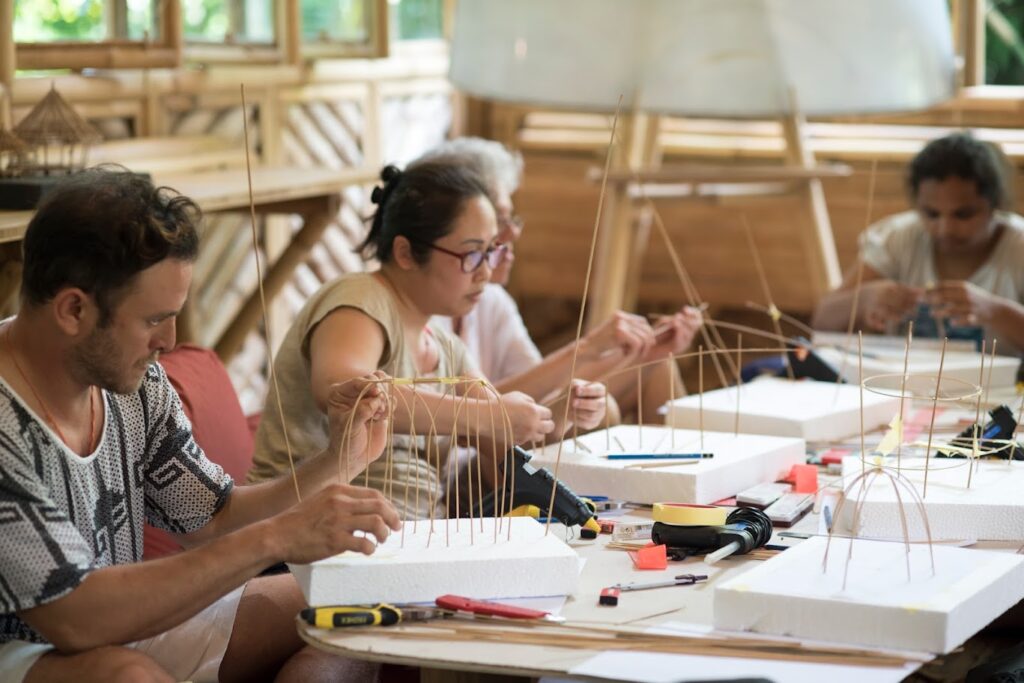

The 11-Day Build & Design Course
In collaboration with IBUKU
Immersed in the most beautiful and innovative bamboo environment. Meet the pioneers, the visionaries, the designers and builders who took this under-utilized material and transformed it into the most desired natural building material for bamboo structure design.

The Intro to Bamboo Engineering Online Course
Designed specially for structural engineers, this FREE online course has been created in collaboration with the Base Bahay Foundation, based in the Philippines.Join the course to learn how bamboo's innate properties make it a versatile building material, and how these properties can be maximized and applied in structural design.