Using Bamboo to Craft an Innovative Mobility Solution
By | July 11, 2025 | Student Work -
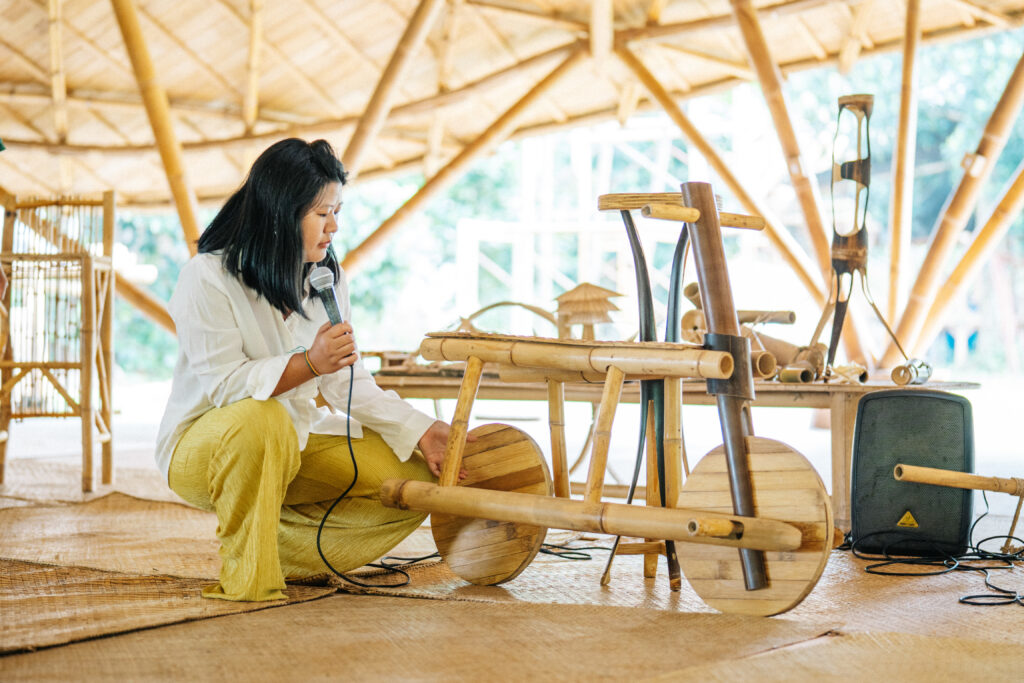
Through her research, Lalrin found that her home-state of Mizoram in India was lacking a sufficient mobility solution for those in rural communities. To tackle this, she set out to innovate a traditional form of transport called the Tawlailir to make it an affordable, time-saving option for local farmers. Read on to see how she used bamboo to bring her vision to reality!
Hi, I’m Lalrin and I’m from Mizoram, a state in the northeast of India. I joined the Design and Carpentry station during the 11-Day Bamboo Build and Design Course in June 2025. My goal was to create a traditional carts inspired by the ones used by farmers in Mizoram. However, unlike the traditional carts that are made out of wood, I wanted to make mine completely out of bamboo!
Related: Experimenting with Small-Scale Heat Bending Processes Using Black Bamboo
My inspiration was based on the traditional wooden carts, called Tawlailir, from Mizoram. These were the main grassroots innovation for mobility made by people for going to their farms and carrying goods.
Since then, it has become a key cultural element, in that any person from Mizoram will know what it is. It’s a symbol of fun as even the children make different versions of it and then they race around. However, it’s also extremely practical because some of the farmers still continue to use it.
So, I wanted to see what I could do about cultural innovation. I was thinking in terms of linking our traditional/cultural elements into something more innovative yet practical with a modern twist. This is because, as we are progressing, the link to our culture is slowly dying out. I wanted to keep the fun bits of the cultural aspect and see if we could also take it forward in terms of mobility usage for modern use. So I built a prototype powered by an EV battery, which significantly expanded its functionality.
By taking a new approach on the traditional carts, farmers could then go to their farms, carry their goods, and allow them to have better access to the market. Overall, this would result in less wastage or spoilage of their crops. Additionally, this would be a better option for them to instead of walking or waiting for the limited options for public transportation, such as the community pickup truck. By having their own means of transport, it would save a lot of time and improve their health as well, given that there is a lot of manual labor that comes with farming and moving goods.
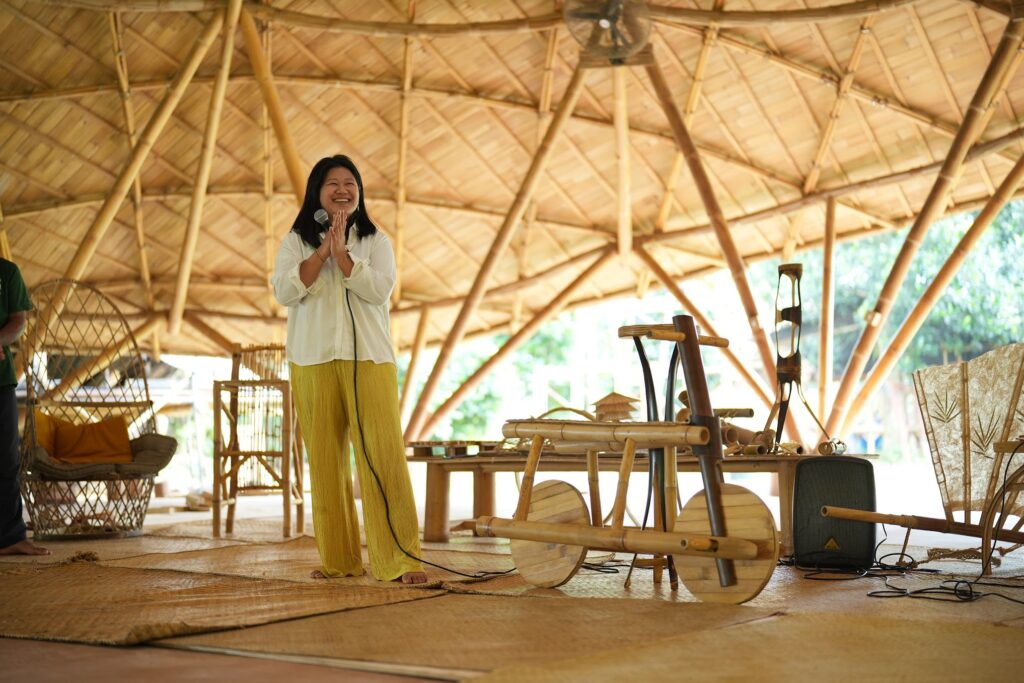
Before coming to Bamboo U, I did some research. However, early on, I realized a lot of people in the rural communities still can’t afford a pickup truck or even a scooter, which is why the Tawlailir are so prevalent. So my goal was to take this element and upgrade it, so that this new product can meet people where they are.
This new mobility solution would be a symbol for freedom and would give the farmers back their time. In fact, in my research, I found that some farmers were walking for four hours a day, to move between places like their farms, homes, and the market. If we could cut it down to just one hour of commute, the farmers could save one whole month in a year! That would give them the opportunity to do so many other things. It could even help alleviate them from the seasonal cycle of farming and give them more time to focus on other endeavors.
Based on all this, I set out to create a scooter. I decided to pick a scooter because it was a small, easy way to begin with tackling the problem. By starting small, I can apply the same kind of mechanics of engineering as a scooter to creating a cart later on.
Before I came for the Bamboo U course, I set out to create my first prototype. I made it using steel with some bamboo. It had an EV battery and a motor, and it could carry about 300 kilograms and go uphill. Overall, it was doing what I had wanted it to do. However, I really wanted to take the project further by using bamboo for the majority of the elements.
I decided Bamboo was because the wood that is typically used for the carts, such as for the overall frame and the wheels, is slowly getting less available in the region. Therefore, because bamboo is so prevalent in Mizoram, I really wanted to see if this was something we could use for this new take on the Tawlailir.
Related: Bamboo’s Potential in Rural and Informal Communities
My goal was to use only bamboo for this mobility solution. I knew it wasn’t fully practical because eventually you do have to use other materials, especially for parts like the wheels, and some nuts and bolt. However, for this particular prototype, I just wanted to see the possibility and test it out. So, in this project, everything is made out of bamboo and no other materials – not even nuts, not even bolts, it’s all just bamboo.
For the scooter, I used five different species of bamboo. They were:
I was particularly interested in exploring what joinery techniques to use, how strong it could be, the scooter’s flexibility, and its comfort levels, keeping in mind that it is something that would be used every day.
I set out by coming up with a design and then cutting the various poles to create the different elements of the scooter. Once that was done, I drilled the holes required and assembled the main frame. I finished by creating the laminated bamboo wheels and then attached them to the frame.
The process itself was quite rewarding because there was a lot of problem solving within that little project. And even things I had not really thought about before came up, like testing out how the load-bearing parts would work or even the wheel alignment.
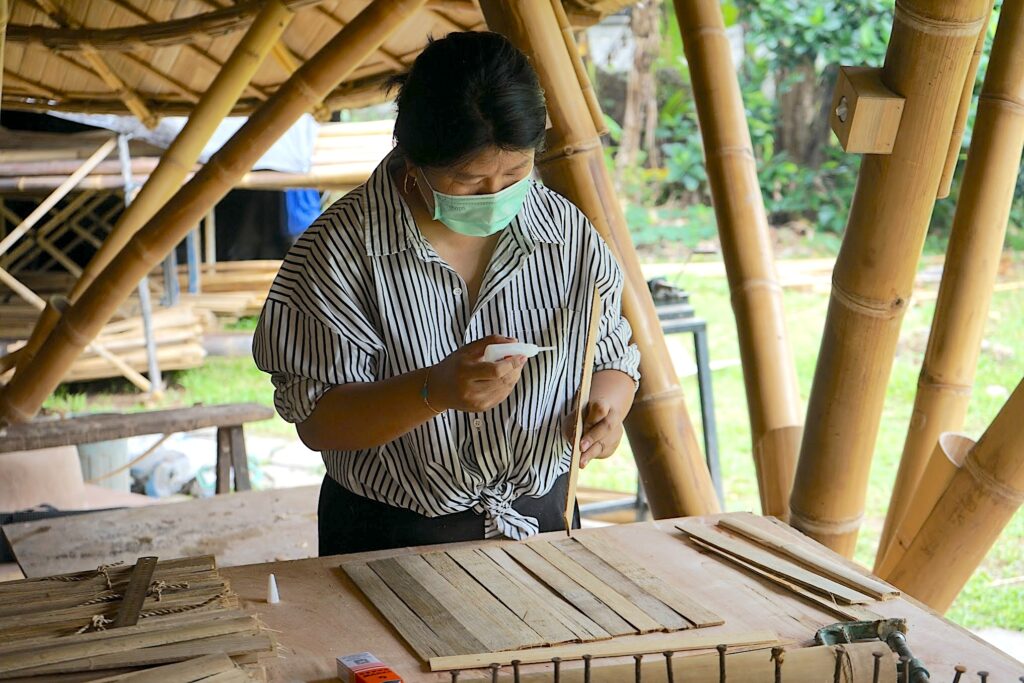
By now having built the scooter, I now know what sort of improvements I can make, when it comes to making other scooters and hopefully carts. I also really appreciated the knowledge exchange between the carpenters at Bamboo U and the way that we were able to work together and try things out.
Through making this prototype, I became even more convinced that bamboo has extraordinary potential. The process also made me think more about the aesthetics and performance of a product, as well as how the storytelling component becomes a powerful part of what shapes the design. With the right design mindset, I know that the vision that I have for bamboo mobility in my home state is definitely a possibility.
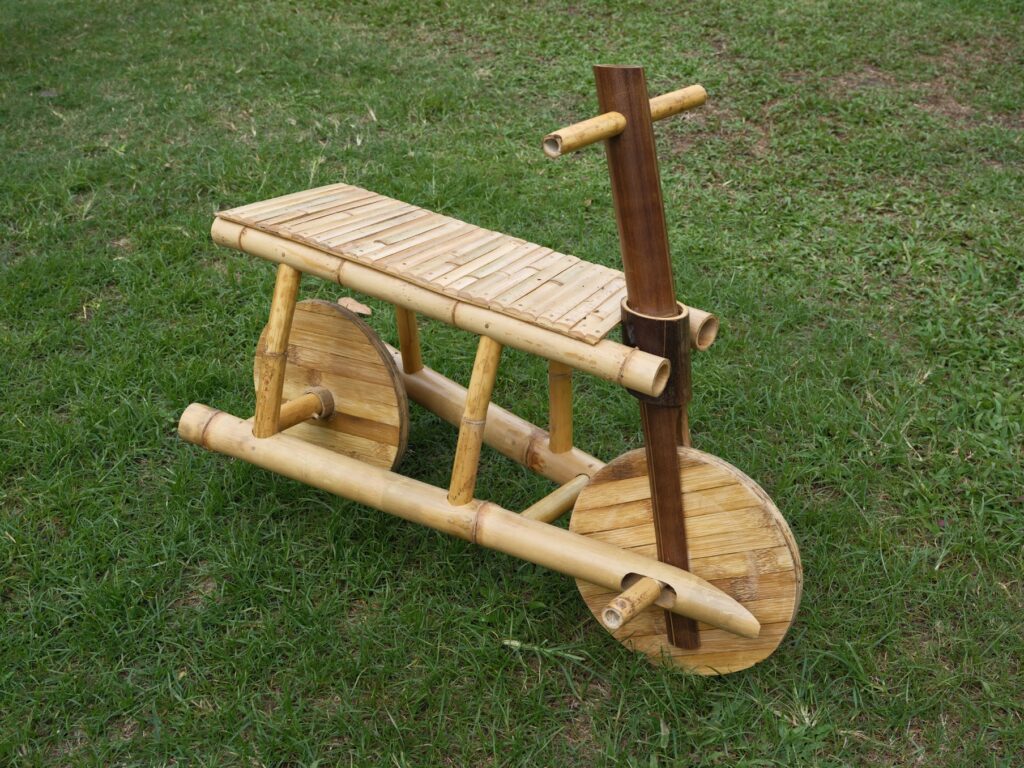
Because I had come to Bamboo U with the vision and the intention to create a mobility solution, I am really glad I got to test things out and am excited to take this forward. I want to see how we can create the cart, scooter, and maybe even other mobility solutions as well, using regenerative materials and/or indigenous designs to meet the needs of the locals.
I believe this is just the beginning and I am so very grateful for Bamboo U to have given me the space and support to try out things with the bamboo, which I could not have done in my home state by myself. Now with the knowledge and experience that I have, I feel that I am now able to implement these learnings back home in Mizoram.
Are you interested in tackling a local concern from your region with bamboo? Click HERE to join us for a workshop, either in-person or online, and use bamboo for your innovations!
Join the 11-Day Bamboo Build and Design Course: hands-on building alongside experts, architects and makers from around the world. Explore the 11-Day Course

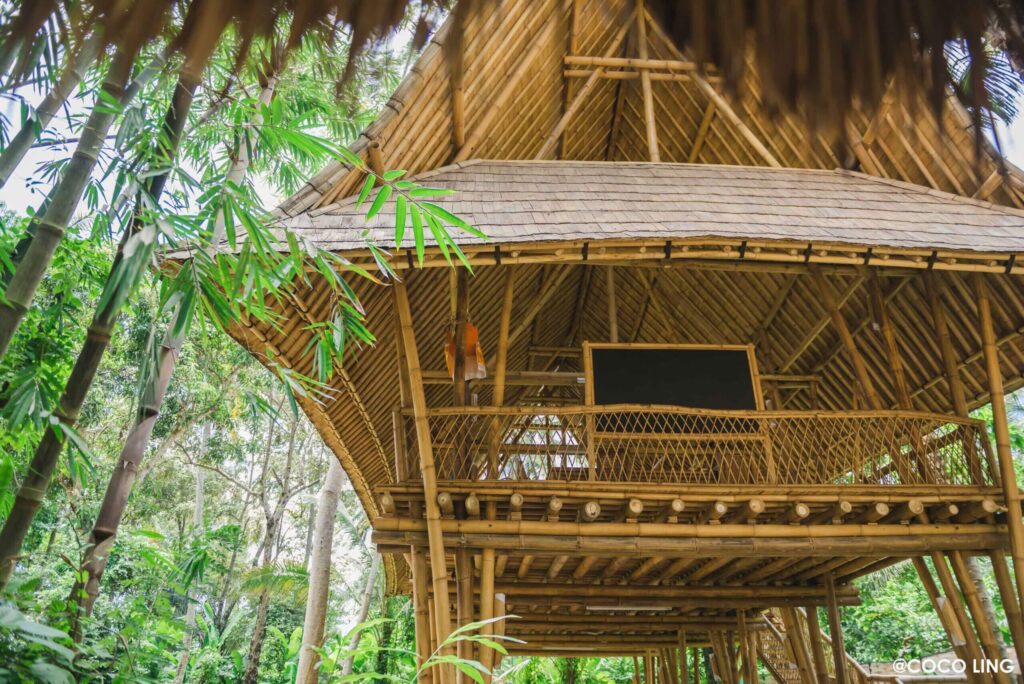

The 11-Day Build & Design Course
In collaboration with IBUKU
Immersed in the most beautiful and innovative bamboo environment. Meet the pioneers, the visionaries, the designers and builders who took this under-utilized material and transformed it into the most desired natural building material for bamboo structure design.
The Intro to Bamboo Engineering Online Course
Designed specially for structural engineers, this FREE online course has been created in collaboration with the Base Bahay Foundation, based in the Philippines.Join the course to learn how bamboo's innate properties make it a versatile building material, and how these properties can be maximized and applied in structural design.