How To Propagate Bamboo: The Ultimate 6 Step Guide
By | February 15, 2023 | Harvesting and Propagation -
In this article, we share the 6 steps to propagate your own bamboo from a cutting.
- Branch cuttings are the easiest, most accessible, and most economical way to propagate bamboo.
- Six steps: observation, harvesting, cleaning, planting, watering, sheltering.
- Plant cuttings in a 1:1 soil and compost mix; first growth appears 3 to 5 weeks after planting.
- Keep cuttings in polybags 6 to 12 months until fully rooted, then transplant in the rainy season.
Observation
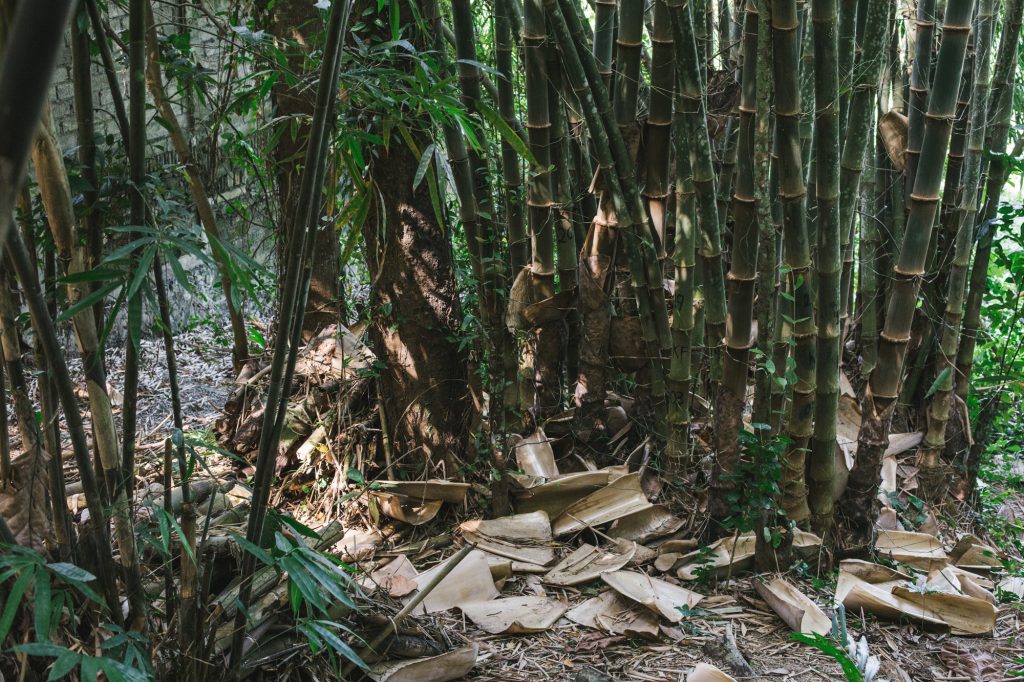
Start by observing and evaluating the conditions of your clump, which is where you’ll be harvesting your cutting from. If your clump shows symptoms such as wilted leaves, brownish-gray stains, unusual presence of insects, or broken culms your bamboo might not be healthy enough to take the propagule. If this is the case, choose a different clump.
Harvesting
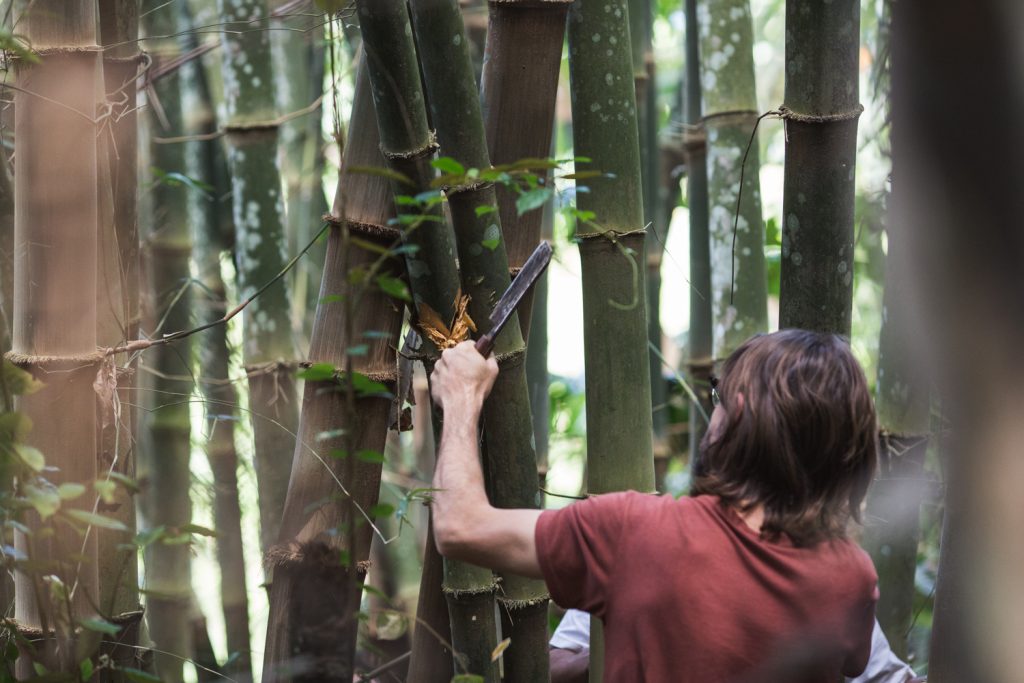
Cut a healthy bamboo branch using a handsaw. We recommend leaving at least 3 - 4 nodes length of culm in the ground to ensure a healthy clump. If you are interested in harvesting bamboo to use directly for construction (not for propagation) have a look at this step-by-step guide on how to harvest bamboo sustainable.
Cleaning
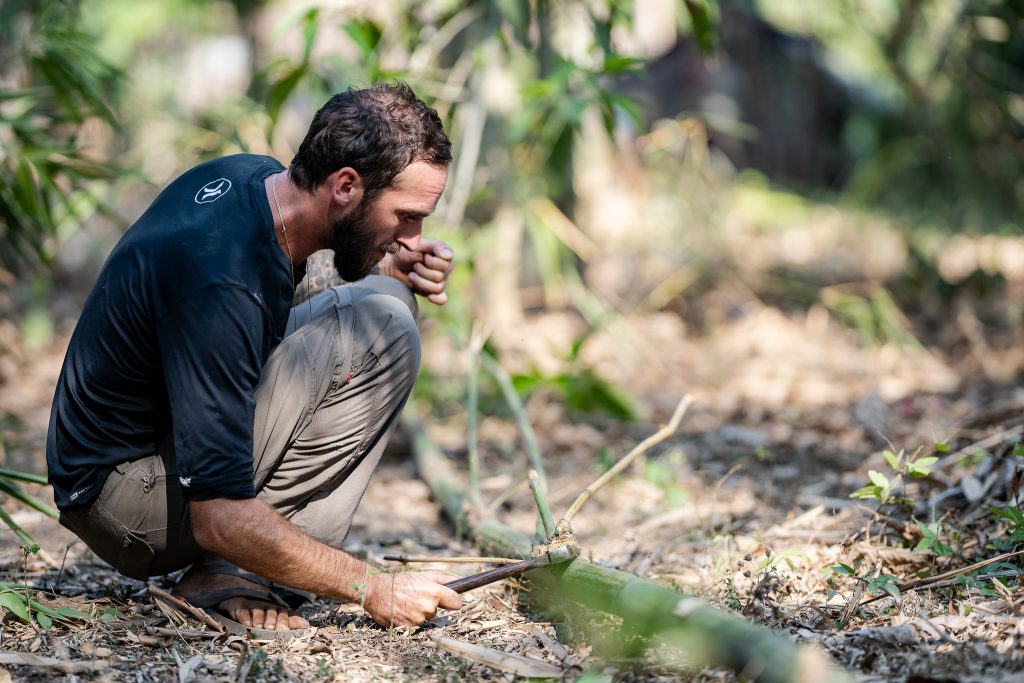
Remove any excess branches and leaves. In the illustration, we leave the main branch and remove the other three sub-branches. You use a sharp knife, handsaw, or pruner to do this. The reason to do this is to ensure all energy is going towards one main branch to grow into a healthy strong culm.



Sheltering
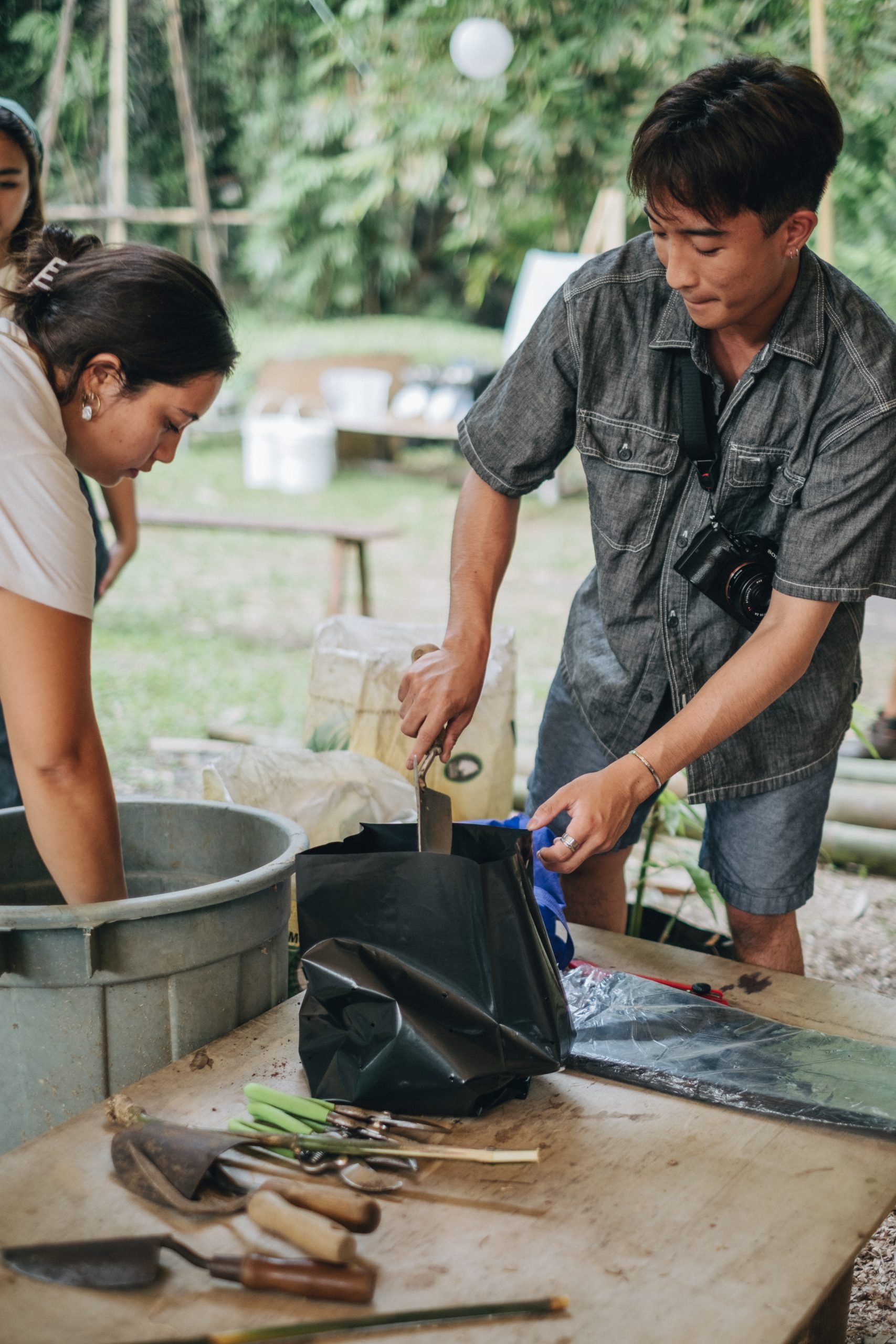
Finally, keep your polybags in partial shade under a nursery Water the soil every day. The first signs of growth and development may already appear 3-5 weeks after planting. However, you should leave the bamboo plants in the poly bags for another 6 months to a maximum of 1 year until they are fully rooted. The new bamboo plants will then be ready for transplanting in the next rainy season.

When it comes time to plant your bamboo culm, note that in subtropical and tropical climates, it is best to plant your bamboo into the ground just before the wet season. This ensures that the young seedling will receive plenty of water during its initial growth. In more temperate climates, it is recommended to plant your bamboo in early autumn as the seedling will have received plenty of natural daylight throughout the summer but will be in the firm ground before the colder months of the year.
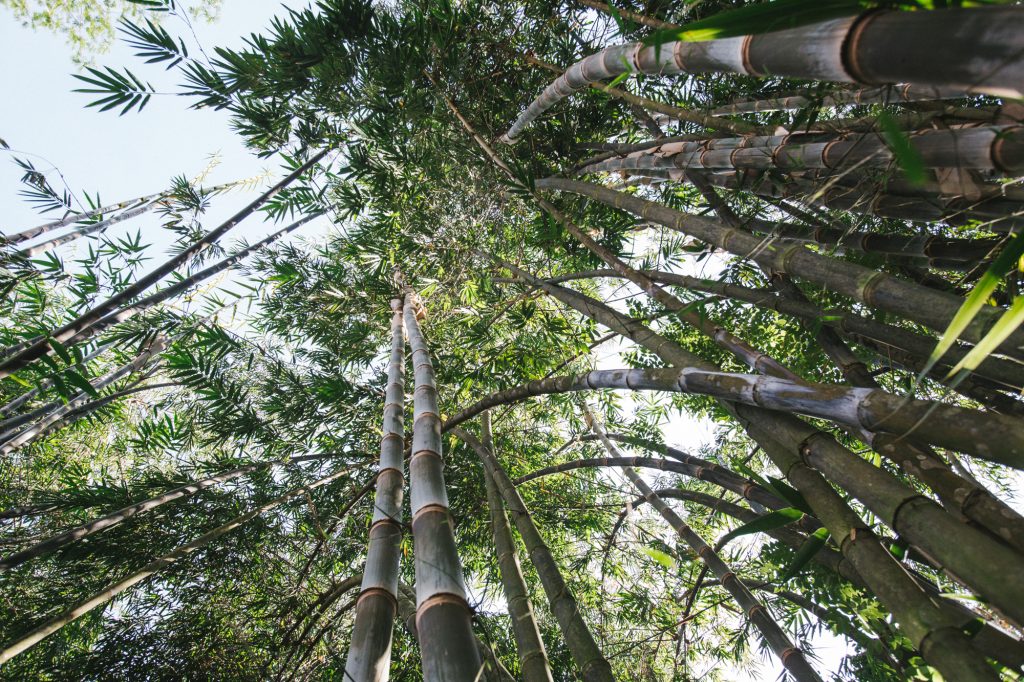
Want to learn more about how to plant and grow bamboo for construction? We teach all of this in The Fundamentals For Building With Bamboo Online Course.
How long does it take to propagate bamboo from a cutting?
The first signs of growth appear 3 to 5 weeks after planting a bamboo branch cutting. The plant should stay in its polybag for another 6 months up to 1 year until fully rooted. It is then ready for transplanting in the next rainy season.
What is the easiest way to propagate bamboo?
Bamboo can be grown from seeds, tissue culture, rhizomes, culms, or branches, but branch cuttings are the easiest, most accessible, and most economical method. Cut a healthy branch with a handsaw, remove excess sub-branches so energy goes to one main branch, and plant it in a container filled with a 1:1 mix of soil and compost. Water regularly, keep the soil moist but not soggy, and shelter the cutting in partial shade.
When should you plant bamboo in the ground?
In subtropical and tropical climates, plant bamboo just before the wet season so the young seedling gets plenty of water during initial growth. In temperate climates, plant in early autumn, after the seedling has had a summer of natural daylight but before the colder months.
Learn sustainable bamboo harvesting, online.
Self-paced online course taught by the same experts behind our Bali programs. Start today from Rp 2,650,000 (approx. US$159).
Explore the Harvesting CourseSee all online courses





The 11-Day Build & Design Course
In collaboration with IBUKU
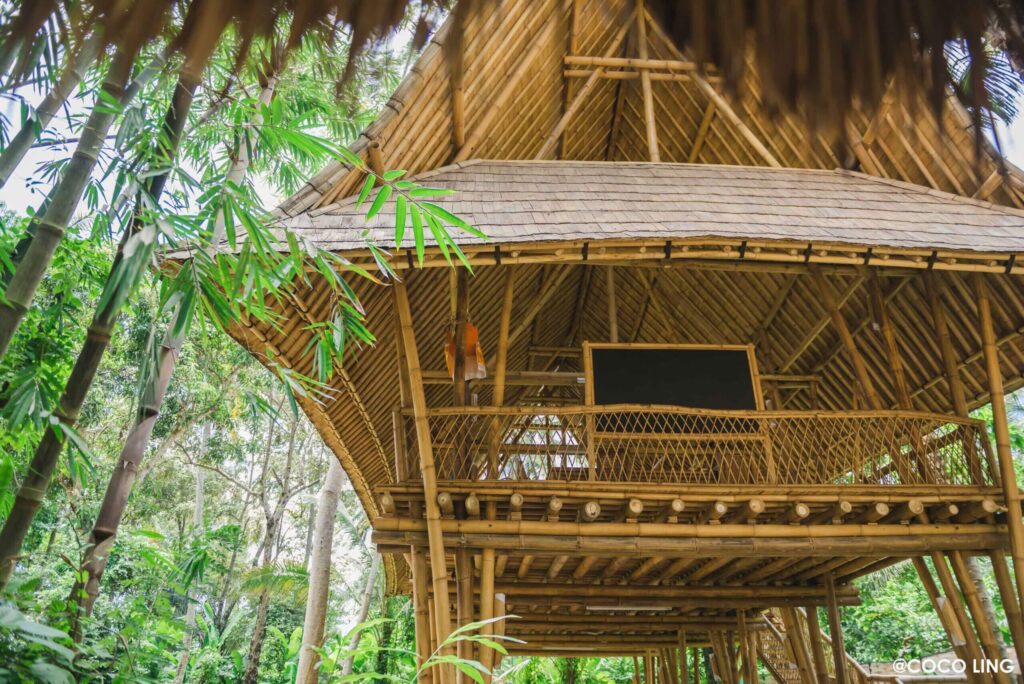
Immersed in the most beautiful and innovative bamboo environment. Meet the pioneers, the visionaries, the designers and builders who took this under-utilized material and transformed it into the most desired natural building material for bamboo structure design.
The Intro to Bamboo Engineering Online Course
Designed specially for structural engineers, this FREE online course has been created in collaboration with the Base Bahay Foundation, based in the Philippines.Join the course to learn how bamboo's innate properties make it a versatile building material, and how these properties can be maximized and applied in structural design.