Crafting a Beautiful Indian-Inspired Punkah Fan
By | August 3, 2025 | Student Work -
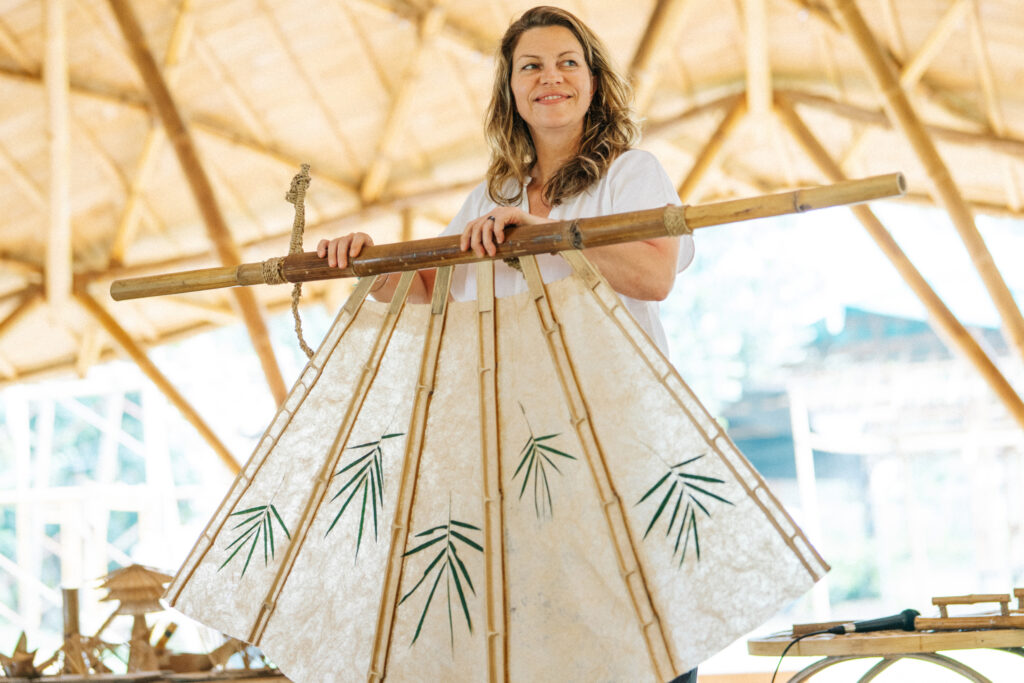
Inspired by the large Punkah Fans from India and the tropical belt, Kersten designed and made her own Punkah Fan using bamboo bone and banana paper. Read on to learn more about her inspiration and process!
Hi, I’m Kersten from Germany. I joined the Bamboo U 11-Day Build and Design workshop in June 2025. I love bamboo bone, which is created by splitting the bamboo longitudinally. During the course, I joined the design and carpentry station and I wanted to create a fan. I was inspired by the Punkah fans from the Indian Subcontinent and therefore, settled on creating a Punkah fan for the airing of bamboo buildings.
Related: Using Bamboo to Craft an Innovative Mobility Solution
Punkah fans are large fans which were used historically in Colonial India and other parts of the tropics. These large fans were often manually operated by a person pulling a rope attached to the fan’s frame, to create cool breezes in interior spaces.
The fans would traditionally be crafted using a wooden frame with a stretched fabric or even large palm leaves between. These were then hung from the ceiling to cool homes and other buildings.
Drawing on the traditional Punkah fans, I wanted to create a large-scale fan that would hang in the beautiful buildings and be able to pivot or move. Ideally, the fan would be attached up near the ceiling and would be powered by pulling a long rope or in the future, an automatic rotary “pulley.”
To craft the fan and its frame, I only used three key materials. First, I used pieces of bamboo bone made from Thyrsostachys siamensis bamboo (also known as “Bambu Jakarta” in Bahasa Indonesia). These pieces were joined to a long pole of bamboo, to craft the fan’s frame and give it structure. Next I created the fan’s leaf. I did so by infilling the segments made by the bamboo bone with banana paper. Finally, I studded the paper with small bamboo leaves for accents. Later on, I added a fourth material, bamboo rope, to be able to control the fan’s movements.
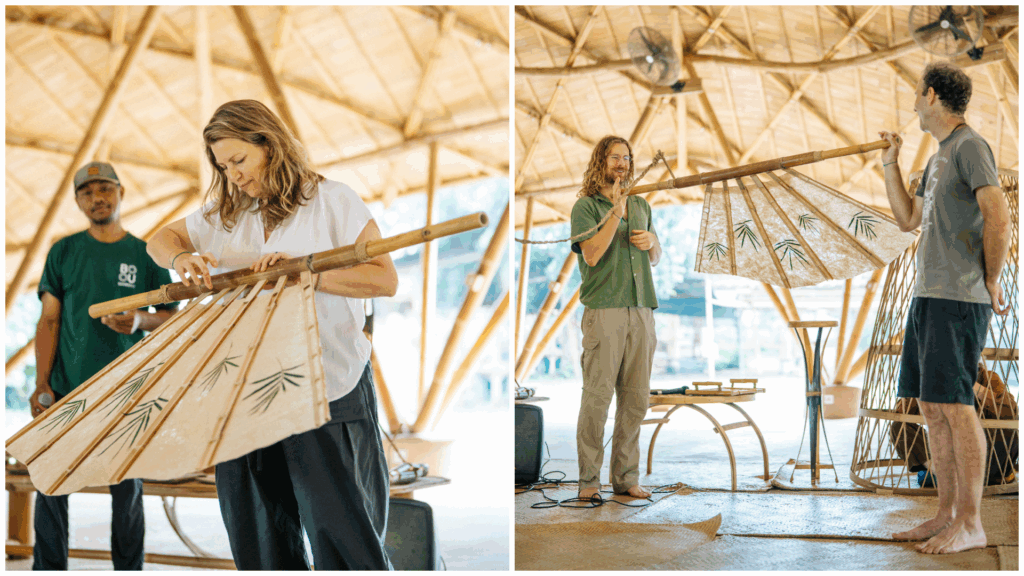
To create the Punkah fan, I first began by cutting the bamboo bone. I filled in the first space between the nodes to strengthen the structure of the fan and maintain its rigidity. Next up, it was time to sand, sand, sand to get the right thickness of the bamboo bone. Then it was time to create the fan’s leaf. I carefully cut the banana paper into shape, so as to not overlap too much.
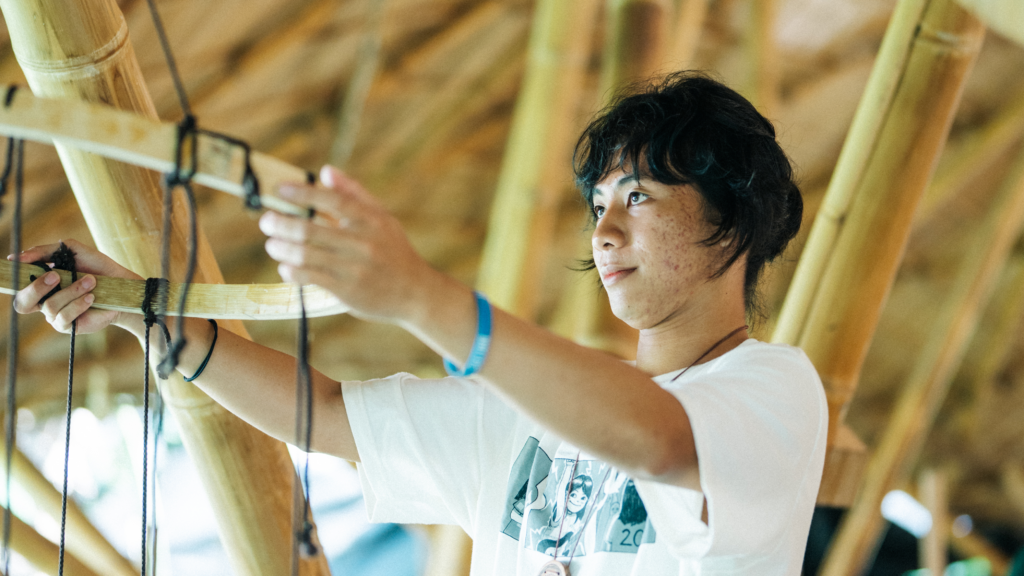
After the main structure of the fan was complete, I then had to look for the perfect pole to create the backbone of the fan. This was then adorned with the bamboo rope to create the pulley mechanism. Finally, I decorated the fan’s leaf with small bamboo leaves from the Thyrsostachys siamensis plant.
Related: Experimenting with Small-Scale Heat Bending Processes Using Black Bamboo
Overall, I really enjoyed my time at the design and carpentry station during the 11-Day Build and Design Course. It was a really great opportunity for me to test things out and work on my skills.
One of the skills I was able to improve on was using a bamboo carving knife (mutik). During the last few days of the course, I was able to take more time to understand how to position myself for leverage and angle. Finally, I learned so much from the amazing carpenters at Bamboo U, who supported me in creating the Punkah Fan and to whom I’m so grateful! Thank you!
Learn to design and build with bamboo in Bali.
Join the 11-Day Bamboo Build and Design Course: hands-on building alongside experts, architects and makers from around the world.
Explore the 11-Day CoursePrefer to start online?

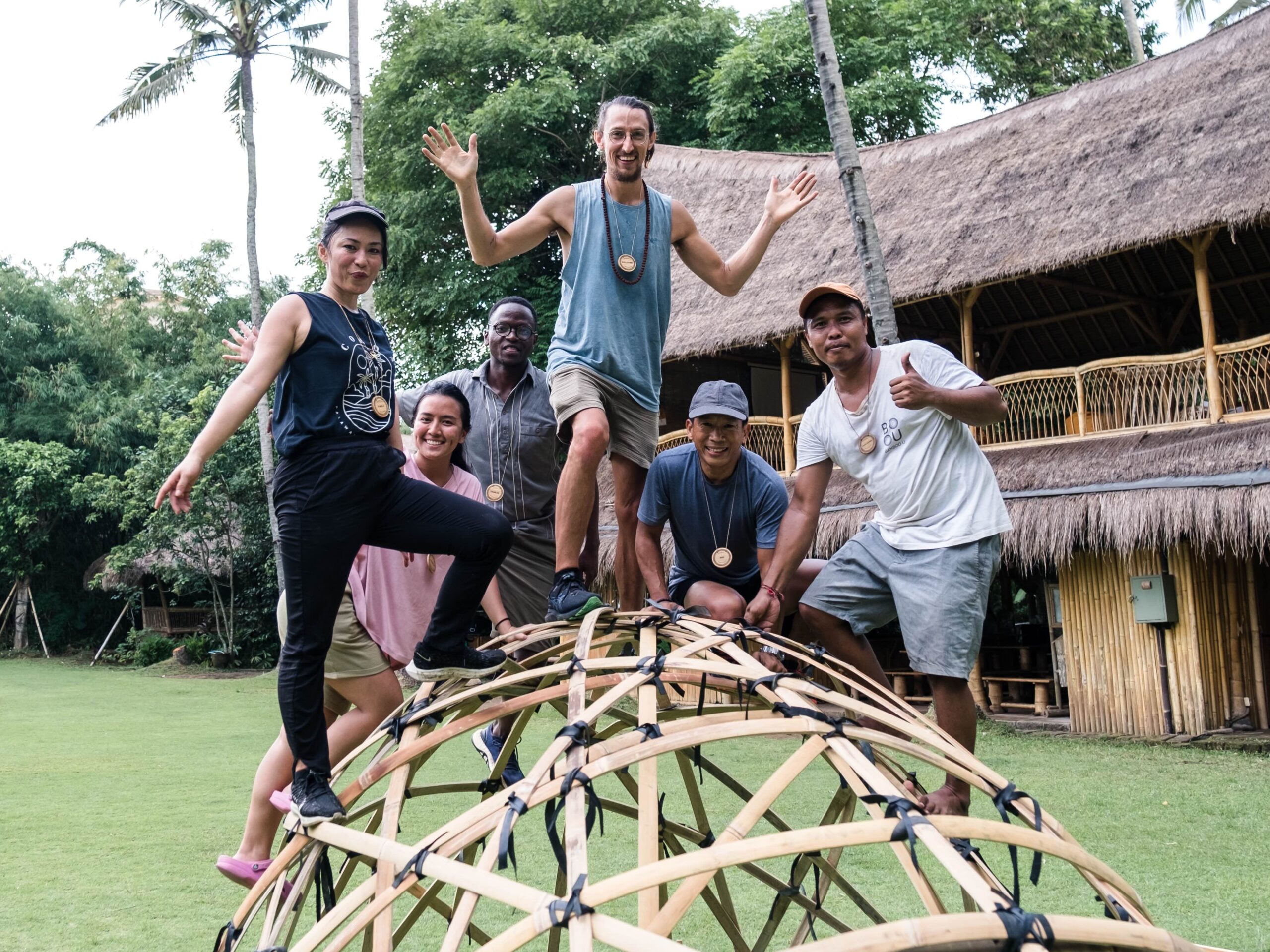
The 11-Day Build & Design Course
In collaboration with IBUKU
Immersed in the most beautiful and innovative bamboo environment. Meet the pioneers, the visionaries, the designers and builders who took this under-utilized material and transformed it into the most desired natural building material for bamboo structure design.
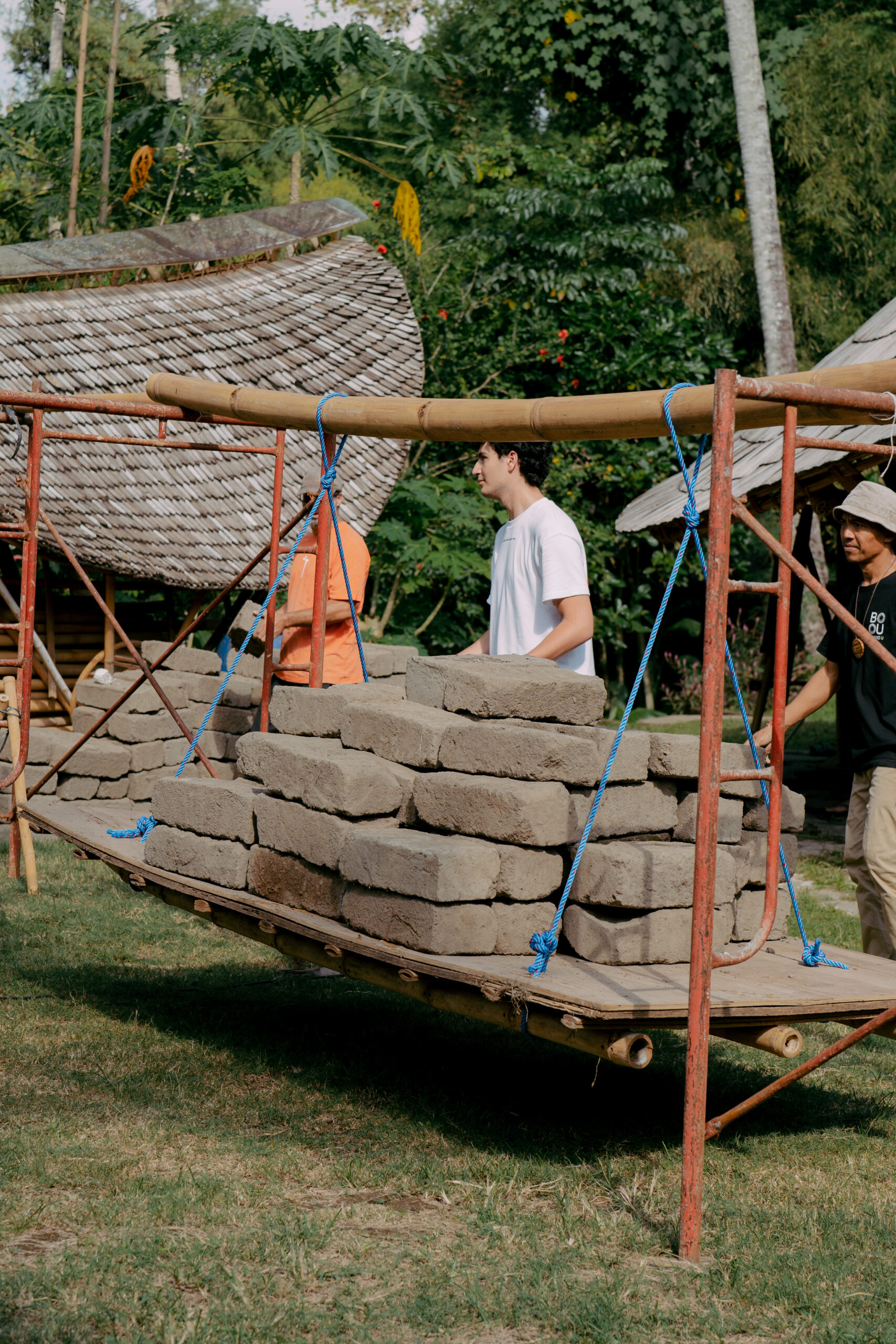
The Intro to Bamboo Engineering Online Course
Designed specially for structural engineers, this FREE online course has been created in collaboration with the Base Bahay Foundation, based in the Philippines.Join the course to learn how bamboo's innate properties make it a versatile building material, and how these properties can be maximized and applied in structural design.