Could Bamboo Be the Key to Solving the Housing Crisis?
By | February 17, 2026 | Alumni Projects and Research -
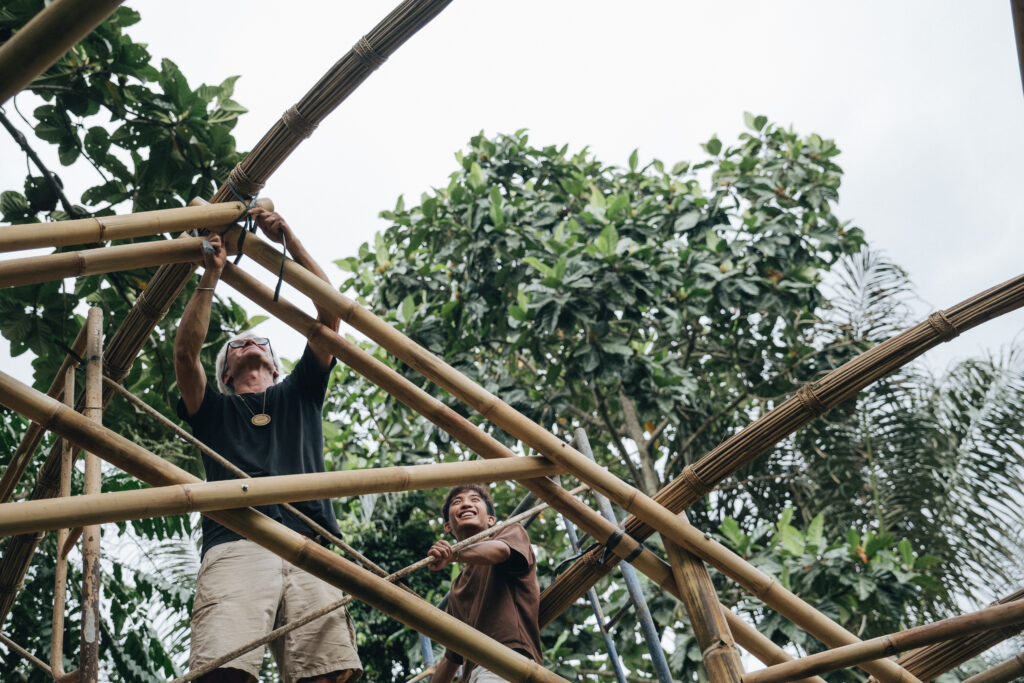
Have you ever imagined how bamboo could help achieve dignified housing standards that are cost-effective and have minimal environmental impact? This article will focus on the work of a Bamboo U alumnus, Asawitswani Chalamanda (Sai), and how he has implemented bamboo as a strategy for Malawi.
In Malawi, more than half of the homes, approximately 58.9% of the 4.8 million residential units, are classified as “sub-standard,” meaning they have mud walls and grass or thatched roofs. This type of housing is often found in rural areas and informal settlements: Simple houses with dirt floors, mud walls or a mixture of mud and wood frames, and traditional roofs. This system creates risks: Roofs leak when it rains, floors and walls are prone to dampness, and ventilation and sanitation are poor. Due to the perishable nature of the building materials, houses require frequent repairs, which creates long-term uncertainty for many families.
This raises a big question: Is there a material that is cheap, local, and sustainable enough to improve living standards without high costs? The answer is bamboo.
This material is strong, lightweight, and can be combined with simple construction techniques. In many forms of vernacular architecture around the world, bamboo, wood, and earth have long been used as basic materials that adapt to local climates and conditions. Combining traditional techniques like wattle-and-daub (a wood/bamboo frame mixed with earth) with simple innovations can produce more sustainable homes that remain cost-effective, but rooted in local knowledge. This approach also aligns with the concept of sustainable architecture. It minimizes environmental impact and maximizes local availability, while maintaining a balance between function and cost.
Related: Bamboo’s Potential in Rural and Informal Communities
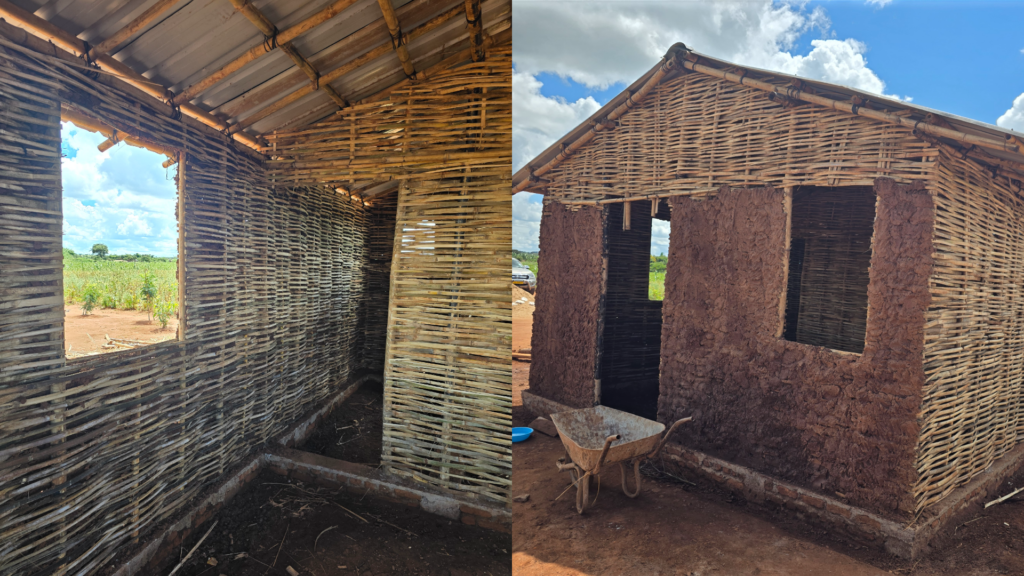
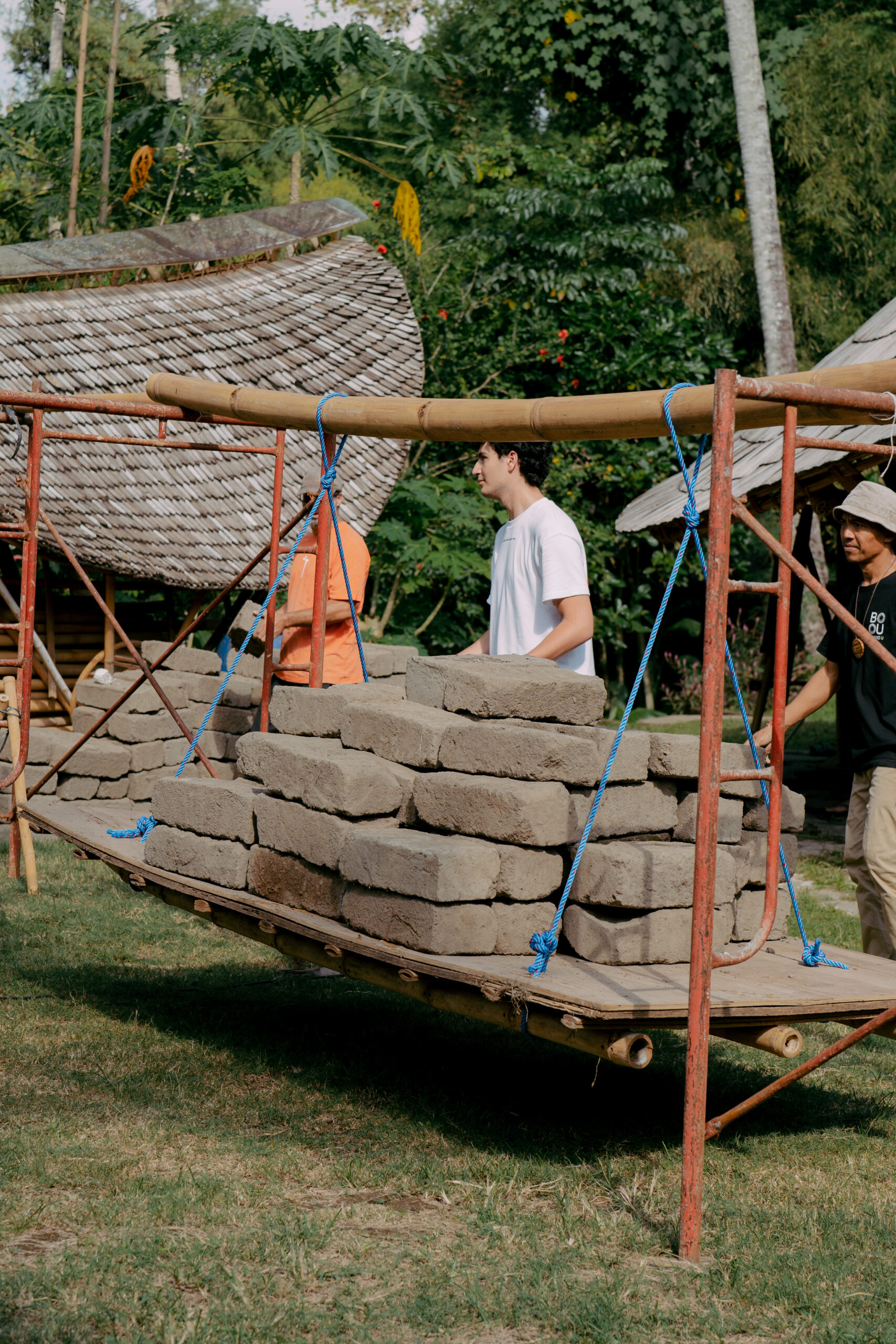
At Tsamber Farms, Asawitswani Chalamanda (Sai) and his team are developing a prototype house using:
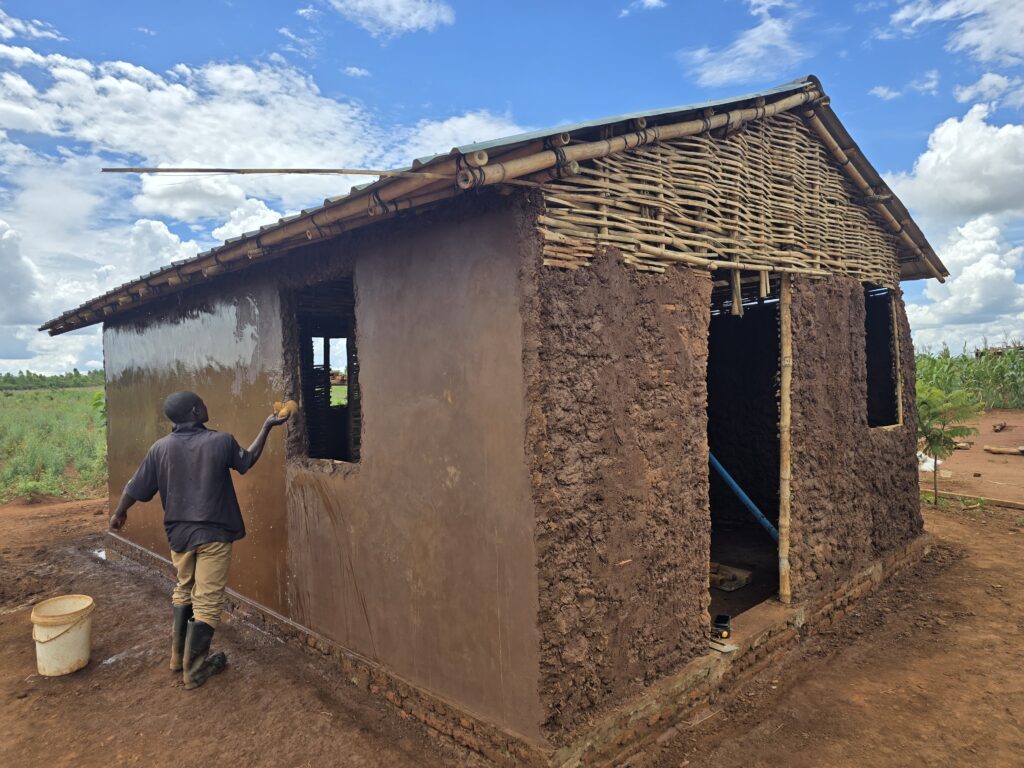
This project is in the early stages of trial and error, but is nearing completion. After the walls are installed, they will be tested for weather resistance, humidity resistance, and structural durability. The goal is not just to build a house, but to prove that a bamboo and earth house can be a decent, affordable, and sustainable residence like a regular conventional house.
Although nearing completion in the construction phase, the project undertaken by Sai and his team was no easy feat. Many challenges were encountered during the construction process, such as training local craftsmen and workers who had to be trained from scratch due to their unfamiliarity with the construction methods. The soil mixture and wattle-and-daub technique required frequent trial and error to achieve optimal wall proportions for strength and durability.
Related: It’s Time for Architects to Rediscover Natural Materials
Here are some reasons why using bamboo as an alternative could be a game-changer:
While still in its early stages and fraught with technical challenges, this project by Sai and his team demonstrates that solutions to Malawi’s housing crisis don’t always have to come from modern, expensive materials. Sometimes, a combination of bamboo, soil, local creativity, and a willingness to experiment can open up new opportunities for thousands of families in need of more affordable housing.
If successful, this prototype will be more than just one home – It could become a model for alternative housing for low-income communities across rural Africa. Hopefully, this project will inspire us to believe that adequate housing is a right for everyone and that sometimes, the answers to major challenges can be found in the simplest materials already around us.
Inspired by Sai’s work in Malawi? Be part of the solution.
The Bamboo Housing Challenge drew 89 proposals from more than 40 countries, and Jean Renaud’s winning bamboo social housing design is being built in Bali this October. Join our 11-Day Build & Design Course (October 23 to November 3) and help build it with your own hands.
Sources
Habitat for Humanity International. (n.d.). Malawi. Accessed from: https://www.habitat.org/where-we-build/malawi
Learn to design and build with bamboo in Bali.
Join the 11-Day Bamboo Build and Design Course: hands-on building alongside experts, architects and makers from around the world.
Explore the 11-Day CoursePrefer to start online?

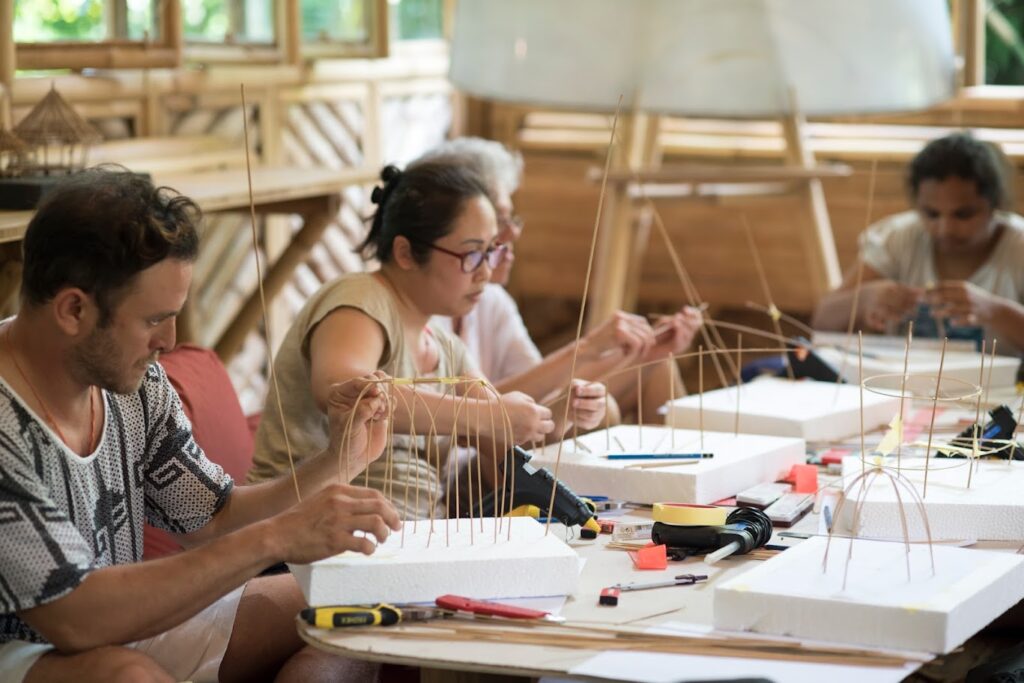
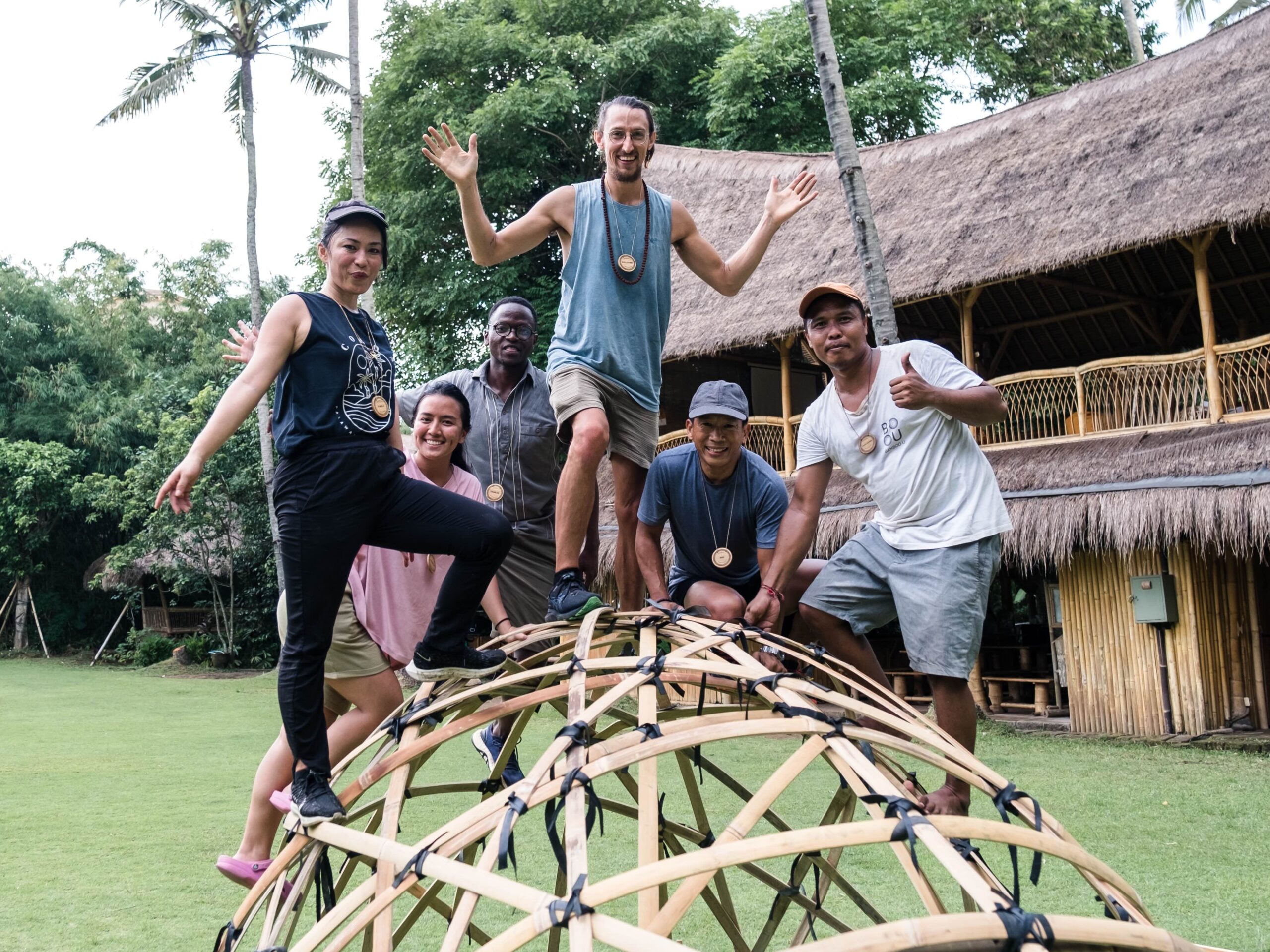
The 11-Day Build & Design Course
In collaboration with IBUKU
Immersed in the most beautiful and innovative bamboo environment. Meet the pioneers, the visionaries, the designers and builders who took this under-utilized material and transformed it into the most desired natural building material for bamboo structure design.
The Intro to Bamboo Engineering Online Course
Designed specially for structural engineers, this FREE online course has been created in collaboration with the Base Bahay Foundation, based in the Philippines.Join the course to learn how bamboo's innate properties make it a versatile building material, and how these properties can be maximized and applied in structural design.