Building Social Housing with Bamboo
By | October 8, 2026 | Alumni Projects and Research - Design -
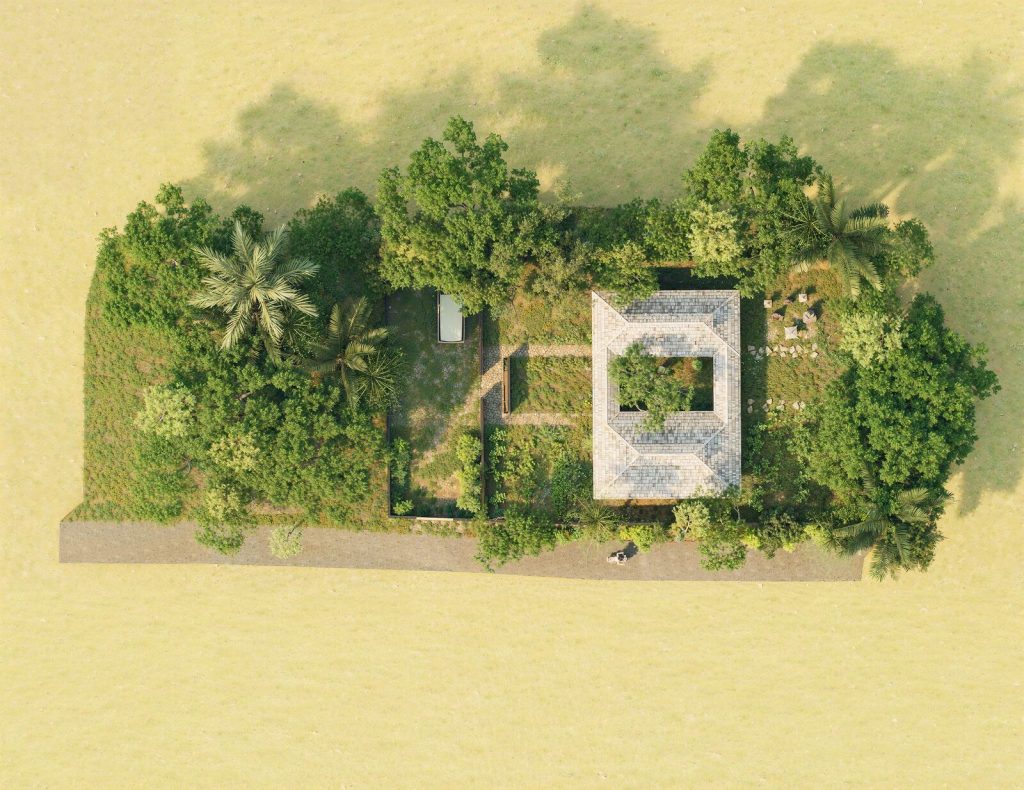
Can bamboo help solve the affordable housing crisis? The world needs around a billion new homes, and bamboo social housing is one of the most affordable and lowest-carbon ways to build them. This October, in our 11 Day course in Bali, participants will build two bamboo houses from the winning design of the Bamboo U and Base Bahay social housing competition, by architect Jean Renaud.
- The world needs around a billion new homes, according to Luis Felipe Lopez of the Base Bahay Foundation.
- Bamboo suits social housing because it is fast to build, resilient when engineered properly, low cost where it grows locally, and creates local value chains.
- Base Bahay has built almost 3,000 bamboo homes, mostly in the Philippines and Nepal, using Cement-Bamboo Frame Technology (CBFT).
- The Bamboo U and Base Bahay competition drew 89 proposals from more than 40 countries; architect Jean Renaud won with a courtyard home built on CBFT.
- Participants of the October 2026 11-Day Build and Design Course in Bali build two houses from the winning design.
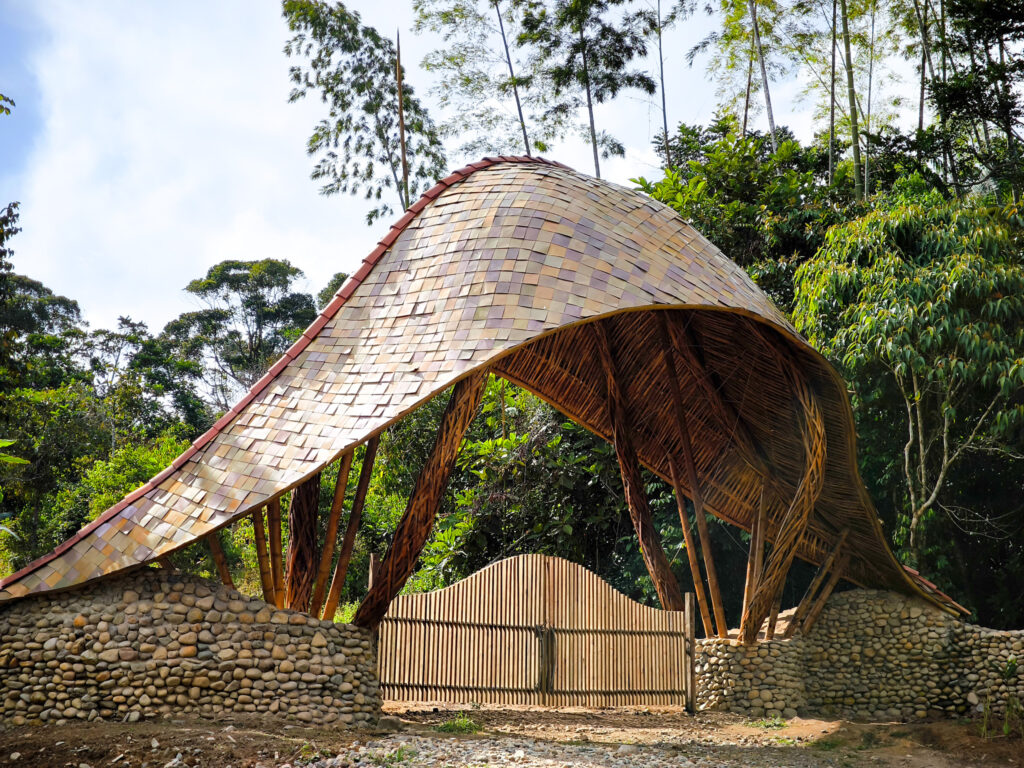
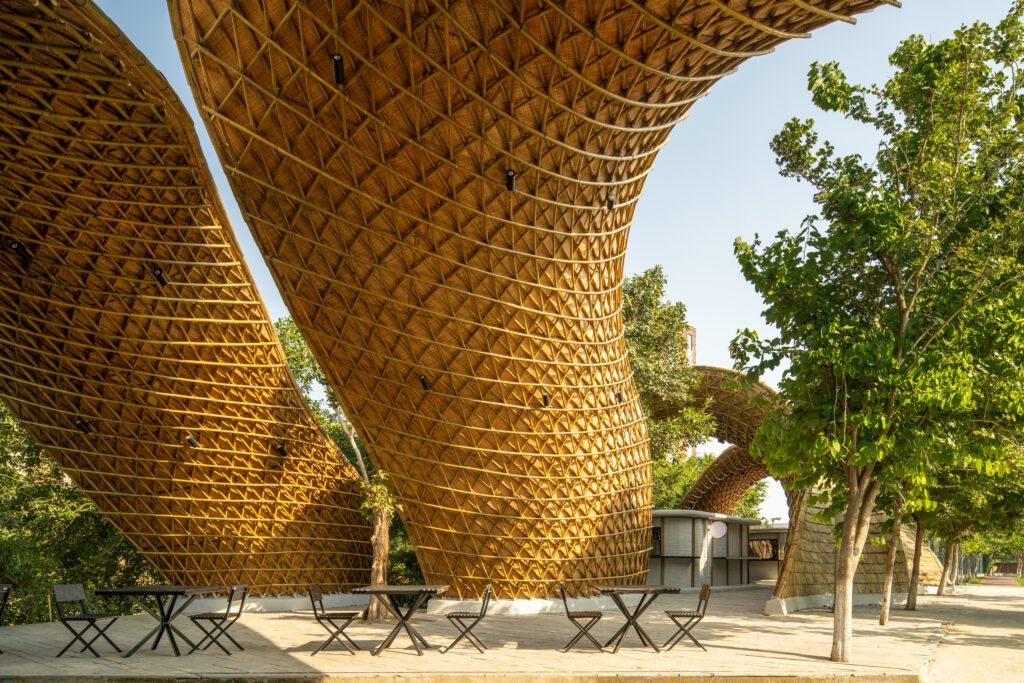
While working as an architect in the Ivory Coast, Jean Renaud noticed just how present bamboo was, yet it was only being used for things such as fencing and curing concrete slabs. Jean had seen bamboo projects online that inspired him, Simon Vélez’s pavilion at Domaine Bois Buché and the Arc by IBUKU in particular, so he knew what was possible with bamboo.
“That gap between the material’s potential and its actual use reinforced my desire to refocus my practice around it,” he says.
The Ivory Coast is not alone in this. Bamboo grows abundantly in many parts of the world. But without the knowledge to treat it and build with it, it mostly stays an underutilized resource. Jean decided to do something about this and come to Bamboo U to learn how to use bamboo for construction. One year later, we are about to build his design for social housing in our October Bamboo Build and Design Course.
The world needs around a billion new homes by 2050. The Philippines alone needs about 7 million. Indonesia needs 15 to 20 million, Latin America around 5 million, and India hundreds of millions. These numbers come from Luis Felipe Lopez of Base Bahay, a foundation in the Philippines that addresses the housing needs of vulnerable communities by developing scalable bamboo structural systems. He shared them in a conversation with Bamboo U manager Luis Echeverría (watch Luis Felipe Lopez on bamboo social housing, also embedded at the end of this article).
The need for new housing is not only in the ever-growing cities of the world. “We need solutions in the urban side, but we also need solutions in the rural side to keep people in the rural side,” Luis Felipe says.
There is also the climate aspect of what they do. “If we built everything using concrete, the world cannot bear that amount of carbon.” Buildings and construction produce around a third of global CO2 emissions each year, according to the UN Environment Programme, so building with bamboo could address both of these problems at once.
Related: Could Bamboo Be the Key to Solving the Housing Crisis?
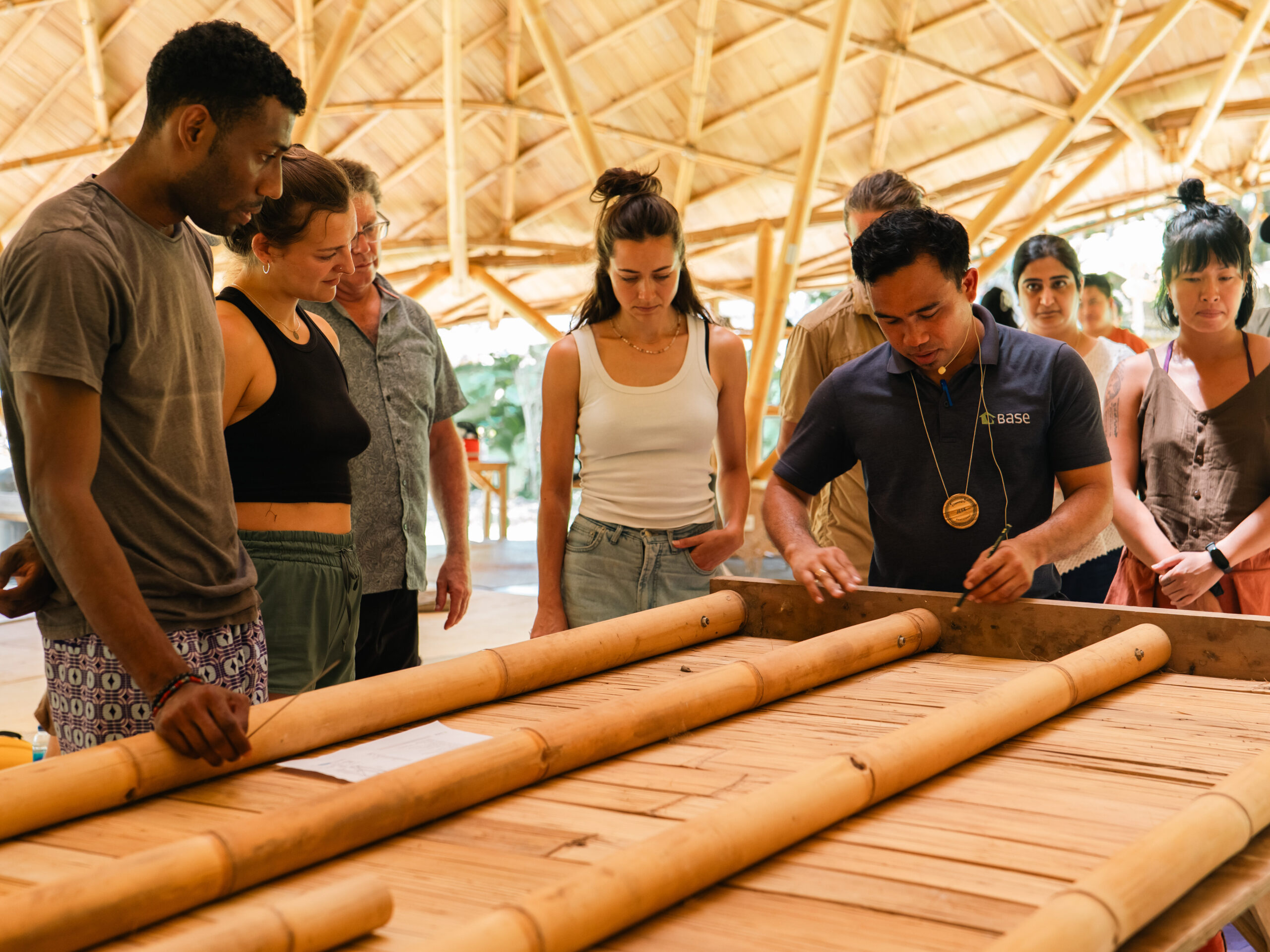
The places in the world that most need better-quality and more housing are often the places where bamboo is already growing. “Given today’s climate challenges and social housing needs, particularly in tropical and subtropical regions, where housing is often most precarious, bamboo stands out as a particularly relevant material,” Jean Renaud says.
Jean gives four reasons:
- Speed of Construction: Bamboo structures can be assembled easily and quickly.
- Resilience: When engineered properly, they can withstand earthquakes better than many conventional structures.
- Competitive Cost: In regions where bamboo grows locally, its cost is highly competitive compared to imported materials.
- Local Value Creation: Bamboo can become a genuine economic driver for residents, generating a real local value chain, from cultivation to construction.
Base Bahay has spent twelve years proving this to be true, having built almost 3,000 homes from bamboo, mostly in the Philippines and Nepal. In order to make bamboo scalable, they developed a way to use it in the same way that timber is used for framing houses. They call this system Cement-Bamboo Frame Technology (CBFT). If you want the engineering behind systems like this, Base Bahay co-created our free Intro to Bamboo Engineering online course.
However, bamboo still carries a stigma in the tropics, Luis Felipe says. “We need to start to change the mindset, and we cannot do it alone.” Many people want a concrete home because it feels more modern. That is one reason Base Bahay uses cement in its CBFT walls: it helps the primarily bamboo houses feel familiar and makes people more willing to live in them. It is a useful lesson. If we hold out to be perfectly sustainable, we can end up building nothing at all. A home that is mostly bamboo and actually gets lived in reduces more carbon than a perfect one that never gets built.
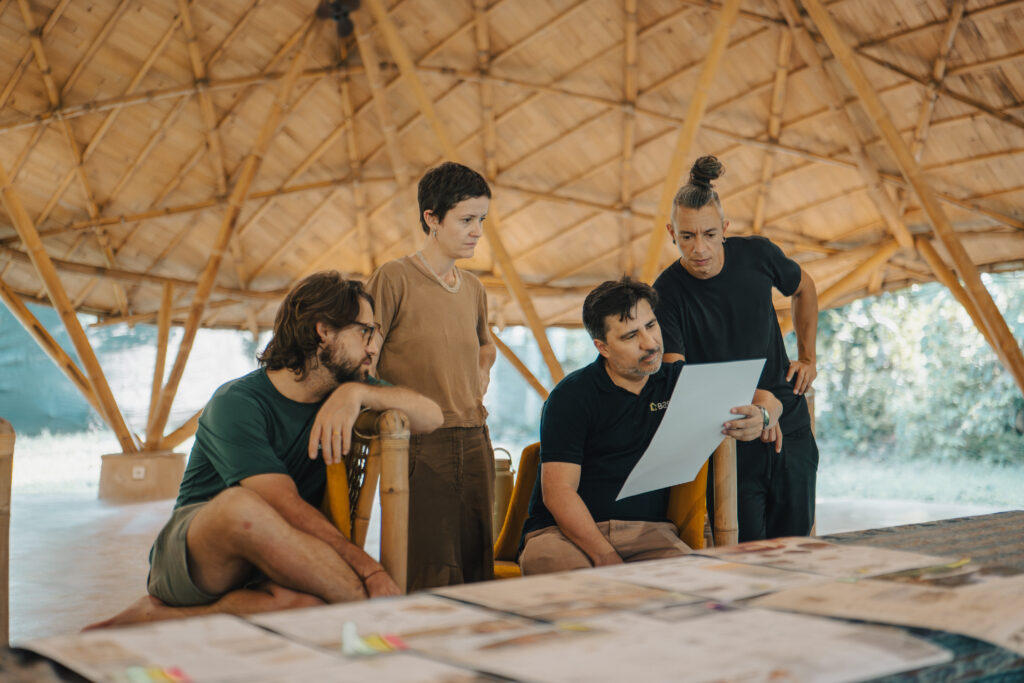
When Luis Felipe first taught at Bamboo U in 2016, social housing and Bamboo U’s focus felt like two separate worlds. However, over the years students kept asking about it, and we have kept collaborating with Base Bahay. Then two years ago we had an idea: to put out a call to people around the world to design an affordable bamboo home that was also nice to live in. Could we come up with a design that was not just a shelter, but also a beautiful space that gives the people who live there a better quality of life?
The Bamboo U and Base Bahay competition launched early this year. It drew 89 proposals from more than 40 countries. “The world is asking for solutions like that,” Luis Felipe says.
The jury looked at it from different sides. IBUKU and the Bamboo U team looked for beauty, while Base Bahay looked for a design that was practical and scalable. That is why this collaboration works so well. The winning design, Jean’s, found what Luis Felipe calls “that perfect equilibrium between beauty and pragmatism.”
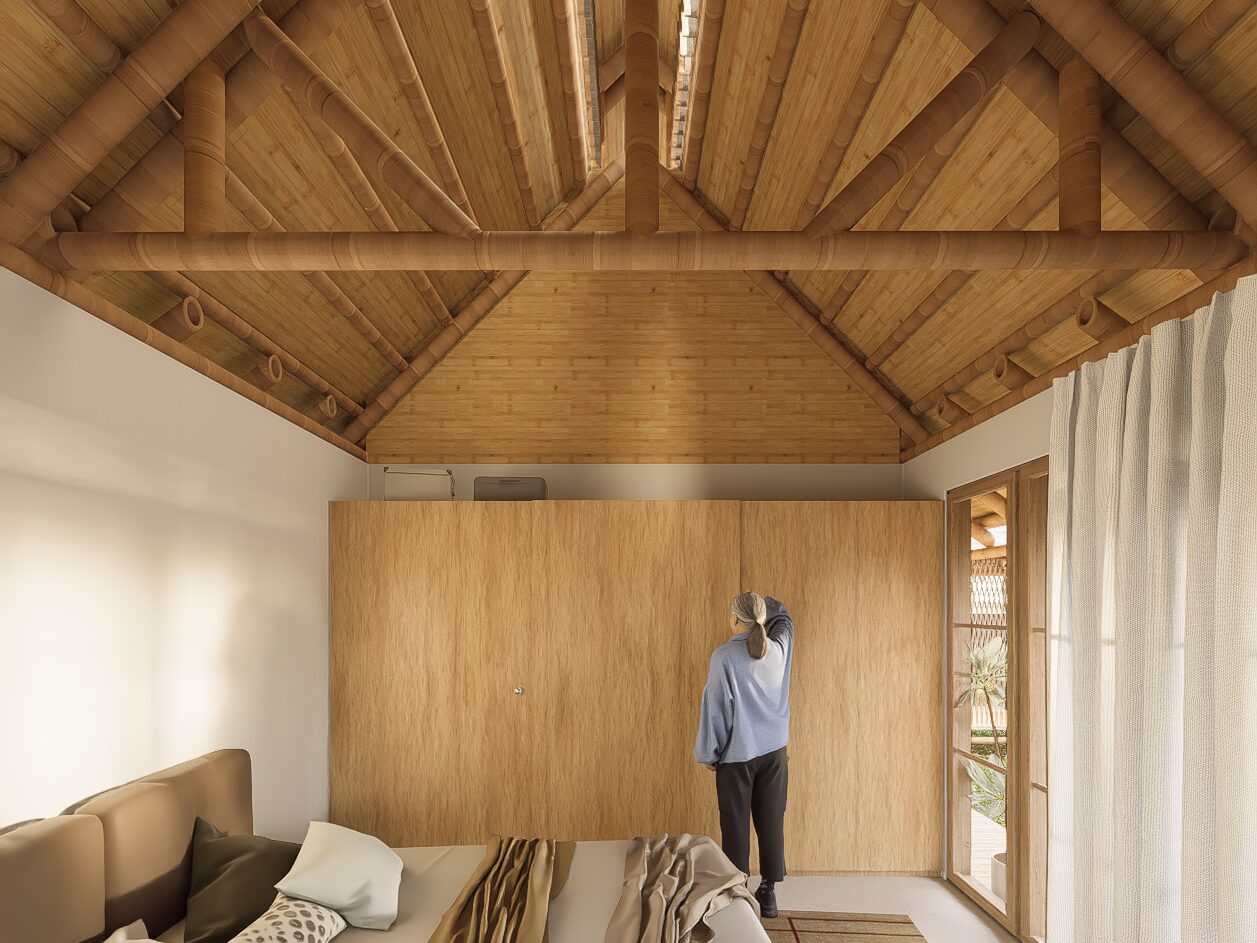
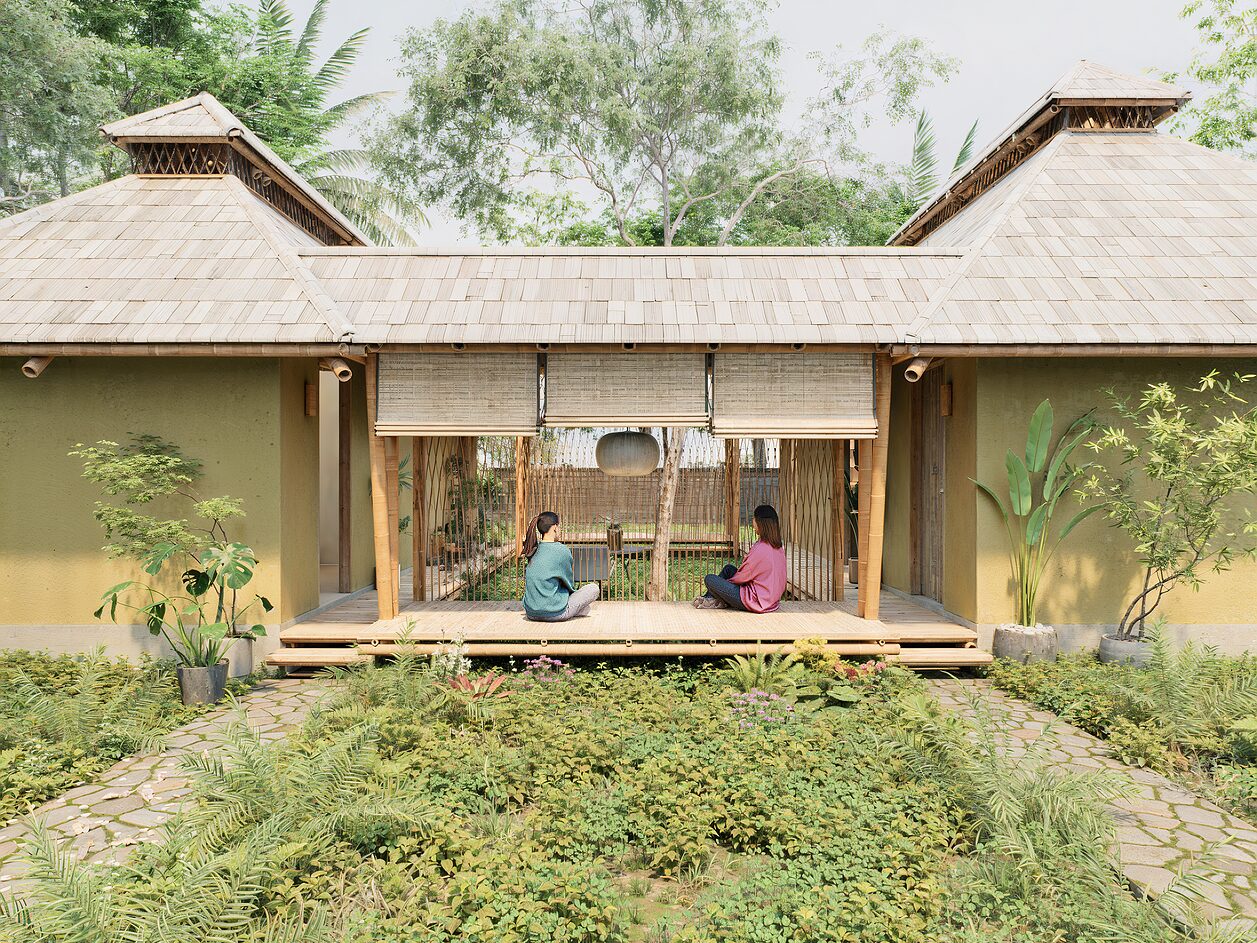
Jean spent nearly ten years working in architecture practices before natural materials pulled him in, and he got bitten by the “bamboo bug,” as we like to say here. In 2026 he launched his own studio, De Nouveau, to design spaces with geo and bio-sourced materials, “in service of a distinct aesthetic, everyday comfort, and a sustainable, regenerative approach.”
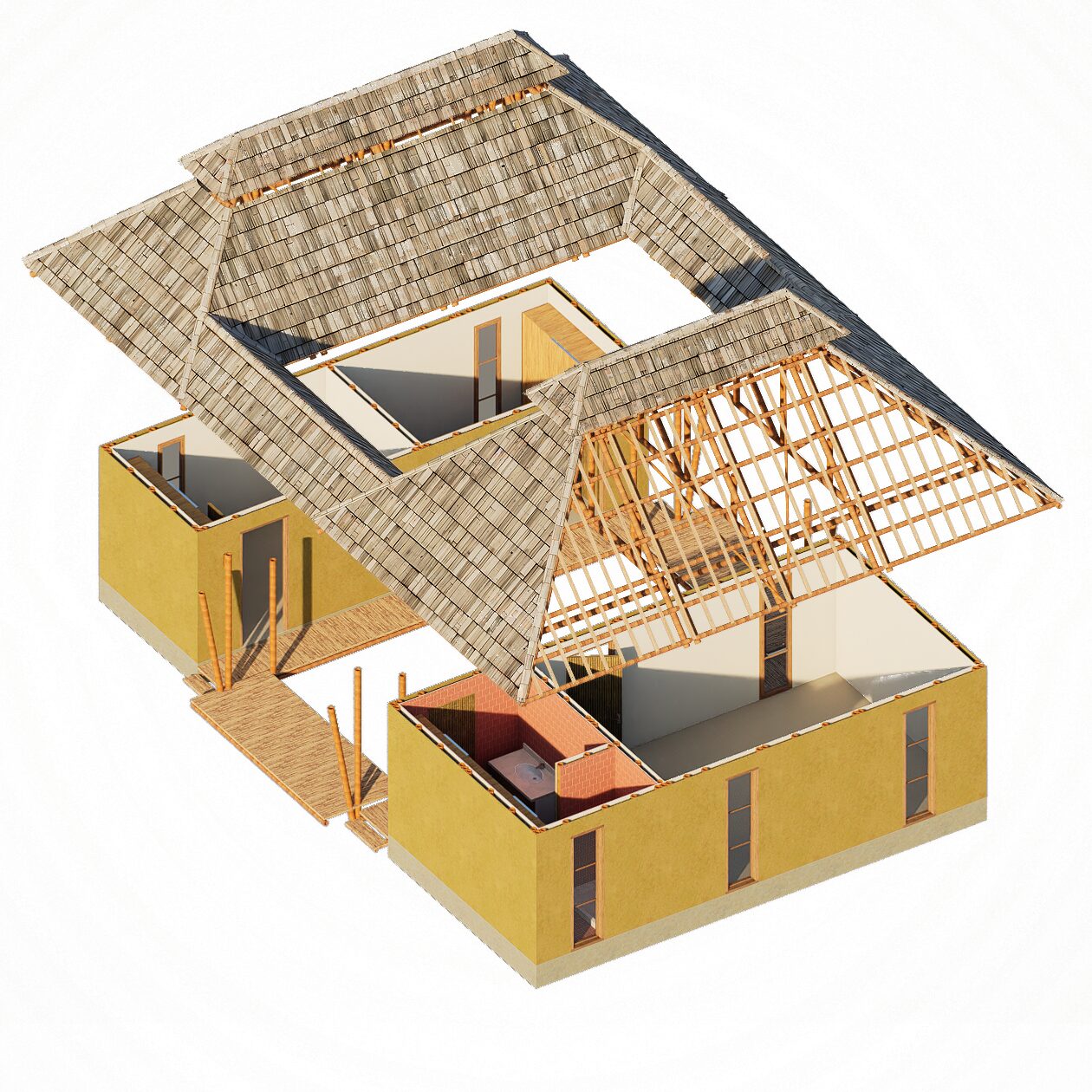
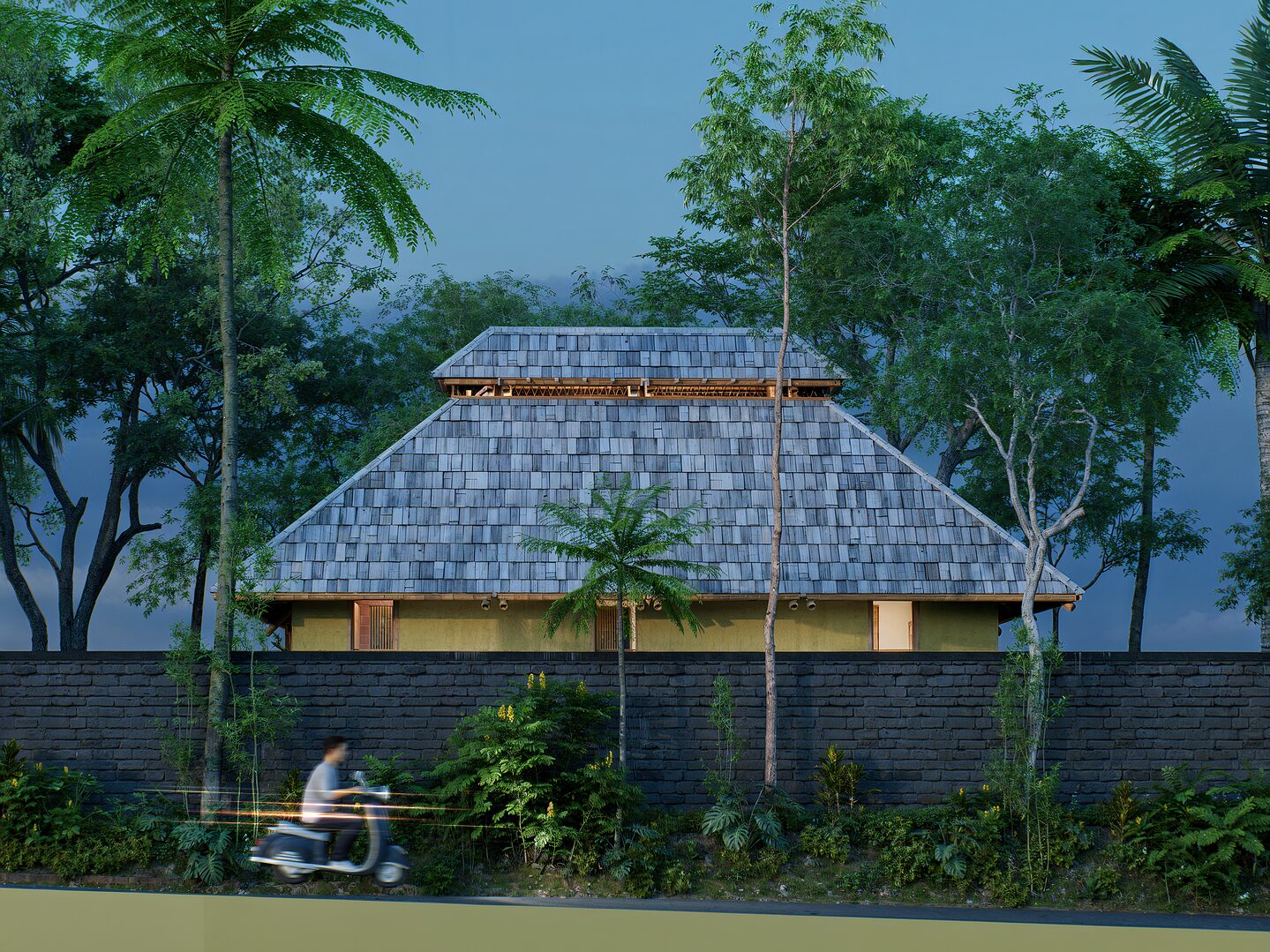
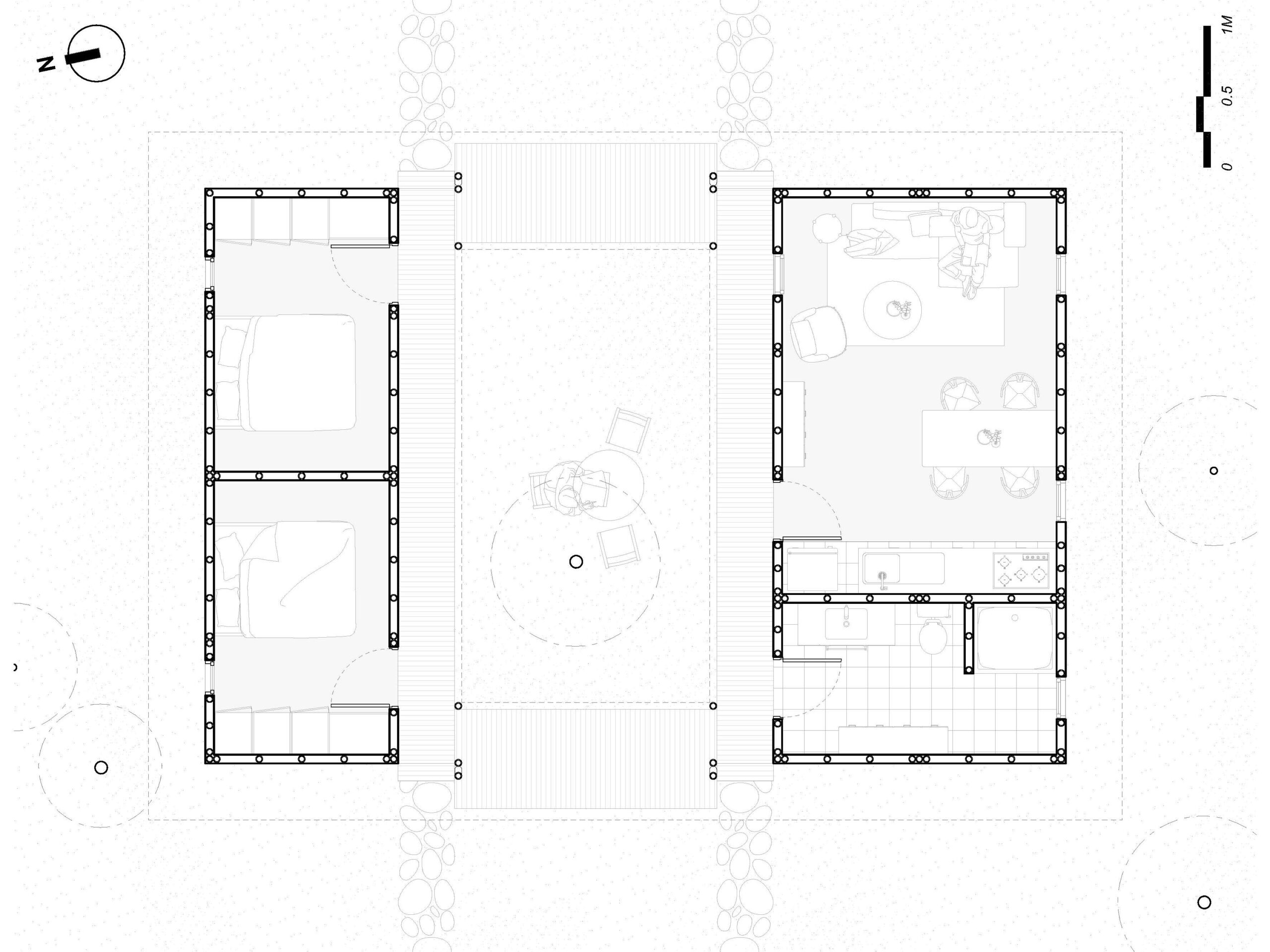
His proposal for the Bamboo U and Base Bahay competition is a housing module built around Base Bahay CBFT technology. Wall panels and roof framing are prefabricated, so the home is cheap, easy to build on site and stands up to harsh weather.
The spaces are arranged around an open courtyard, the way traditional Balinese houses are designed, with Jean wanting his design to “build on rather than erase” that heritage. Thoughtful details and spaces made for gathering and spending time together make this a wonderful adaptation of CBFT.
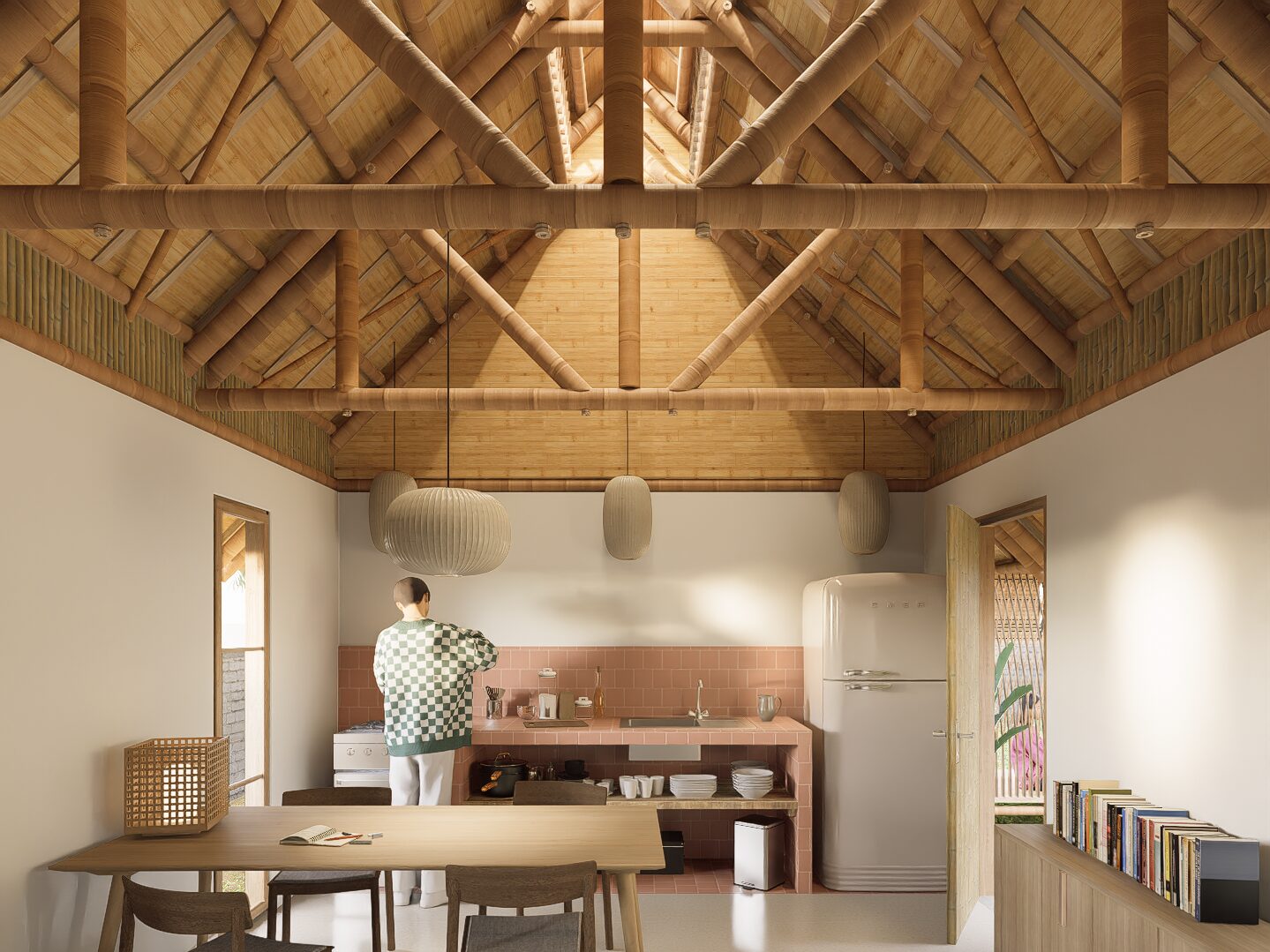
Last year Jean was a student at Bamboo U, finding it “a genuine source of inspiration, set in a timeless environment where every experiment seems possible.” Now, this October, Jean will be back to build a project of his own, with Luis Felipe leading the build.
Related: Building Beautiful Bamboo and Stone Homes in Peru

If you care about building sustainable, affordable housing, join us in Bali this October and help build Jean’s design with your own hands. Can’t make it this time? Get in touch, and we’ll let you know when we next team up with Base Bahay.
Ready to build Jean’s social-housing design by hand?
Join our 11 Day Build & Design Course, running this October 23 to November 3 in Bali, our last course of the year.
Can bamboo houses be used for affordable social housing?
Yes. The places that most need more and better housing are often where bamboo already grows. Architect Jean Renaud gives four reasons bamboo suits social housing: it is fast to assemble, it can withstand earthquakes better than many conventional structures when engineered properly, it is highly cost competitive where it grows locally, and it creates a local value chain from cultivation to construction.
What is Cement-Bamboo Frame Technology (CBFT)?
CBFT is a building system developed by the Base Bahay Foundation that uses bamboo the same way timber is used for framing houses, which makes bamboo housing scalable. The walls are finished with cement, which helps the mostly bamboo homes feel familiar and modern, so people are more willing to live in them.
How many bamboo homes has Base Bahay built?
Base Bahay has spent twelve years building with bamboo and has built almost 3,000 homes, mostly in the Philippines and Nepal.
Who won the Bamboo U and Base Bahay social housing competition?
Architect Jean Renaud, founder of the studio De Nouveau and a Bamboo U alumnus, won from 89 proposals submitted from more than 40 countries. His design is a prefabricated CBFT housing module arranged around an open courtyard, inspired by traditional Balinese houses. The jury included IBUKU, Bamboo U and Base Bahay.
Where is the winning bamboo social housing design being built?
Two houses from Jean Renaud's design are being built at Bamboo U in Bali during the 11-Day Build and Design Course from October 23 to November 3, 2026, with Luis Felipe Lopez of Base Bahay leading the build.
Learn to design and build with bamboo in Bali.
Join the 11-Day Bamboo Build and Design Course: hands-on building alongside experts, architects and makers from around the world.
Explore the 11-Day CoursePrefer to start online?



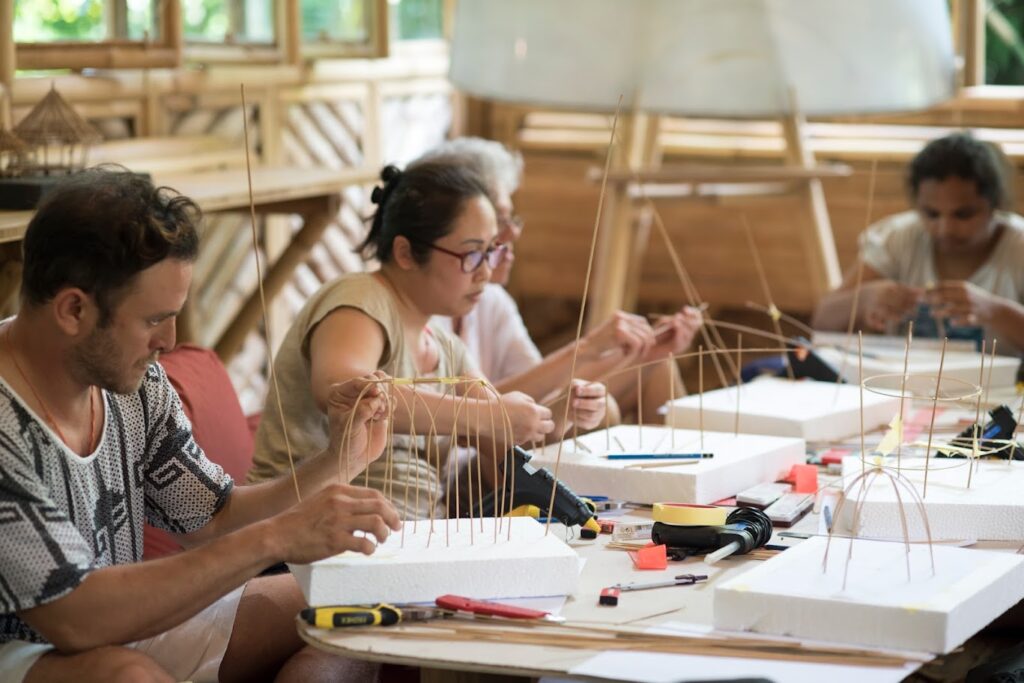

The 11-Day Build & Design Course
In collaboration with IBUKU
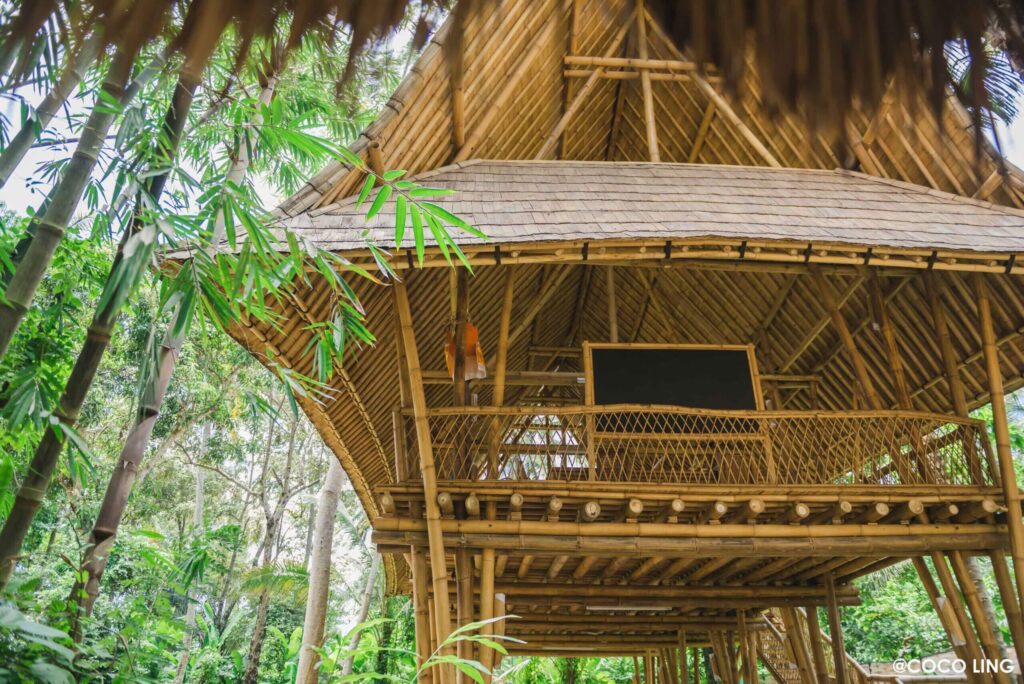
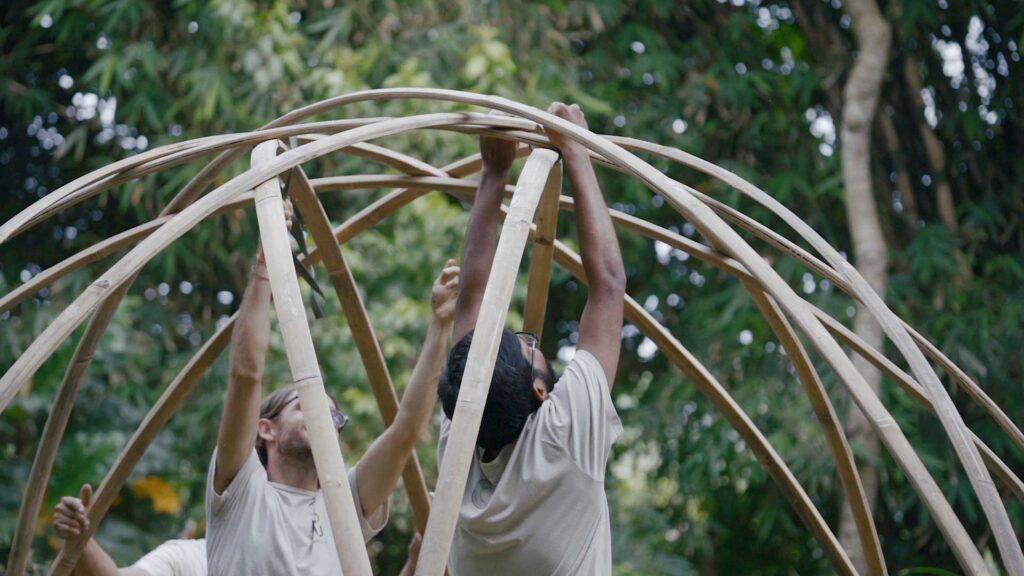
Immersed in the most beautiful and innovative bamboo environment. Meet the pioneers, the visionaries, the designers and builders who took this under-utilized material and transformed it into the most desired natural building material for bamboo structure design.
The Intro to Bamboo Engineering Online Course
Designed specially for structural engineers, this FREE online course has been created in collaboration with the Base Bahay Foundation, based in the Philippines.Join the course to learn how bamboo's innate properties make it a versatile building material, and how these properties can be maximized and applied in structural design.