Building a Community-Centered Pavilion in Bamboo with Augmented Reality (AR) Technology
By | November 17, 2025 | Bamboo U Built Projects - Design -
In contrast to orthographic drawings used in traditional architecture, physical models have primarily served as the main design tool and blueprint for bamboo construction. However, in recent years, digital tools are becoming increasingly woven into the bamboo design process.
Through the use of digital modeling softwares such as Rhinoceros 3D and Grasshopper, as well as Augmented Reality (AR) technology, the realm of bamboo design is expanding.
As part of a one-week workshop held in August 2025, Bamboo U hosted students from the University of Hong Kong (HKU) and their professors, Dr. Kristof Crolla and Dr. Garvin Goepel, as part of a summer elective program focused on integrating digital technologies into local craftsmanship.
For this project, we crafted what would otherwise be a traditional Balinese Bale Pavilion, with a modern twist. Through the technical expertise of Dr. Garvin and Dr. Kristof, combined with the craftsmanship support of the bamboo carpenters from the Bamboo U team, this structure was brought to life within the span of a week.
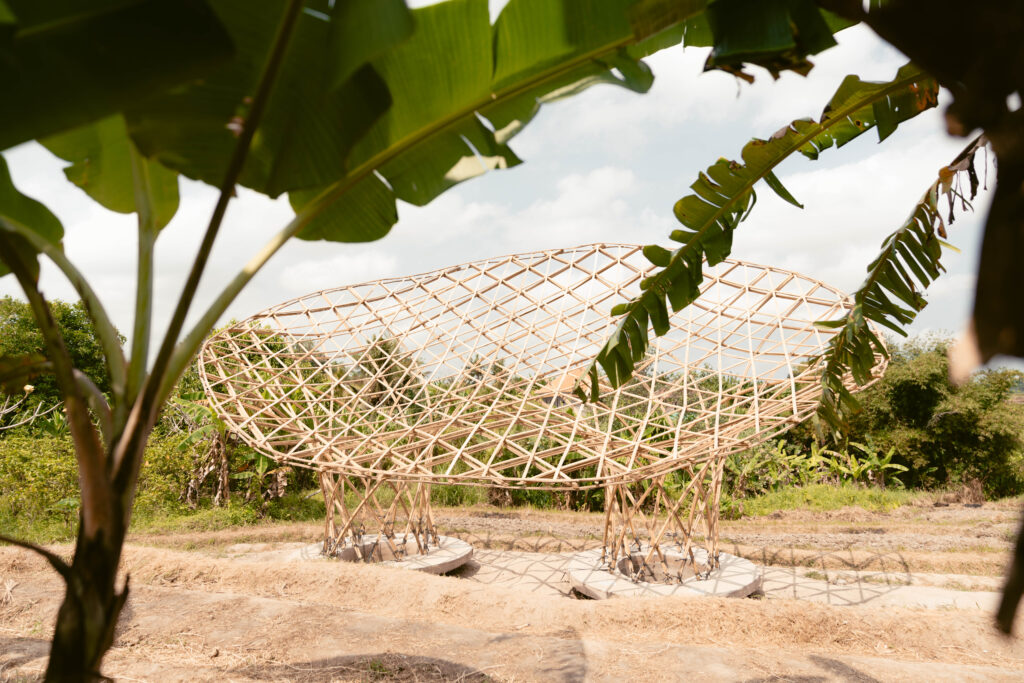
The concept of the parasol pavilion is inspired by the architectural typology of a Balinese Bale Banjar. A Bale Banjar is a traditional community gathering space for events and religious ceremonies. At least one of these spaces can be found in every village across Bali.
The spatial inspiration of the pavilion stems specifically from the Bale Timbang typology, consisting of two columns that hold up a roof. This typology is found within the rice fields as a shelter from the elements, space to congregate, and place to store tools and weigh freshly-harvested rice.
This particular Bale, is located along the Subak rice terraces of the Sibang Kaja village. The term “Subak” refers to a water management and irrigation system spanning almost 20,000 hectares, which was developed in the 9th Century. This system features the use of sustainable farming practices, with water supplies democratically managed by the local water temples of each area. Due to its deep cultural and geographic significance to the island, the Subak system is now listed as a UNESCO world heritage site.
Besides rice, the farmers in this area also grow colorful balsam flowers used in Balinese religious offerings called Canang Sari, as well as crops such as banana trees. All these contribute to the lush landscape in which the parasol sits. Overall, the Bale will serve as a space of relaxation and congregation for a community of over 150 farmers across 4 hectares of rice fields.
Related: Buildings that Wouldn’t Exist Without Digital Tools – Part 1
The design process was heavily centered on the development of digital models through the use of Rhinoceros 3D (also known as Rhino) and Grasshopper. Rhino is one of the most versatile tools for 3D modeling, meanwhile the Grasshopper plugin within Rhino allows for parametric modelling of different forms.
Parametric design entails using a series of commands or “parameters”, to manipulate your design. These instructions or “scripts” allow you to achieve complex geometries with ease. Instead of modeling each component in your digital model individually, you can adjust a few parameters within your Grasshopper script to update your entire model. This is particularly useful when you’re working with bamboo. This is because you will often have to make adjustments to your overall design based on the innate properties of the bamboo you are working with and how the material and overall form respond to site conditions.
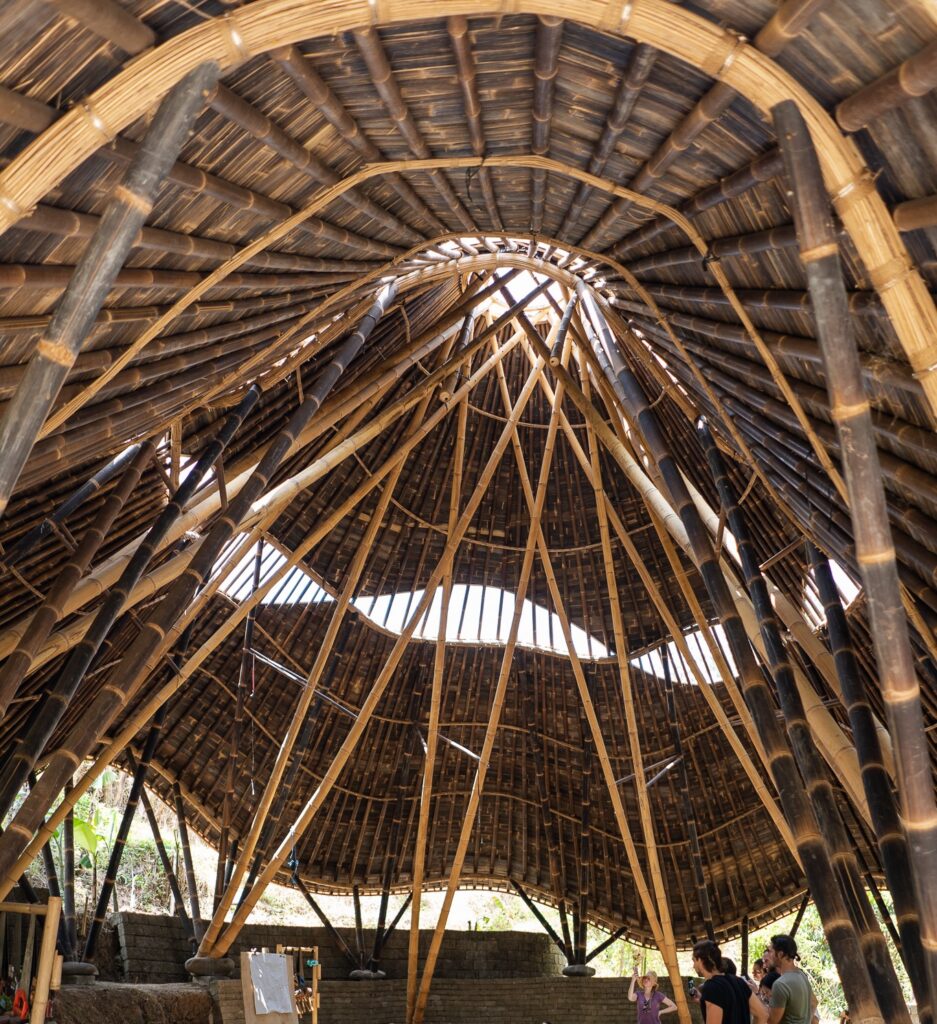
Within Grasshopper, we also utilized plugins to form-find and test the inherent stability of structure through real-time physics simulations. The Bale’s gridshell consists of a grid made of quadrilaterals, which stretches down to form two tubular “legs”. At the points where the grid starts to change and move down, the grid warps to create a few pentagonal shapes. This allows for the creation of the smooth curvature in 3-dimensions before returning to its diamond-shaped pattern below.
The legs of the structure are reinforced by their tubular geometry and gridshell. Meanwhile the roof is suspended in tension. Only the perimeter of the roof is attached to the base of the parasol, leaving it suspended in the center, which creates a kind of floating effect. By using these digital tools, we were able to design and build an extremely lightweight structure, without compromising the project’s aesthetic qualities and overall strength.
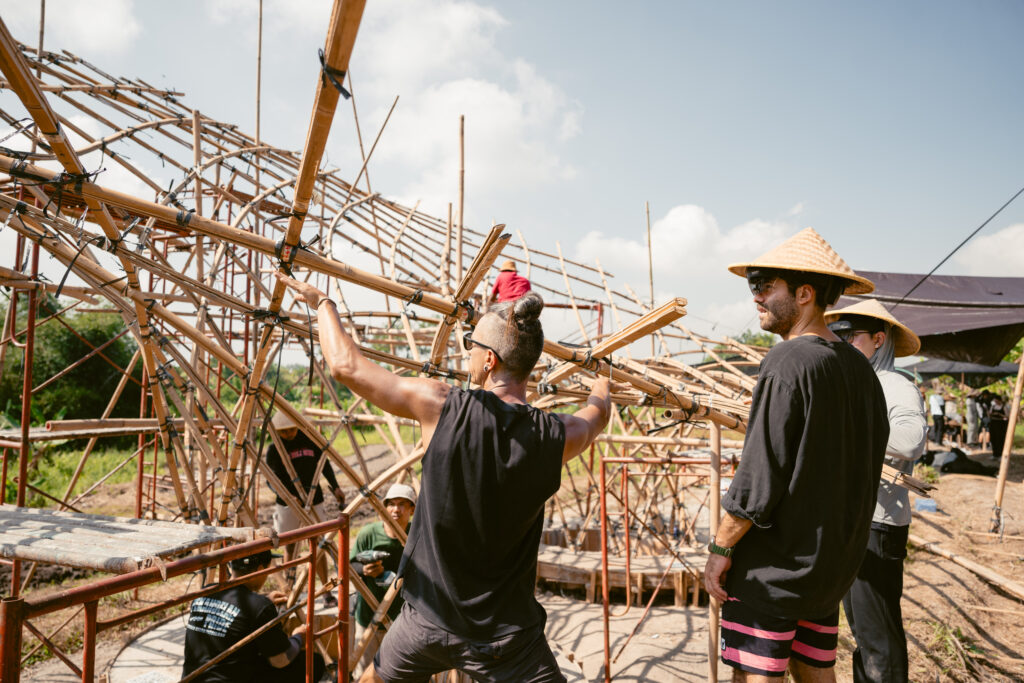
Once the overall form was finalized, it was time to integrate Augmented Reality into our process. AR works by overlaying digital information such as images or objects into the physical environment. To do this, Augmented Reality often employs the use of tools such as HoloLenses or even specially-made apps on smartphone devices. During previous builds that used AR, we used the technology to project holograms of our digital model onto building sites, to provide precise instructions that guided the construction process of the structure.
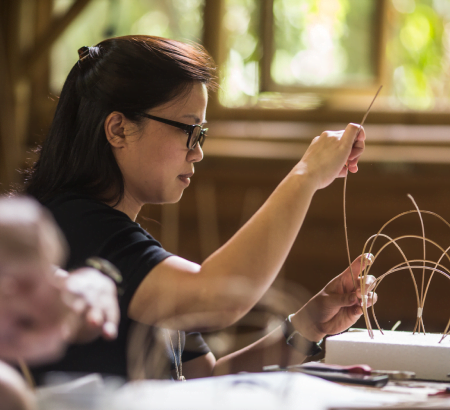
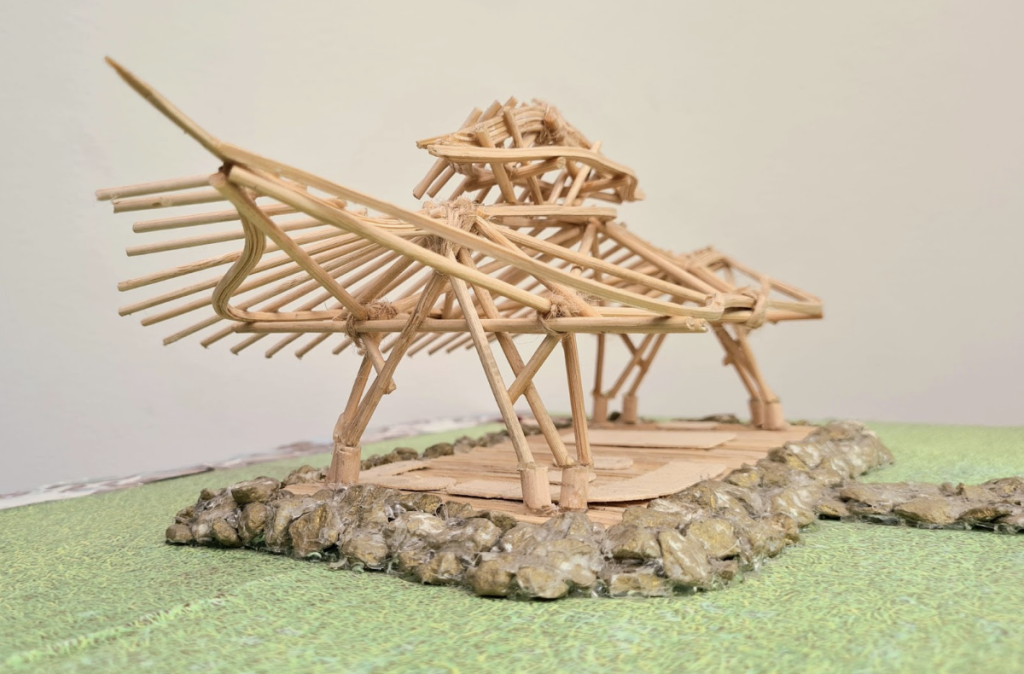
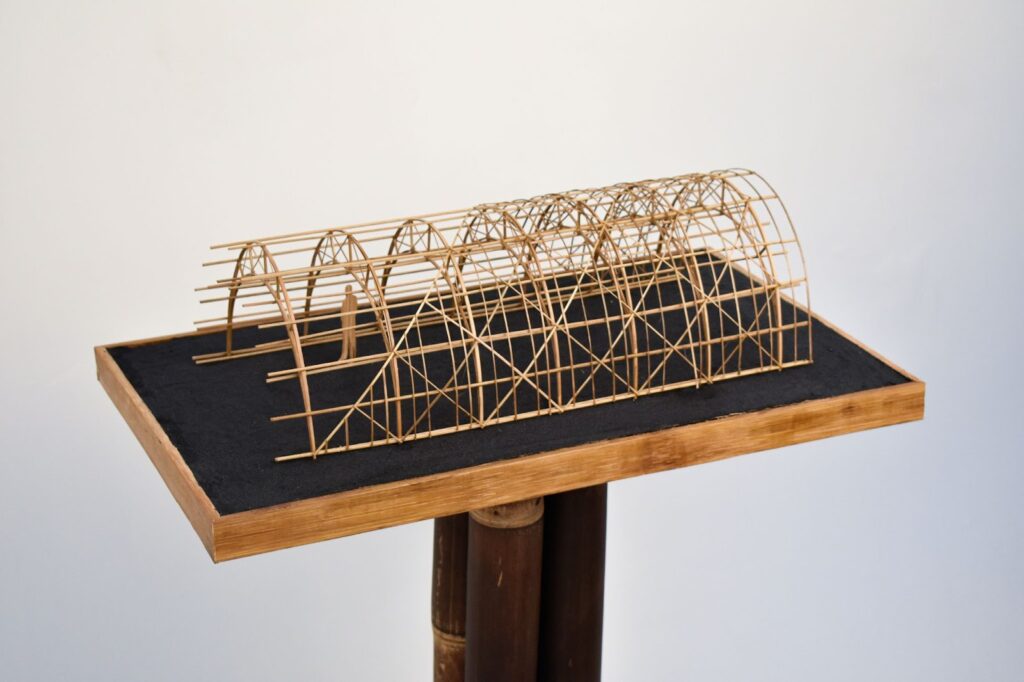
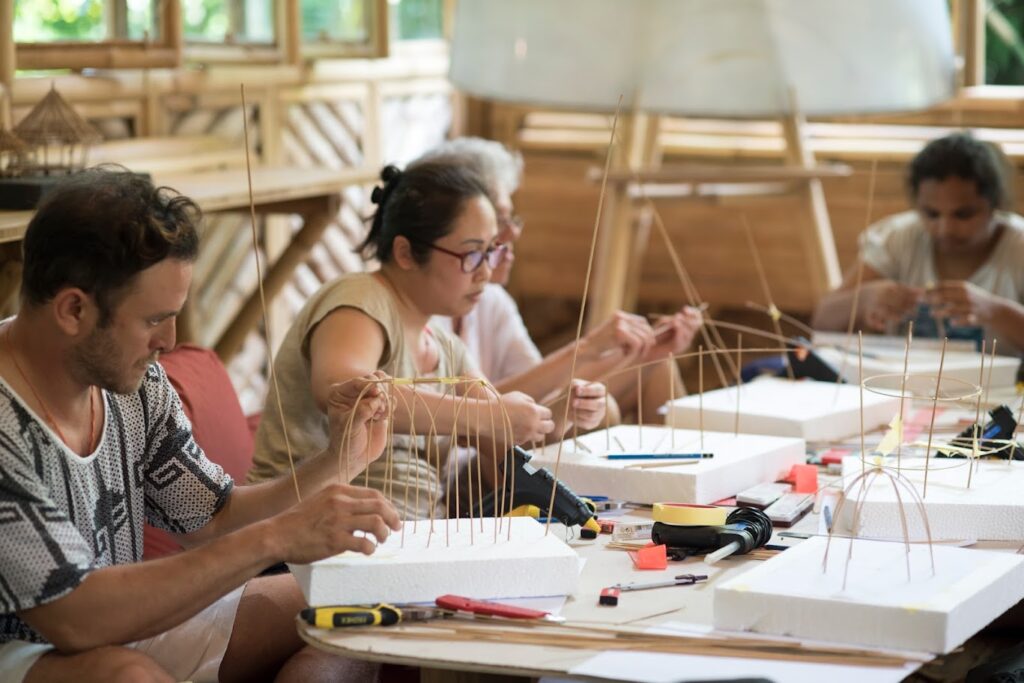
For the Bale project, Augmented Reality was first incorporated during the design phase to guide the creation of bamboo sketch models. AR projections of the digital model helped guide the students as to the placement of mini hand-whittled bamboo splits, to craft physical models. Through these small-scale iterations, the capabilities of the material became evident, such as the extents to which they bend and twist. By understanding the material even on the scale of maquettes, there was an increased awareness of how the bamboo splits would behave at full-scale.
Next, it was time to bring AR to the site. AR holograms of the structure were overlaid in 3-dimensions on site through the use of QR codes spaced out on the ground. These referenced the digital model and placed it in the real world environment at scale.
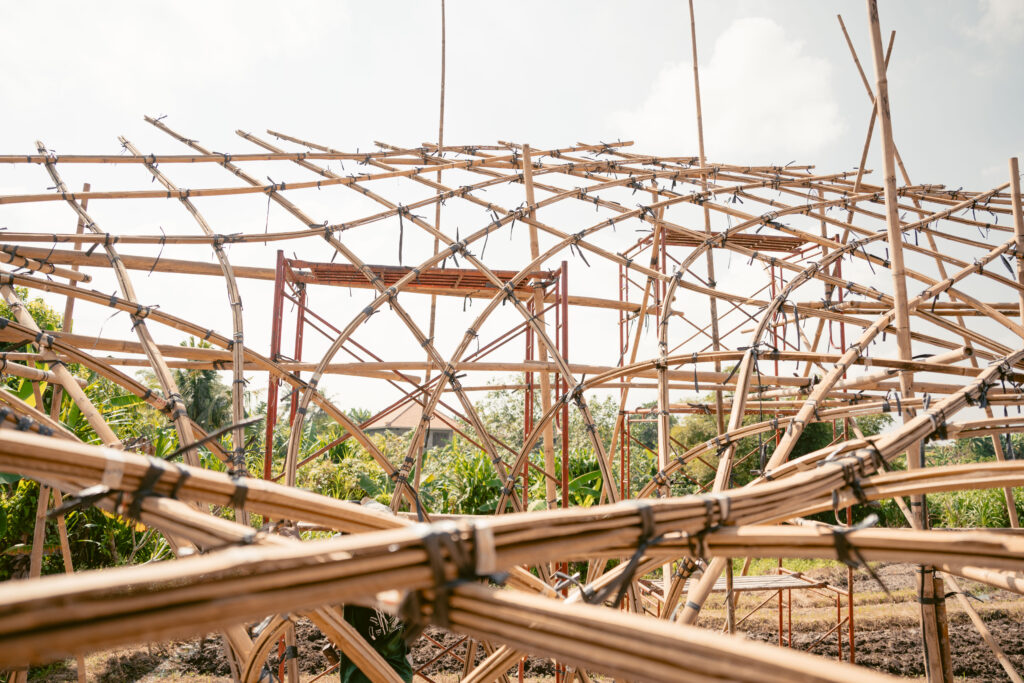
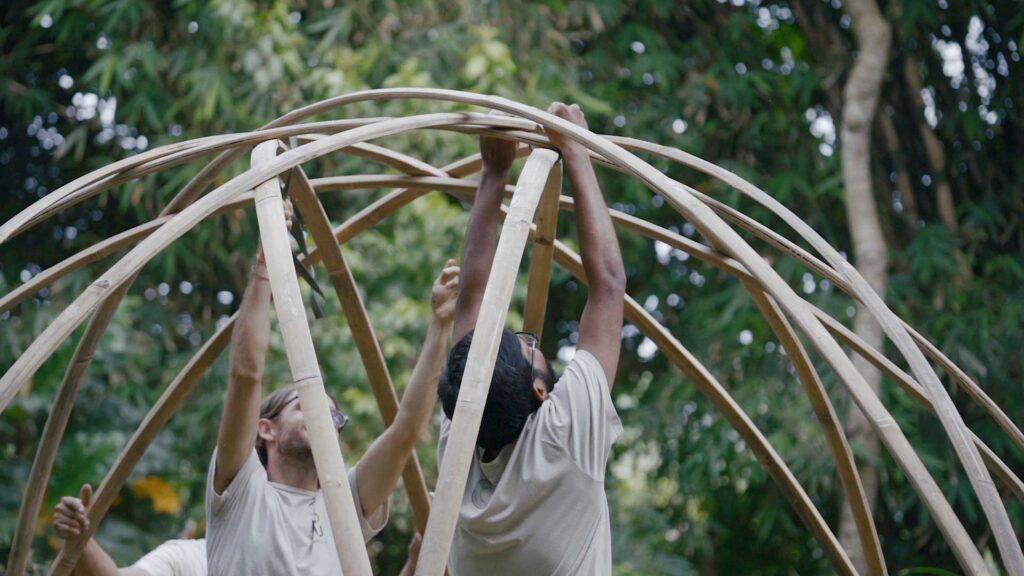
Using Augmented Reality and digital tools allowed for a streamlined building workflow. The entire process used splits that were roughly 3cm wide by 1cm thick, which were pinned in stacks of four splits to enhance rigidity and strength. These were assembled on the ground and were aligned to templates created using the AR holograms to match their required curvature in 2-dimensions.
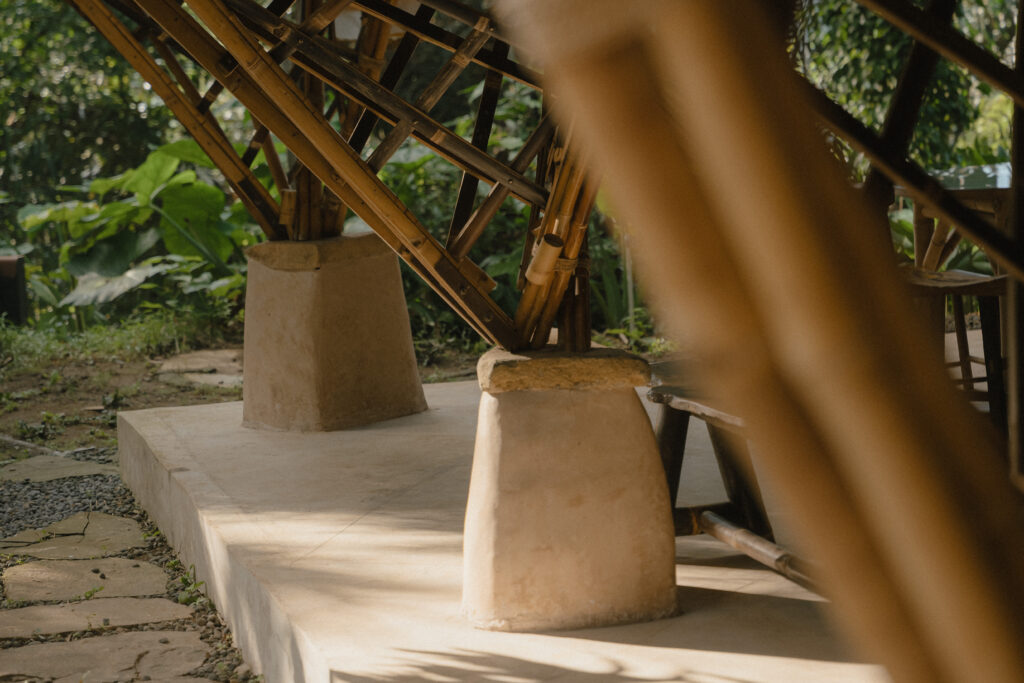
After creating the split bundles to assemble each component of the grid, these structural elements were then arranged on site using the AR projections as a guide. The overlays indicated the precise placement of each bundle in 3D space. This included where they connected to the foundations, the intersection points of components in the grid, and the arrangement of splits to weave together the overall form.
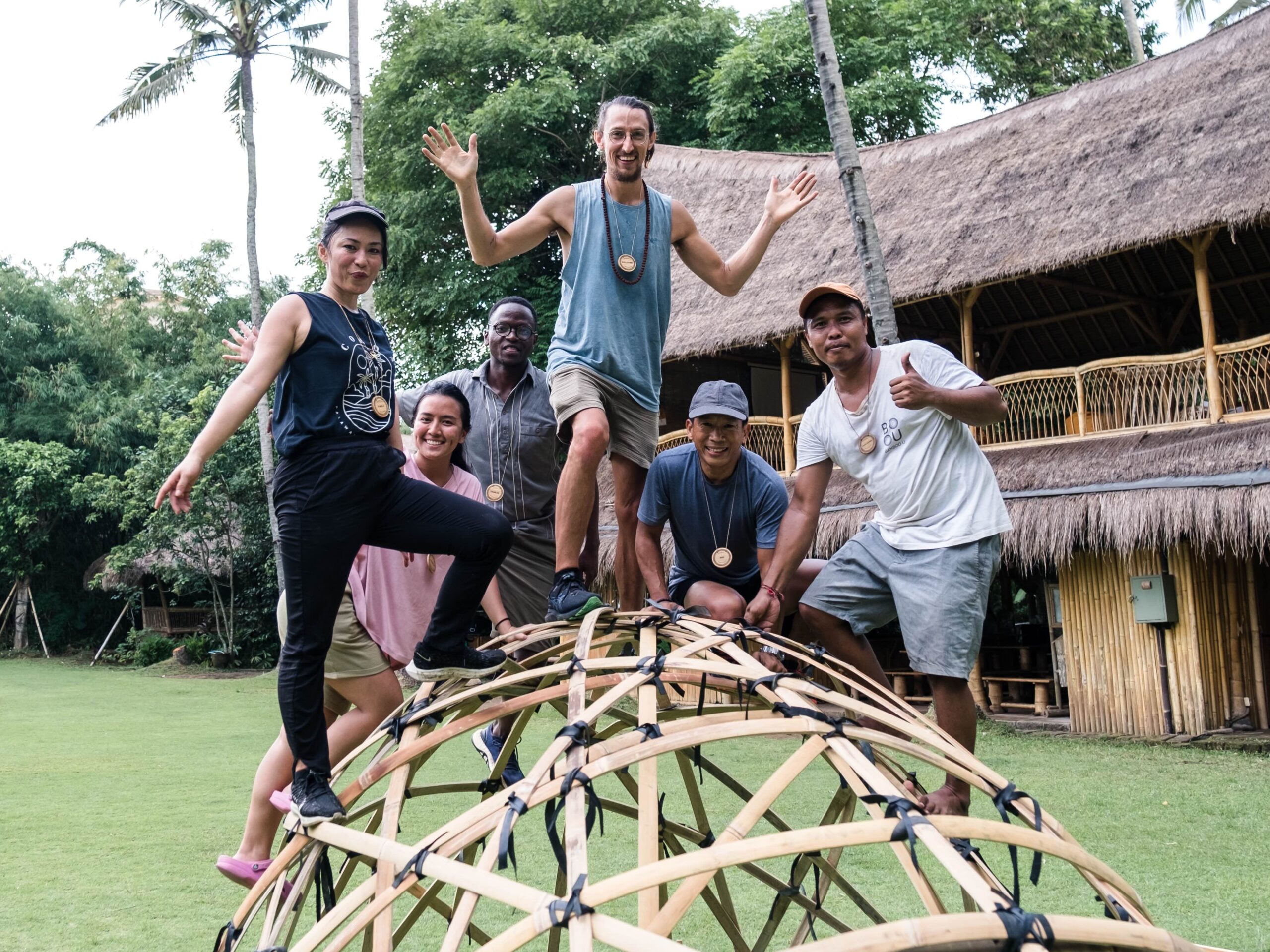
This process, called the lay-up method, was very different to the pop-up method we had used previously. For the last two Augmented Reality projects done with the support of Dr. Garvin and Dr. Kristof, we created structural grids on the ground, raised them, and slowly popped them into a domed shape. These can be seen in the Cocoon Kecil mini domes and Bamboo Dome at the Kul Kul Farm. For this project, the grid and its curvature in 3-dimensions were created in-situ, a feat that had never been trialled before using bamboo and Augmented Reality.
While the Augmented Reality overlays were especially useful in providing instruction to build, by working with the material, the students also became more aware of the capabilities of the material. This was particularly intriguing when it came to how understanding how the split bundles could curve in three dimensions. Through this process, the students were able to take up certain parts of the project in their own hands and work intuitively, as the project required a flexibility to “dance” and strike a balance between the AR technology and the properties of the material on hand.
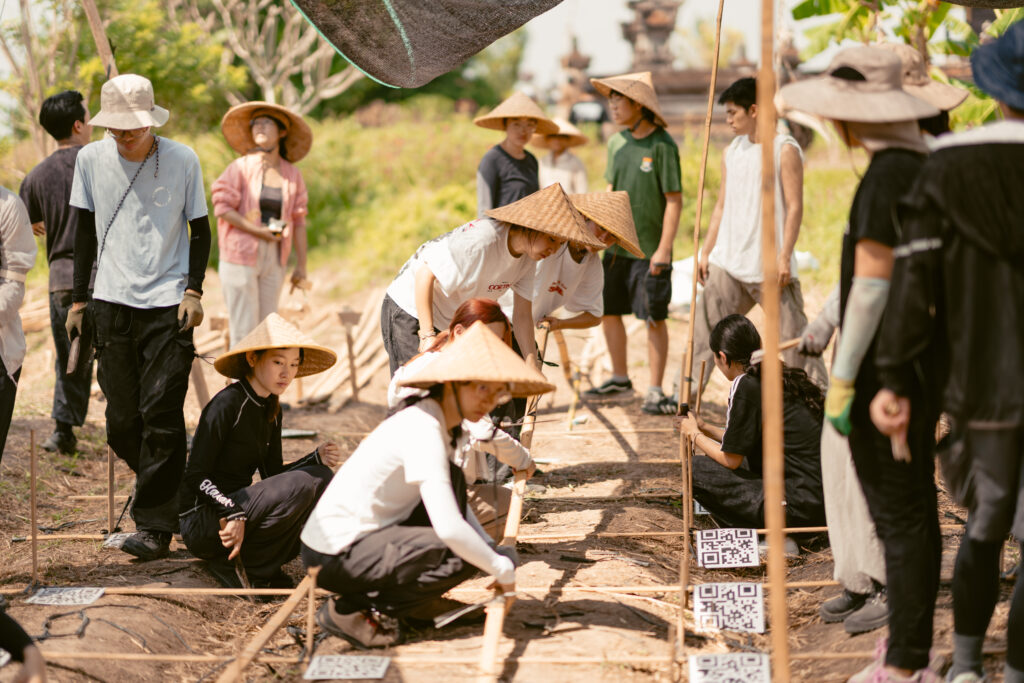
Applying a variety of digital design tools into the design and construction process of the Sibang Kaja Bale, especially Augmented Reality, is the main reason the project was able to be realized at this scale, so quickly with high levels of accuracy and craft.
In this project, these tools allowed for immense flexibility. This is especially useful when working with irregular, natural materials like bamboo. The Bale was tweaked and reworked several times before construction began, which included adapting the project to the on-site conditions and budgetary constraints.
In typical construction settings, reworking the design would consist of the construction drawings needing to be updated and reprinted, before being distributed to the team on-site. On the other hand, by integrating AR technology into the build, this update process was streamlined. Since the digital overlays are connected to the 3D model, as soon as the file is updated, the holograms update as well – allowing for tweaks to be made without delays. Therefore, a challenge that would traditionally take a few days to tackle, can now be resolved in minutes.
Additionally, through the use of digital design tools, it was relatively straightforward to maintain budgetary constraints. Once changes were made to the design, it made it easy to use the digital model to calculate material quantities and ensure everything was still within the planned limits. If there were any discrepancies, the model could be iterated to align with constraints such as material costs. This allowed the project to continue to develop across the design and construction phases without going over-budget and without compromising the integrity of the design
Finally, digital technologies, specifically the use of Augmented Reality in the construction process, welcome all to participate in the build process. Through its intuitive nature, even students that had never worked on a construction site were able to quickly get used to the process. Though some guidance was provided from the local craftspeople in the team, the students were able to complete the entire structure in less than seven days!
Through the growing accessibility of digital technologies, we want to challenge the notion that intricate geometries and materials like bamboo are only for specific groups of people. To execute a project using Augmented Reality like we did for the Bale requires a digital model and some basic smartphones or handheld devices to overlay the holograms onto the site, so as to guide the construction. The rest becomes a dialogue between the site, digital model, and the builders’ intuition. Through this project, we hope to encourage more opportunities for structures like this bamboo gridshell pavilion to be built in other contexts, possibly even using similar processes.
Related: Augmented Construction in Taiwan: Crafting the MemutAR Pavilion
Through the application of various digital design tools, such as Augmented Reality, in the bamboo design and build process, we are continuing to innovate and explore new forms of architecture that would not be possible using traditional workflows alone. Through the use of these tools, we are able to develop structures with complex geometries that are both buildable and materially efficient.
Overall, the hope is that this project serves as a prototype for larger structures that apply digital tools, such as Augmented Reality, in the bamboo design and build process. The aim is to scale up structures of similar complexity and ambition by maintaining a rapid construction process, without substantially increasing factors like cost (eg. material) and complexities (eg. craftsmanship). It would also be fascinating to see how these methods are applied to other forms of natural or bio-based construction, such as earth construction or even mycelium.

Sources:
UNESCO World Heritage Centre. Cultural Landscape of Bali Province: the Subak System as a Manifestation of the Tri Hita Karana Philosophy. https://whc.unesco.org/en/list/1194/
Are you looking to integrate digital design tools into your workflow?
Join our Digital Design for Bamboo Course to get started with integrating 3D modeling and parametric design tools into your workflow!
Join the 11-Day Bamboo Build and Design Course: hands-on building alongside experts, architects and makers from around the world. Explore the 11-Day Course
The 11-Day Build & Design Course
In collaboration with IBUKU
Immersed in the most beautiful and innovative bamboo environment. Meet the pioneers, the visionaries, the designers and builders who took this under-utilized material and transformed it into the most desired natural building material for bamboo structure design.
The Intro to Bamboo Engineering Online Course
Designed specially for structural engineers, this FREE online course has been created in collaboration with the Base Bahay Foundation, based in the Philippines.Join the course to learn how bamboo's innate properties make it a versatile building material, and how these properties can be maximized and applied in structural design.