Beyond Construction: The Melaspas Ceremony That Completed the Bale Timbang
By | May 7, 2026 | Bamboo U Built Projects -
A building isn't truly finished when construction stops. It only begins to come to life when it's given meaning.
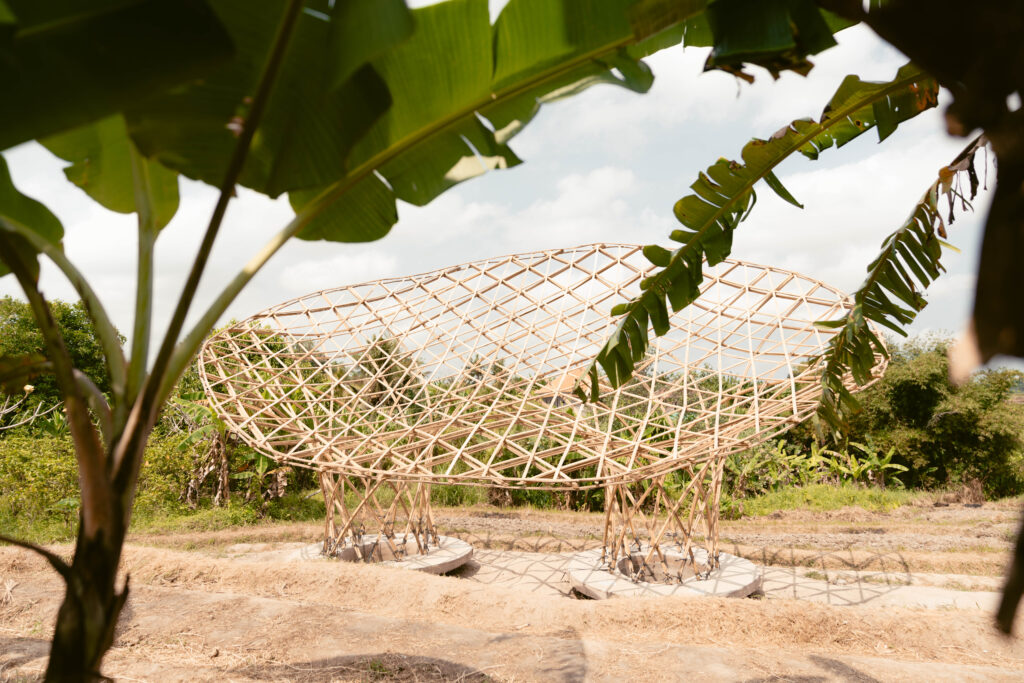
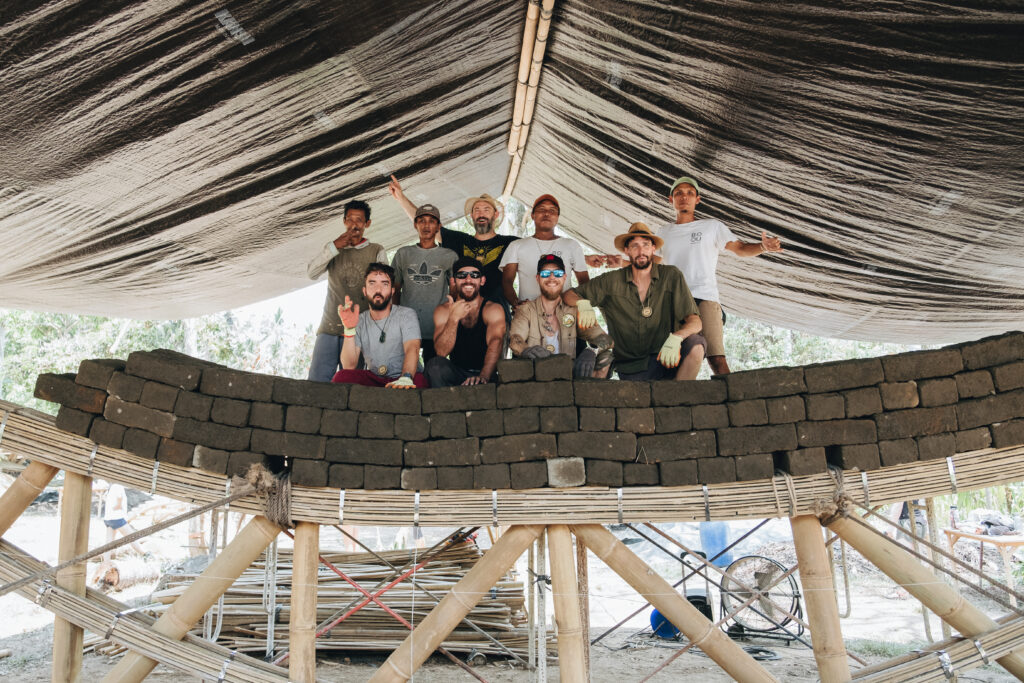
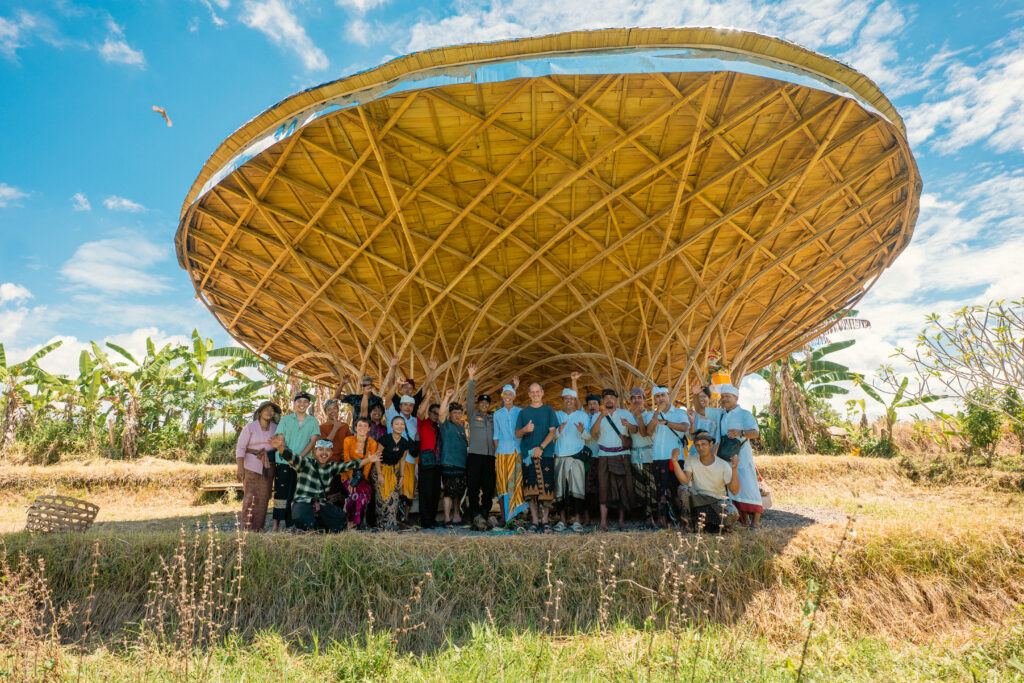
In August 2025, Bamboo U collaborated with Astungkara Way, Journeyman International, and the University of Hong Kong to build a simple space for farmers: A place to rest, gather, and share.
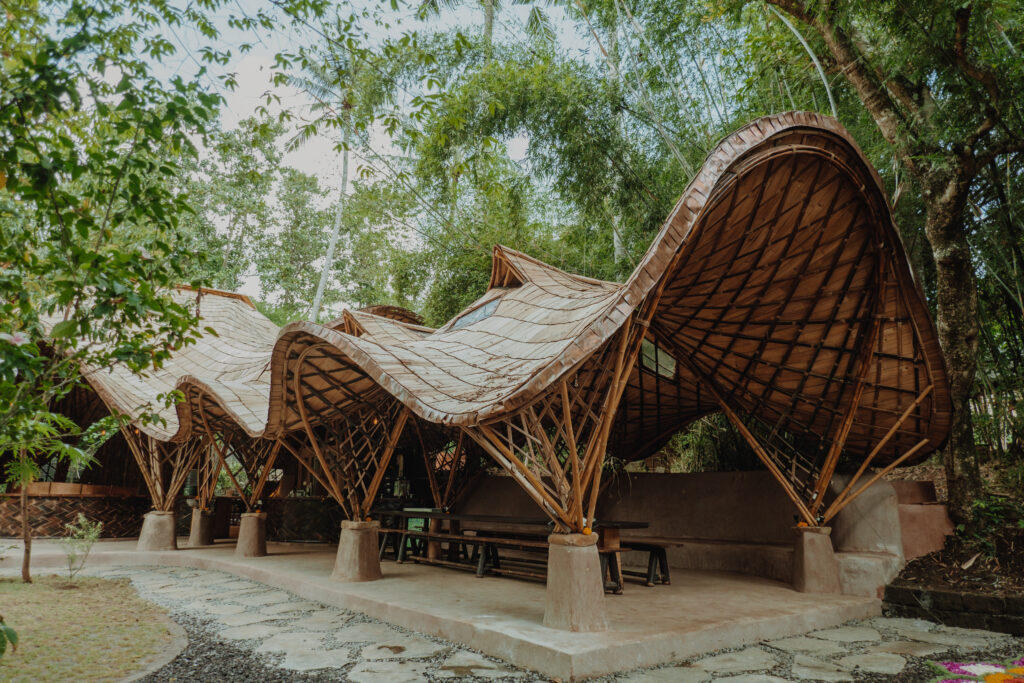
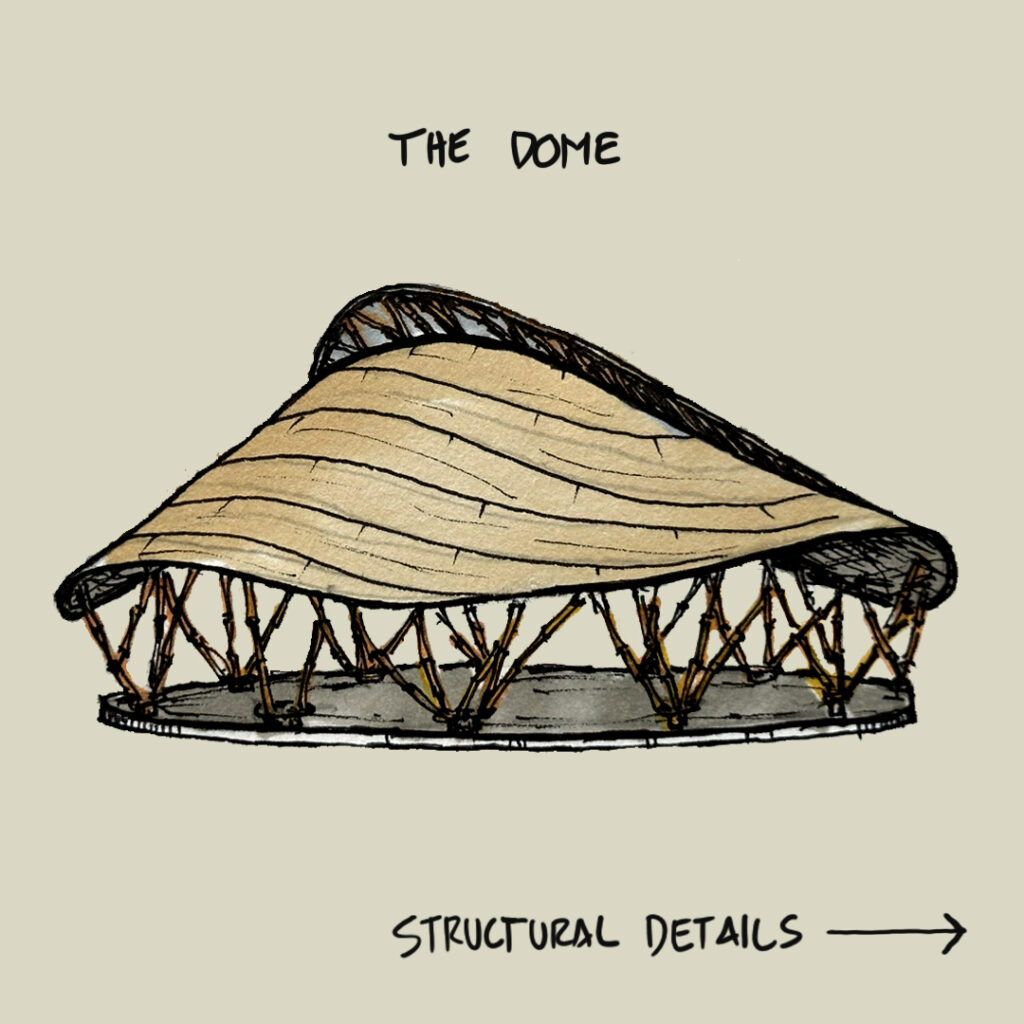
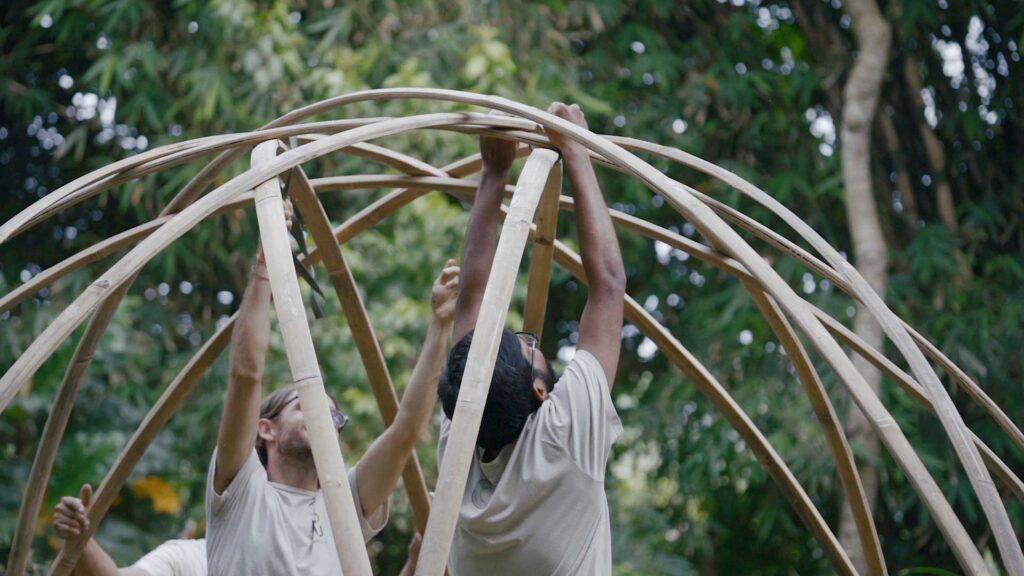
The Bale Timbang was born out of the need for a communal space for farmers to rest and gather after a long day in the fields. The pavilion plays a crucial role as a place for the community to meet, share knowledge, and build stronger social connections. The project was developed over six months through a collaborative process that combined learning, practice, and direct engagement with the local context. Within a week, the main structure had taken shape. After this, key elements were installed and the building was finally declared complete. But the process did not stop there.
Related: Building a Community-Centered Pavilion in Bamboo with Augmented Reality (AR) Technology
In Bali, a building is not considered complete when the structure is simply finished or when the project timeline has been met. Completion has a broader meaning and it relates to how a space is prepared to truly “come to life.” In Balinese Hinduism, a living building is one that has undergone a process of embedding itself with meaning, both physically and spiritually.

As part of the building’s completion process, the Melaspas ceremony is performed. Melaspas is a purification ritual performed to cleanse and balance the energy of a new building before it is used. Through a series of prayers, offerings, and the use of holy water, all elements of the building are united into a habitable whole.
This ritual aims to neutralize negative (niskala) energy and bring harmony to everyone. Furthermore, Melaspas serves as a form of gratitude and a reflection of the balanced relationship between humans, nature, and God. A principle that aligns with the Tri Hita Karana concept in Balinese life.
Related: The Powerful Role of Bamboo as a Multi-Sensory Medium in Balinese Culture
After the Melaspas ceremony, the Bale Timbang is no longer a structure standing on land. It becomes a prepared space, both physically and meaningfully. For the farmers who will use it, the Bale Timbang will stand as more than just a place of shelter. This space is designed to support daily activities, from resting after work, sharing stories, to strengthening social relationships within the community.
With an approach that prioritizes natural materials and the local context, the Bale Timbang is designed as a simple, functional space that harmonizes with its surroundings.

For Bamboo U, this moment also serves as a reflection on how we view the building process. The cross-organizational collaboration on this project not only resulted in a building, but also brought together diverse perspectives, from education and field practice to understanding the local context. This process reaffirmed that building in Bali means building consciously, where every decision is connected to the surrounding environment and the local culture and community.
In this context, Melaspas is not a finale, but an integral part of the entire process. It ensures that what has been built is not only structurally complete, but also ready to become a part of life. With the completion of Bale Timbang, the project enters its next phase. When the space begins to be animated by the activities, interactions, and daily lives of its users. Because ultimately, a building is shaped not only by its materials and construction, but also by the meaning, relationships, and life that grows within it.
The Bale Timbang is one example of how Bamboo U approaches building, not only as a technical process, but as a collaborative and contextual practice.
This same hands-on philosophy is carried into the 11-Day Build and Design Immersion, where you’ll learn through real construction experiences rooted in material exploration, local knowledge, and community engagement.
Join the 11-Day Bamboo Build and Design Course: hands-on building alongside experts, architects and makers from around the world. Explore the 11-Day Course

The 11-Day Build & Design Course
In collaboration with IBUKU
Immersed in the most beautiful and innovative bamboo environment. Meet the pioneers, the visionaries, the designers and builders who took this under-utilized material and transformed it into the most desired natural building material for bamboo structure design.
The Intro to Bamboo Engineering Online Course
Designed specially for structural engineers, this FREE online course has been created in collaboration with the Base Bahay Foundation, based in the Philippines.Join the course to learn how bamboo's innate properties make it a versatile building material, and how these properties can be maximized and applied in structural design.