Handcrafting a Bamboo Lamp Inspired by the Magnolia Flower
By | November 27, 2025 | Student Work -
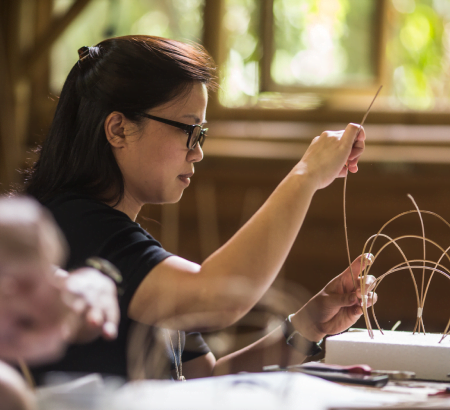
As part of the Principles of Bamboo Design course, Fellicia crafted her a lamp inspired by the beautiful magnolia flower. Read on to learn about how she brought it to life!
Hi! My name is Fellicia. Since December of last year, I have embarked on a new career, immersing myself in the world of lighting. This transition was inspired by my partner, Gilbert Murrer, a bamboo architect, who introduced me to the incredible possibilities of working with bamboo. That spark led me to where I am today: Establishing Infinita by Fellicia Giovanni, a studio & workshop focused on handcrafted bamboo lighting and home décor.
Before stepping into this new chapter, I explored a few different paths – from running a vegetarian restaurant to working at one of the world’s Big Four marketing to advertising agencies in the Netherlands, where I handled client portfolios for a mix of international brands across diverse industries.
Related: Bending Bamboo To Build Unique Window Frames: A DIY Project
It was actually my partner, Gilbert Murrer, who encouraged me to join the Bamboo U course. Bamboo is nothing like the materials typically used in lighting – its unique behavior demands a completely new way of thinking and making. While I’ve always loved lighting and have come to realize that becoming a bamboo designer is an entirely different journey – one I’m really excited to explore. This course helped me connect more deeply with the material and how to work with it in a way that is respectful, intentional, and creative.
One of the biggest takeaways from the course was gaining a deeper understanding of bamboo as a living material — its rhythm, behavior, limitations, and potential. I started to see that it couldn’t be approached like wood or metal. For me, designing with bamboo became less about controlling the form and more about responding to the material itself.
The course encouraged me to slow down and really connect with bamboo before jumping into design. That shift in mindset — from applying lighting ideas onto bamboo to designing through it — was eye-opening. I also learned that patience is essential. When I tried to rush, things fell apart. Bamboo has a way of reminding me to stay present, and that’s been a valuable lesson.
Related: Crafting A Modern Light Fixture From Black Bamboo
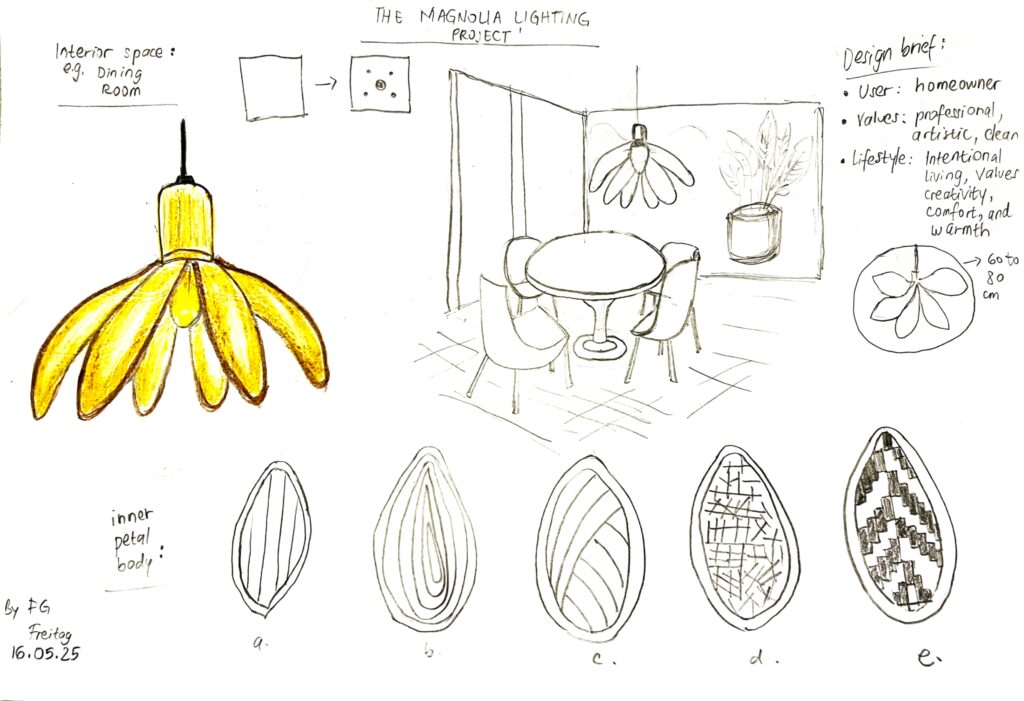
Through prototyping, I translated the petal from my sketch into a real object, a process I found quite challenging. I struggled during this phase because I wasn’t yet familiar with the characteristics of these bamboo species or how they could behave to form the shape I envisioned.
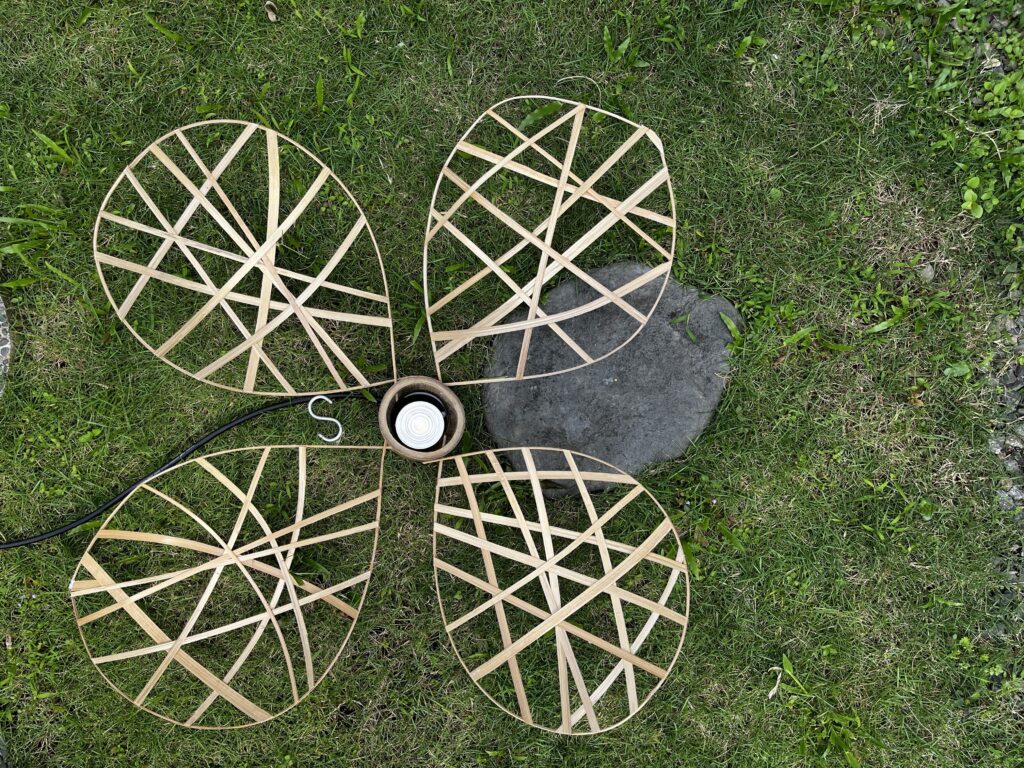
In the prototype, the petals were skinny with rounded edges – just as I intended, rather than having sharp tips. However, they didn’t open naturally and appeared flat and two-dimensional, more like a tennis racket than the three-dimensional form I had imagined.

During the critique session, Luis encouraged me to closely study the natural structure of the magnolia petal. He suggested that instead of just mimicking its appearance, I should replicate its underlying structure in the design. This approach would not only make the form more authentic but also result in a stronger, more stable construction.
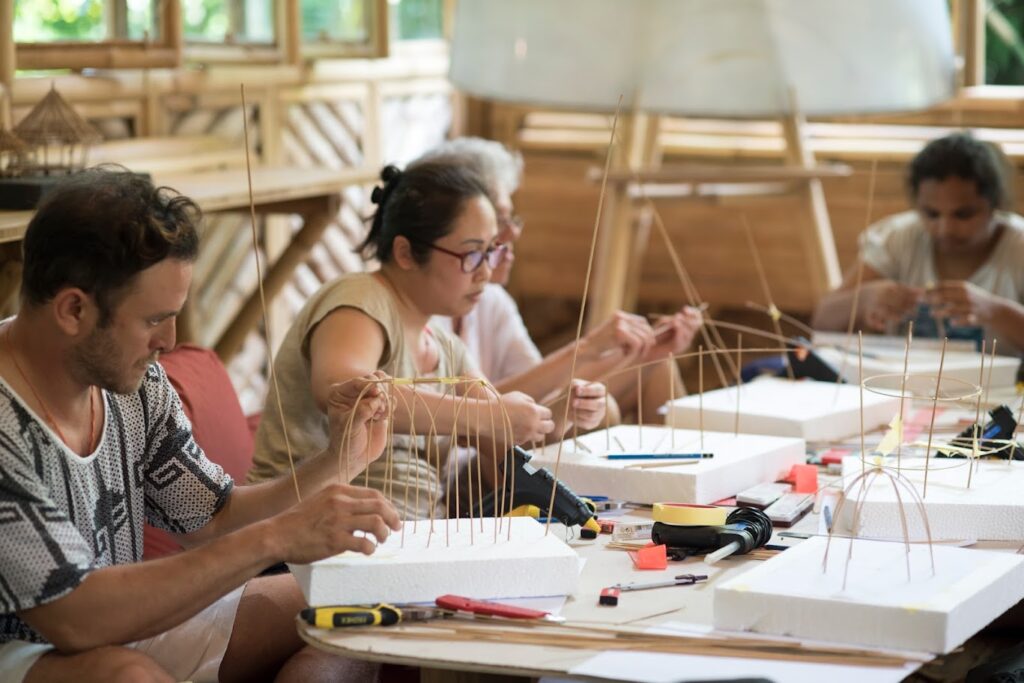
One of the most valuable structural techniques I learned during the course was through the bamboo modeling exercises. Using a simple styrofoam base and cardboard box, I discovered that I could bend bamboo directly over it – and that process felt both fantastic and magical. It showed me how intuitive and accessible working with bamboo can be when using the right form and support.
If I had more time, I would have added more petals and layers to complete the look. I believe this would enhance the sense of depth, softness, and fullness. Bringing the piece even closer to the natural beauty of a blooming Magnolia.
Before the course, I had tried turning my designs into real objects, but it wasn’t as easy as I thought. My original ideas didn’t work because I didn’t yet understand how bamboo behaves — I was treating it like a rigid material.
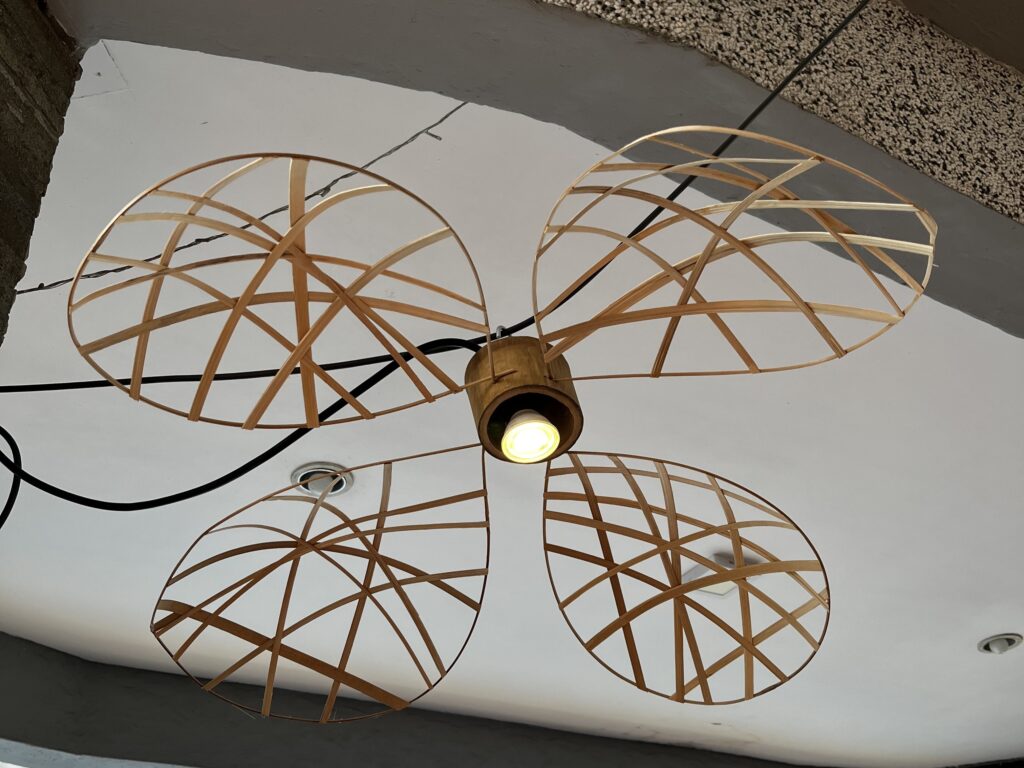
The course shifted that completely. I created a handcrafted bamboo lighting piece, called inspired by the magnolia flower, which I had just planted in mid-May in Austria. Instead of forcing a fixed design, I let the bamboo guide the form. I focused on its natural curvature and tension, which gave the final piece a more organic structure. This approach — listening to the material and working with its strengths — was one of the most important things I took from the course. In the end, the piece became more than just functional lighting; it felt like a quiet collaboration between me and the bamboo.
The Magnolia Lamp is not site-specific yet, but is intended for indoor environments where natural materials and warm atmospheres are appreciated – such as homes. Additionally, it could also provide ambient lighting in other spaces like wellness spaces or creative studios.
The species I was particularly interested in were Belangke (Gigantochloa pruriens) and Hitam (Gigantochloa atroviolacea). I chose them because both are lightweight, bendable, and smooth surface. Especially Hitam, I love for its natural aesthetic look.
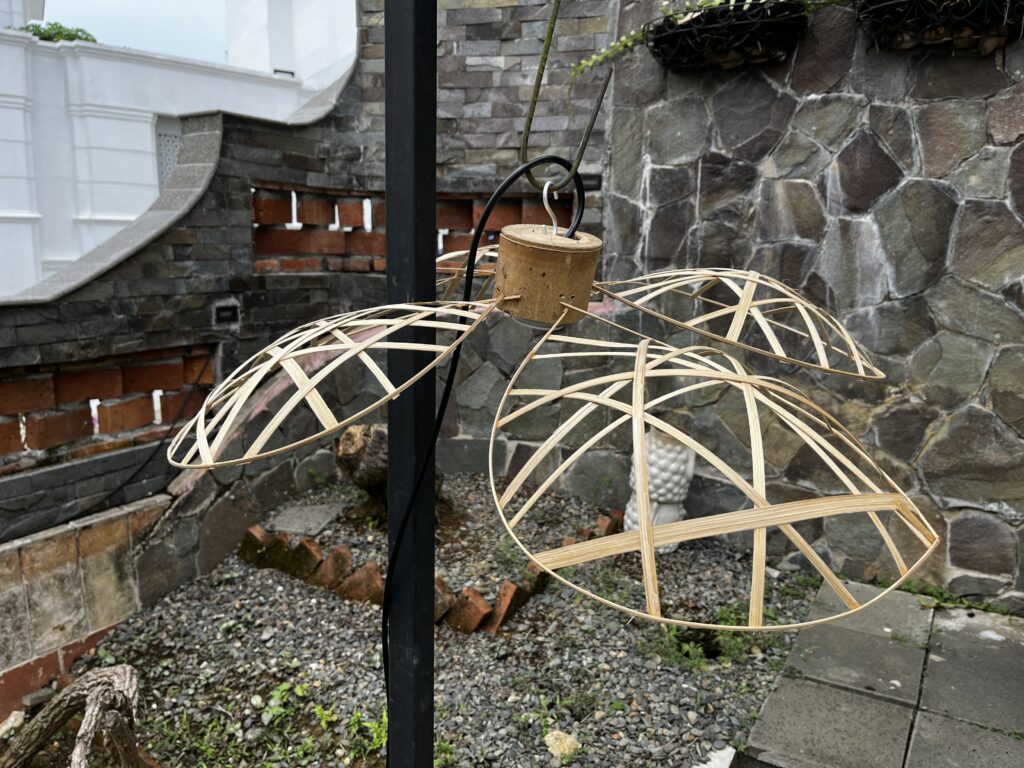
The Bamboo U Principles of Bamboo Design Course opened up a completely new way of thinking and designing for me. One of the biggest takeaways was learning to work with the material, not against it – understanding bamboo’s natural behavior, flexibility, and structure. That shift in mindset influenced every part of my process, from the first sketch to the final form.
My favorite module was when Elora shared her design process, the beautiful final look and how she created the Riverbend House at the Bambu Indah resort. It was magical, empowering and deeply inspiring to me.
I’m also incredibly grateful to all the instructors, facilitators, and bamboo experts – both in the live sessions and in the videos – for guiding me with such generosity. This experience has been an incredible chapter in my journey, and it’s given me the confidence and excitement to move forward and to create more beautiful bamboo lighting.

Ready to take your design skills to the next level? Join our Principles of Bamboo Design course today!
CLICK HERE to enroll.
Learn to design and build with bamboo in Bali.
Join the 11-Day Bamboo Build and Design Course: hands-on building alongside experts, architects and makers from around the world.
Explore the 11-Day CoursePrefer to start online?

The 11-Day Build & Design Course
In collaboration with IBUKU
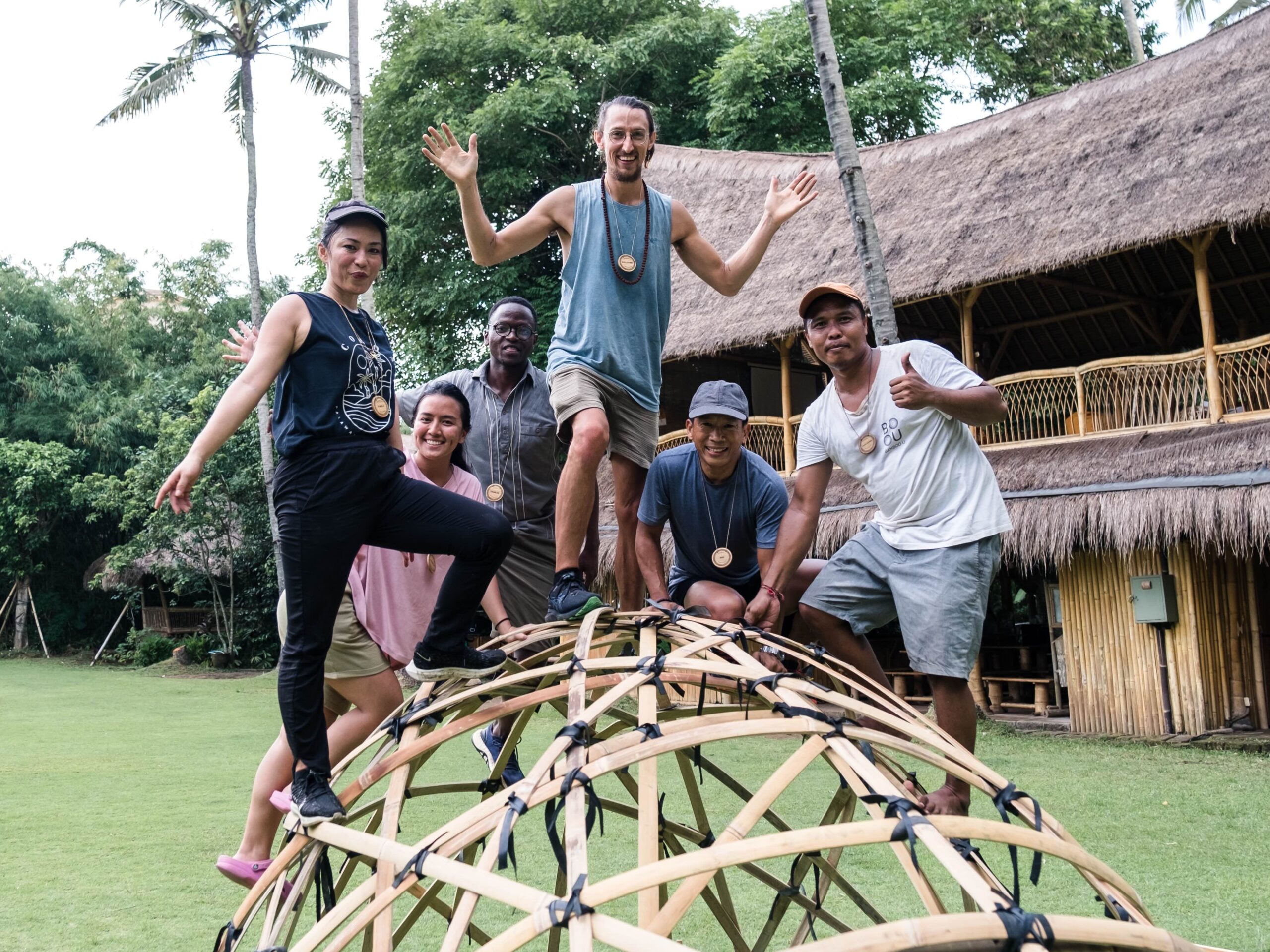
Immersed in the most beautiful and innovative bamboo environment. Meet the pioneers, the visionaries, the designers and builders who took this under-utilized material and transformed it into the most desired natural building material for bamboo structure design.
The Intro to Bamboo Engineering Online Course
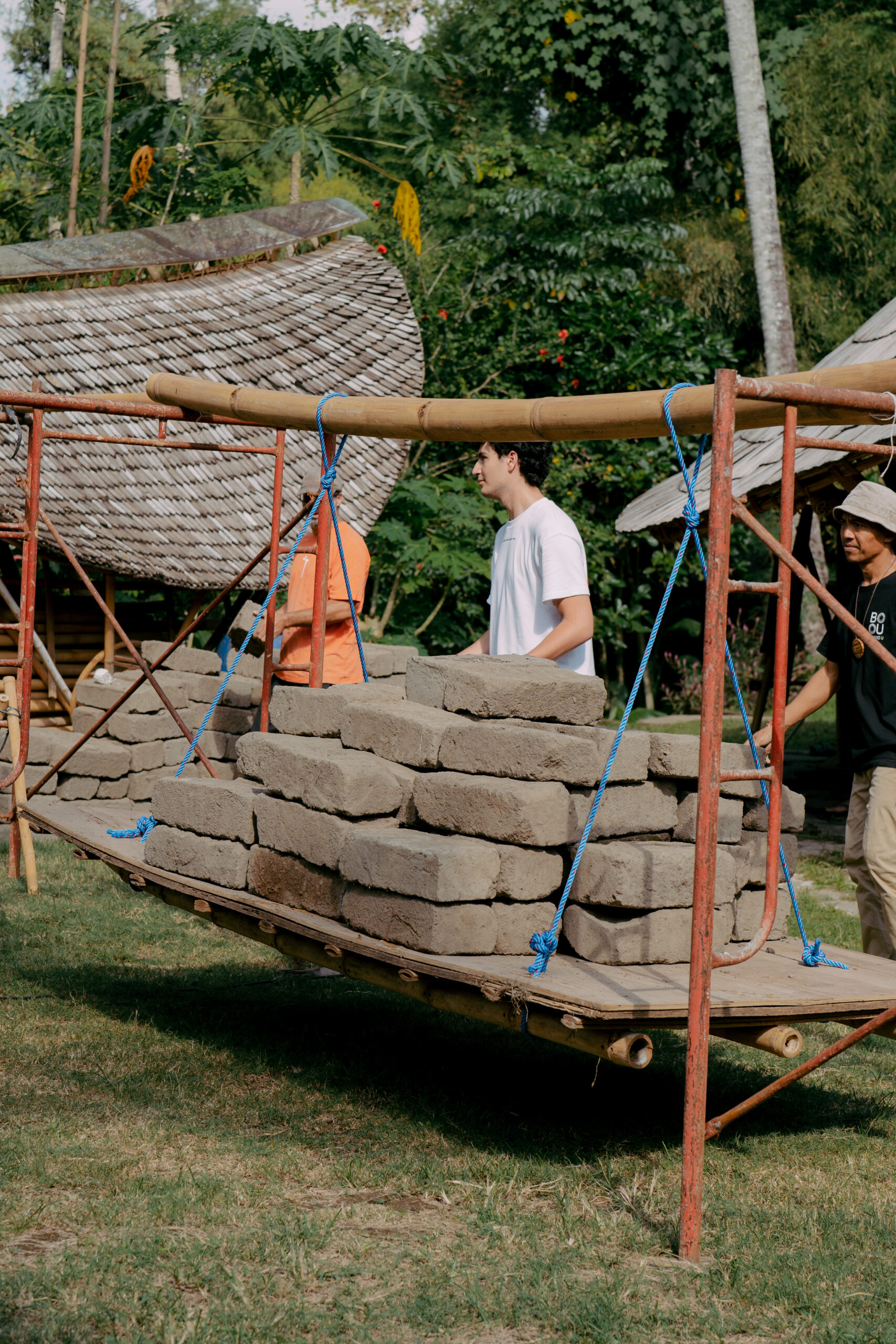
Designed specially for structural engineers, this FREE online course has been created in collaboration with the Base Bahay Foundation, based in the Philippines.Join the course to learn how bamboo's innate properties make it a versatile building material, and how these properties can be maximized and applied in structural design.