Buildings that Wouldn’t Exist Without Digital Tools – Part 1
By | November 14, 2025 | Design -
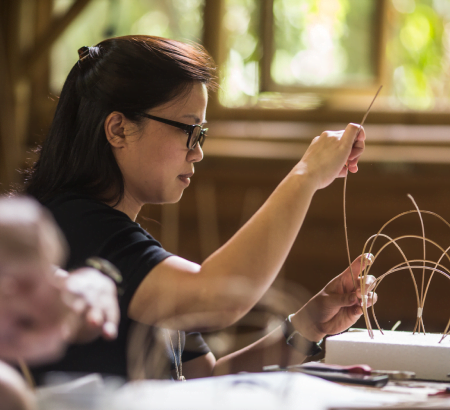
At first glance, bamboo architecture may seem at odds with the world of digital design tools. Bamboo is an irregular material. It tapers, its diameters can be inconsistent, and sometimes it grows in a slight curve. This is the opposite of the straight lines and uniformity that CAD tools were made for. You might therefore assume that designing with bamboo means leaving digital tools behind and only working with hand sketches and physical models, but this couldn’t be further from the truth.
Bamboo buildings often have complex structural systems. These include hyperbolic paraboloids (hypars), gridshells and hyperbolic towers. These systems often require significant coordination between many individual pieces of bamboo. While sketches and physical models are helpful in the initial stages of the design, digital design tools are what make these structures buildable. These tools allow for quick and accurate design changes of intricate geometries and precise communication between teams.
Below, we’ll look at some of the buildings built at Green Camp, Bali by Bamboo U (and our collaborators). These structures would have been challenging to design and build without the use of digital tools.
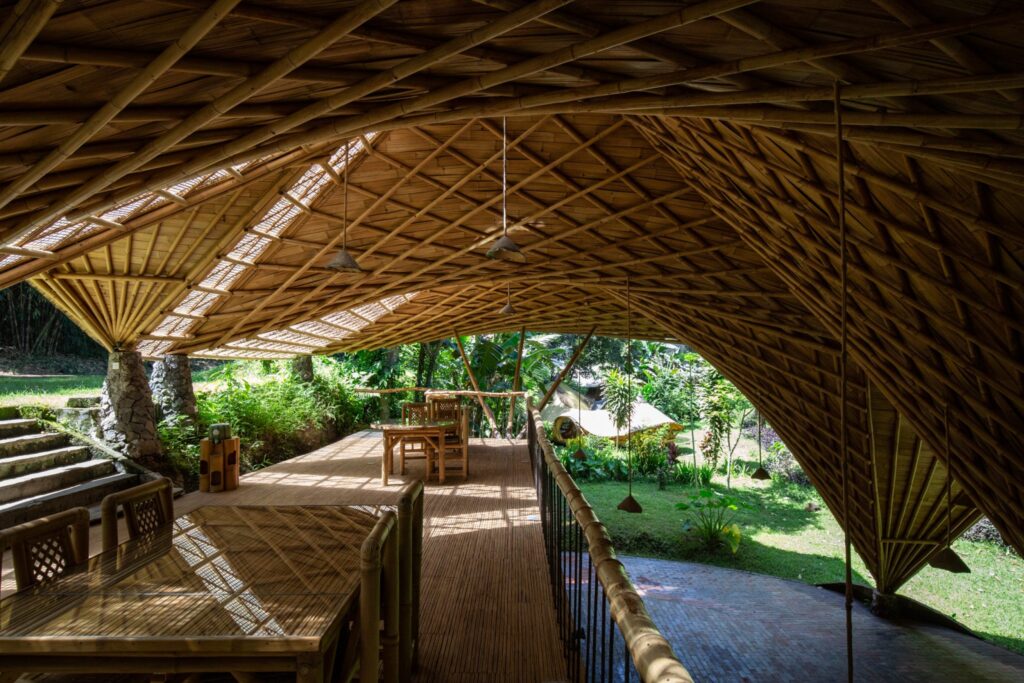
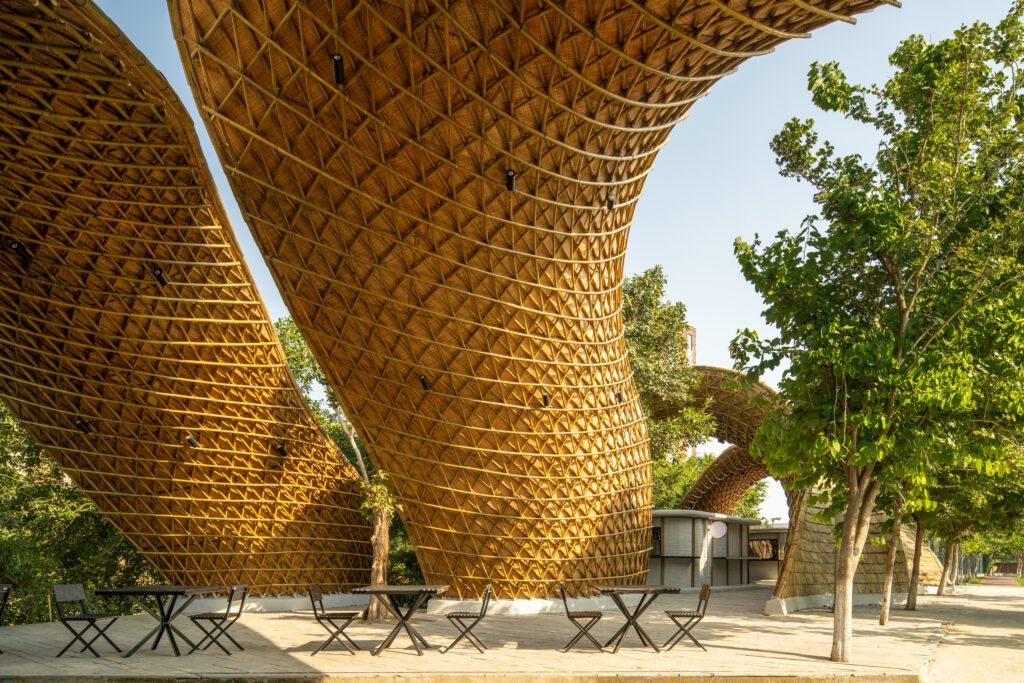
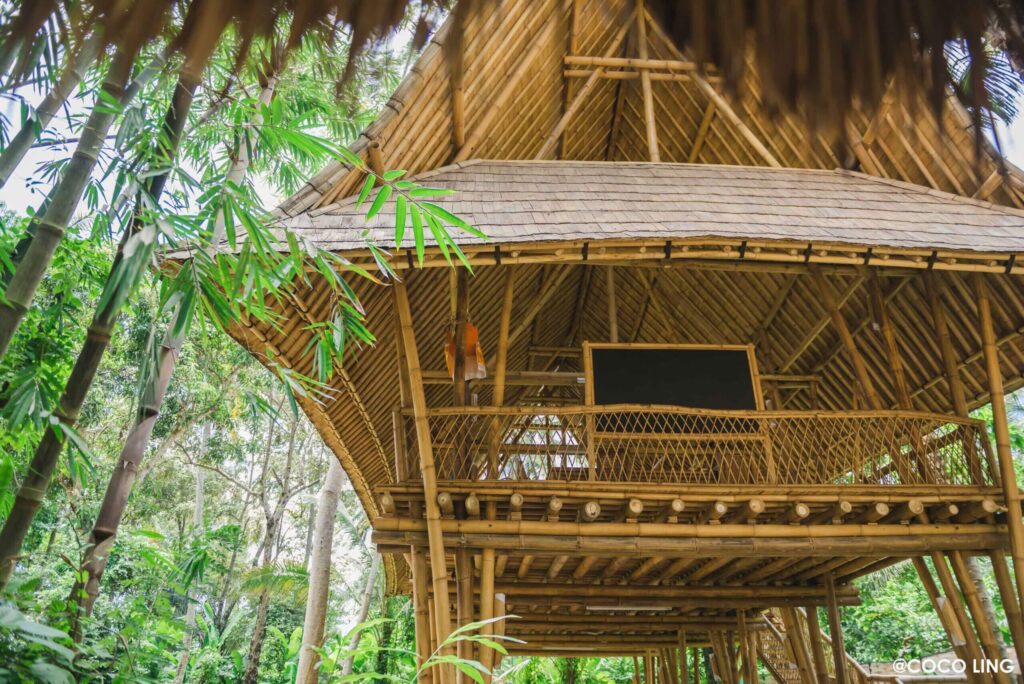
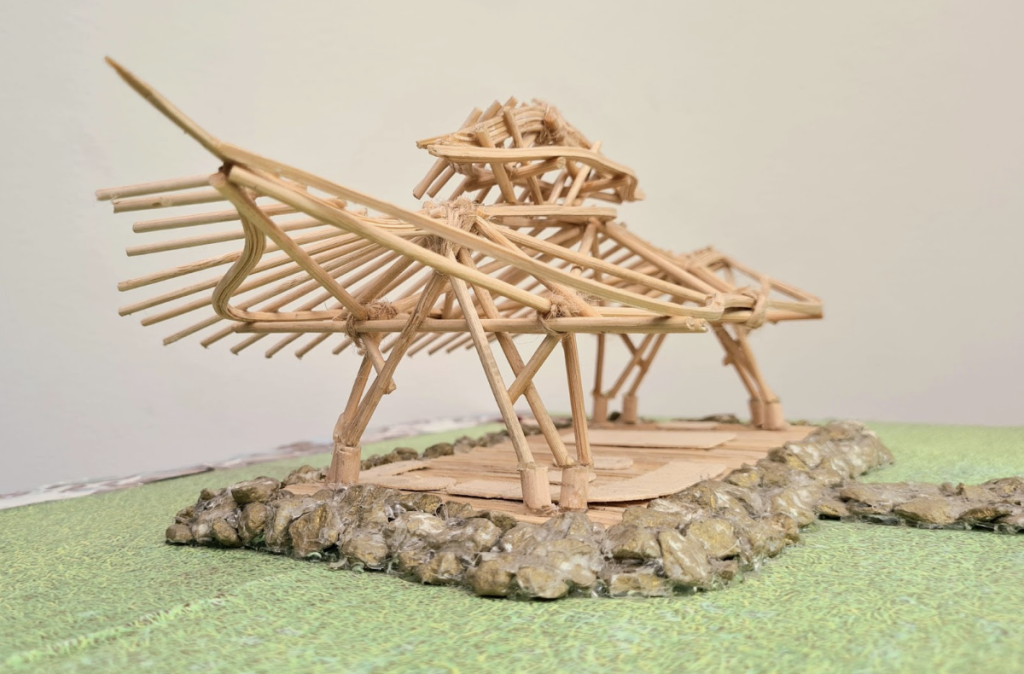
Bamboo Hall at Green Camp is a building composed of a series of hyperbolic paraboloids that form an event space down below and an office above. Known as “hypars”, these doubly-curved geometries are not only visually interesting, but also structurally efficient.
The designers of the project began by making a physical model, which helped the team explore how a series of hypars could be connected to create a double-height space. These early studies were then replicated in the digital modeling tool, SketchUp. This helped determine accurate dimensions and model the structure in more detail to ensure it could be built. SketchUp is an easy-to-use, affordable software recommended for those just starting out in their bamboo architecture journey.
LESSON: Physical models are still important tools in the design process, so working with digital tools doesn’t need to replace maquettes. Rather, these software can help further develop them into buildable designs.
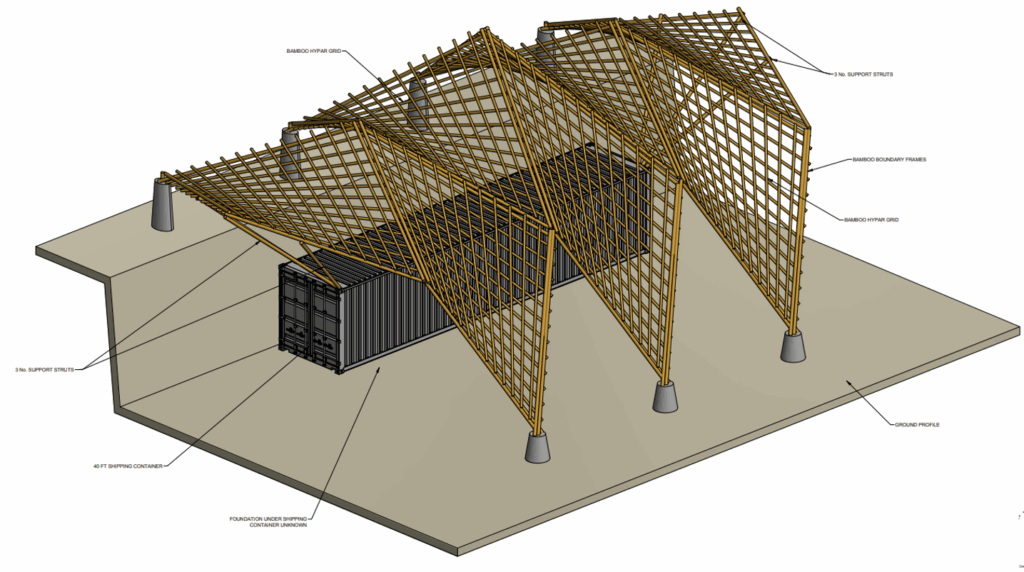
Related: Bamboo Structural Systems You Should Know – Hyperbolic Paraboloids
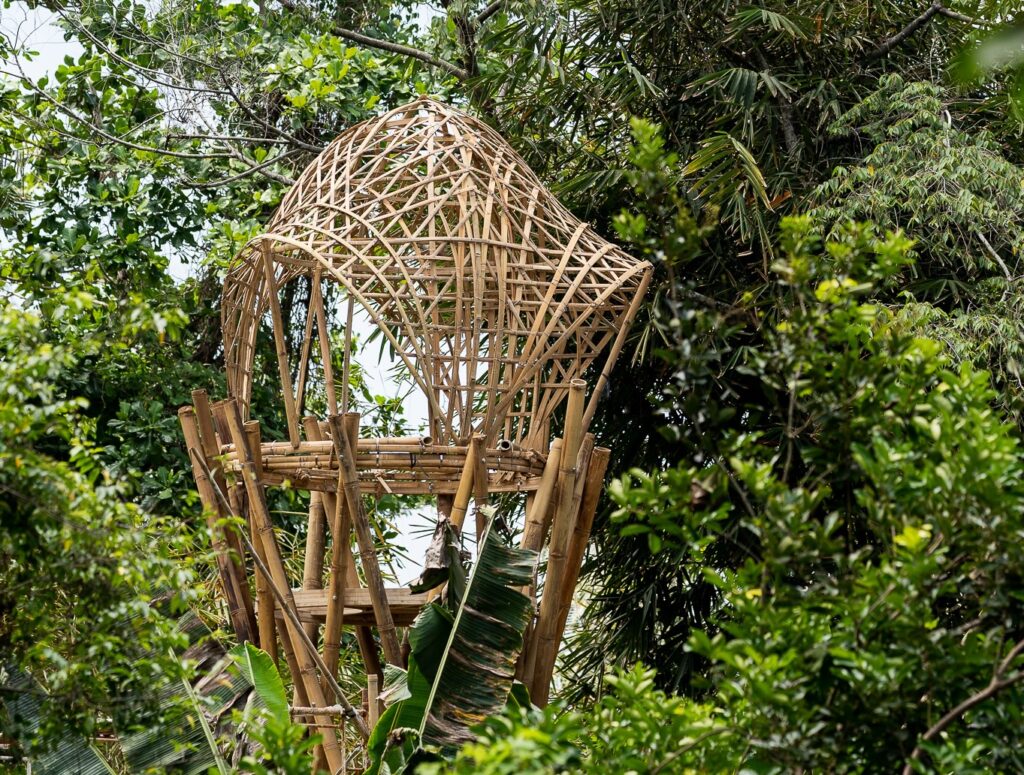
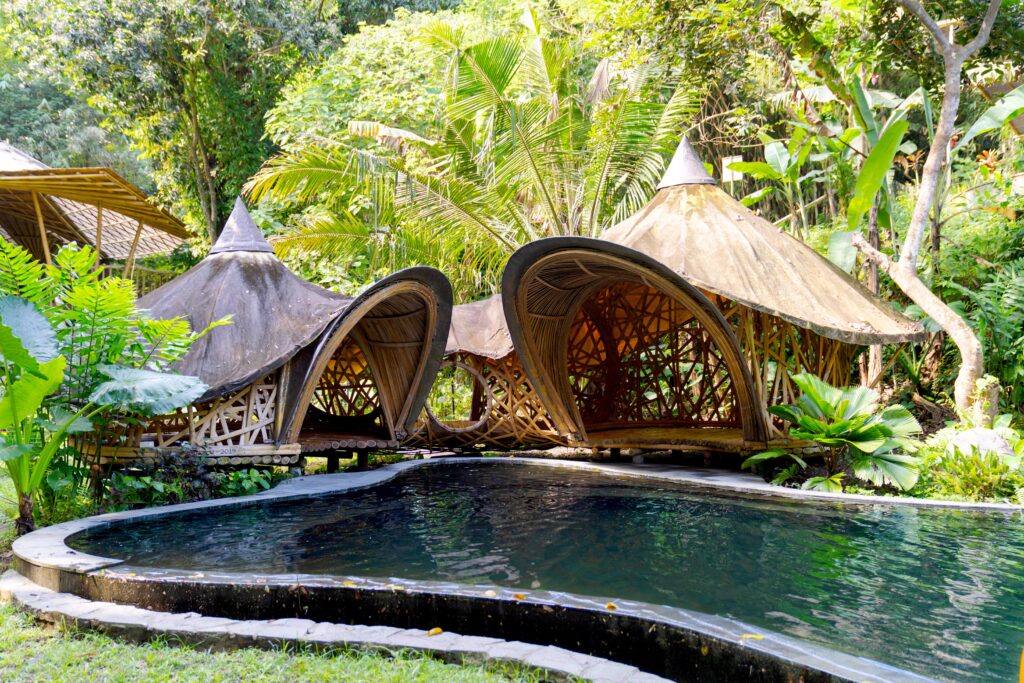
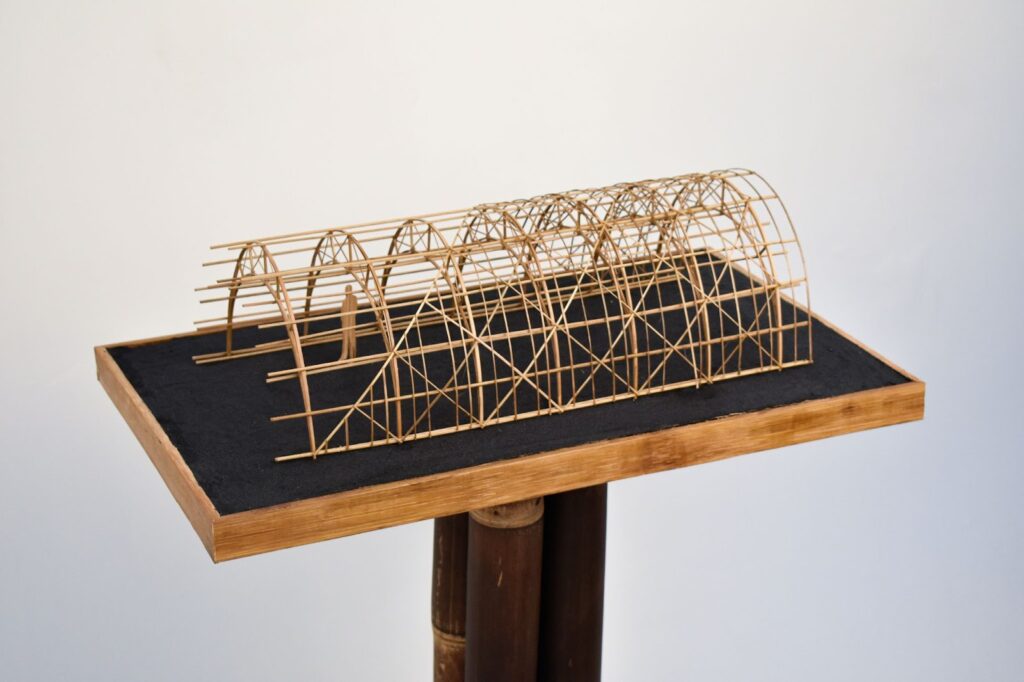
Both the Princess Tower and the Pool Pods at Green Camp feature gridshells: A structural system that consists of a lattice surface, often made from woven bamboo splits.
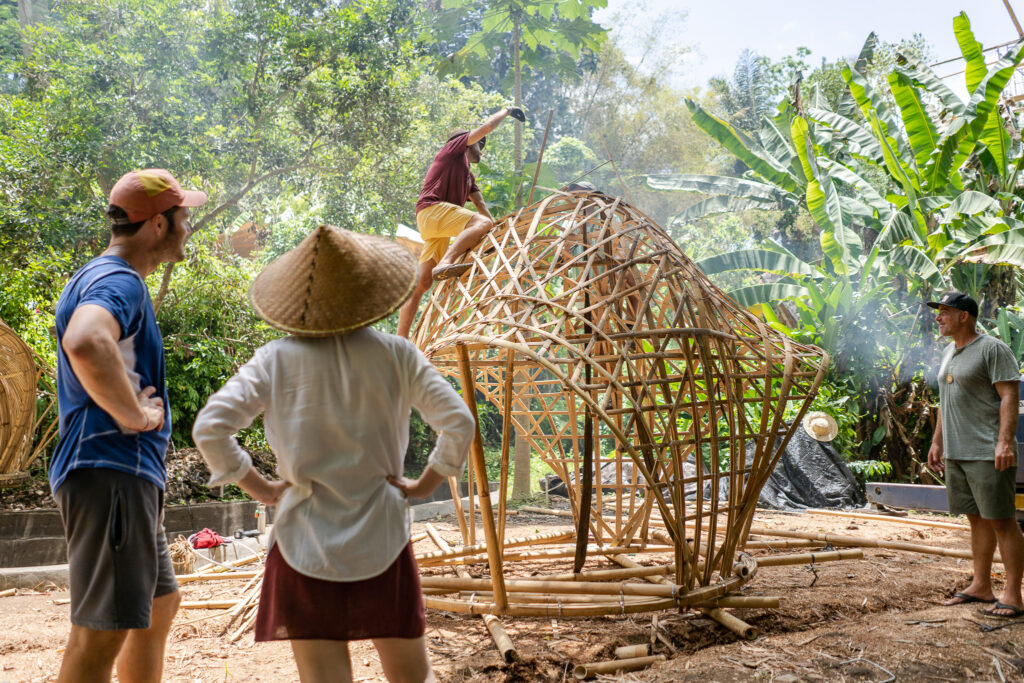
The Princess Tower consists of a gridshell on top of a hyperbolic tower. For this, the design team began by developing the overall form in 3D modeling software. This helped to make key construction decisions, such as the proportions and where key connection points should land. The woven gridshell structure was carefully designed and modeled in Rhino 3D, precisely defining the placement of each split.
In contrast, the building of the Pool Pods had a looser approach. Although they also feature a woven gridshell structure, the bamboo splits were designed to be added randomly, thus creating an irregular pattern. This emerged through the build process rather than being pre-modeled and followed exactly. In this case, the digital model served more as a general guide than a rigid plan.
LESSON: Digital design softwares such as Rhino 3D (and Grasshopper) can be powerful tools when designing intricate forms with specific patterns and connection points. But not every bamboo project requires that level of development. When the design can evolve on–site or doesn’t rely on precision of every piece, a simple digital model is often enough to guide a build.
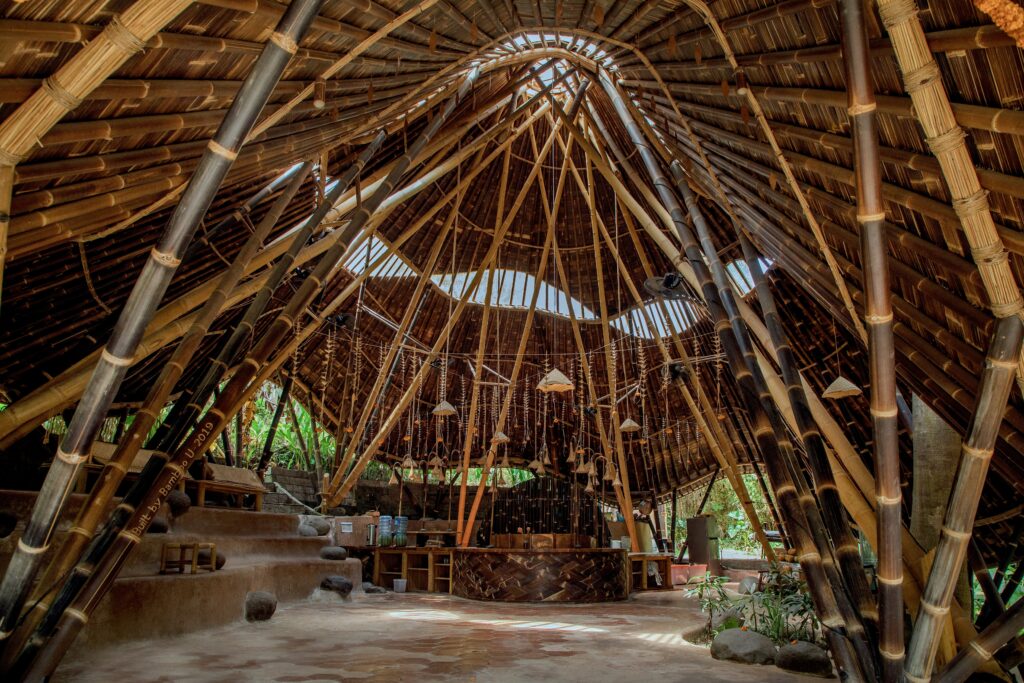
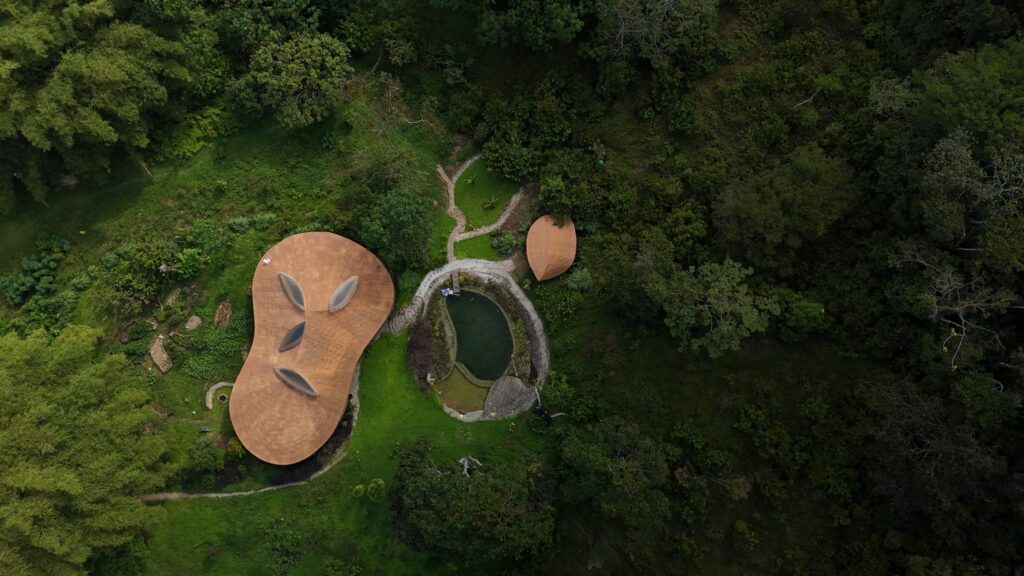
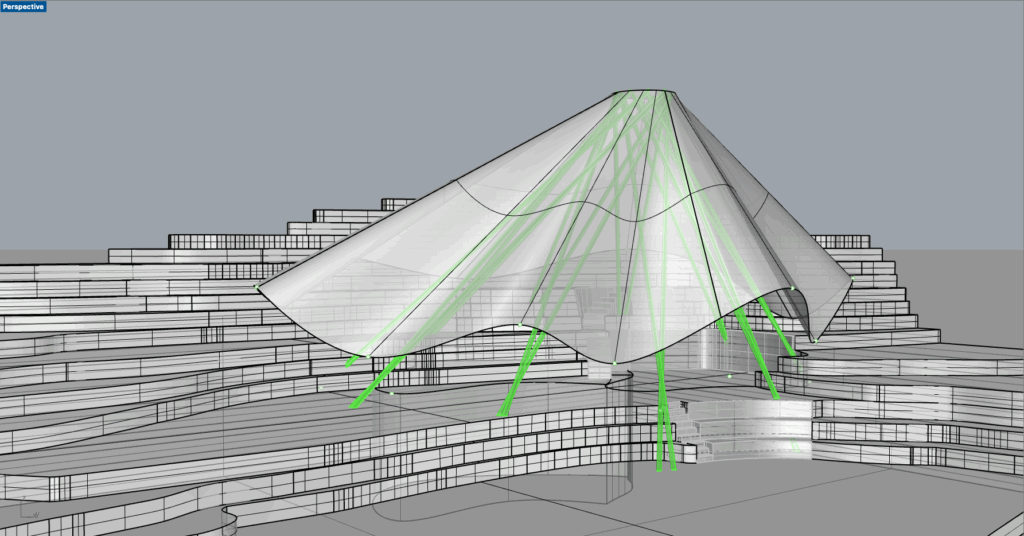
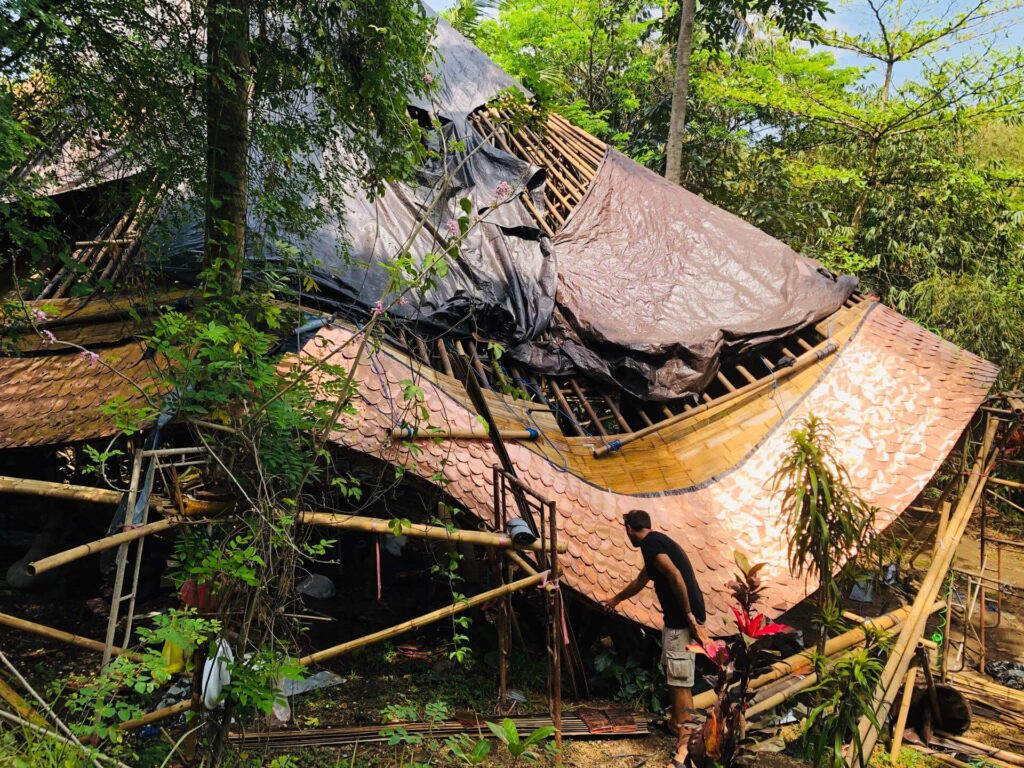
Dapur Naga, which is Bahasa Indonesia for ‘Dragon Kitchen,’ is one of the most sculptural buildings on the Green Camp site. Digital modeling tools helped the team work through a number of challenges. The flowing roof was developed to determine the curvature and openings, as well as the positioning of the building within the existing topography.
The final form, however, changed during construction. As they were building, the team was guided by the site to make adjustments to the roof’s shape and the placement of skylights. This allowed the building to better respond to the landscape, natural light, and lived experience.
LESSON: While digital models can be very helpful in working out complex geometries, dimensions, and connection points, the magic of these buildings is often in the details of how well they respond to place. This is why it’s important to design in conjunction with the site, not just on a screen. Sketching, model–making and continuing to make design decisions throughout the building process help to create a building that is authentically of its site. It’s all about balance!
Related: Augmented Construction in Taiwan – Crafting the MemutAR Pavilion
As we’ve seen through these examples at Green Camp, digital design tools can help us translate complex geometries into buildable designs, coordinate dozens (if not hundreds) of individual elements and allow designers to quickly test out design variations. But, when designing for natural material like bamboo, digital tools shouldn’t replace sketching and physical modeling. The best outcomes come from using a combination of both.
Are you interested in learning how digital tools can form a part of your bamboo design process? Our Digital Design for Bamboo online course is made for beginners in the realm of bamboo digital design wanting to take the first step!
Click HERE to enroll now and translate your ideas from concepts to reality through a variety of digital tools.
Learn to design and build with bamboo in Bali.
Join the 11-Day Bamboo Build and Design Course: hands-on building alongside experts, architects and makers from around the world.
Explore the 11-Day CoursePrefer to start online?

The 11-Day Build & Design Course
In collaboration with IBUKU
Immersed in the most beautiful and innovative bamboo environment. Meet the pioneers, the visionaries, the designers and builders who took this under-utilized material and transformed it into the most desired natural building material for bamboo structure design.
The Intro to Bamboo Engineering Online Course
Designed specially for structural engineers, this FREE online course has been created in collaboration with the Base Bahay Foundation, based in the Philippines.Join the course to learn how bamboo's innate properties make it a versatile building material, and how these properties can be maximized and applied in structural design.