From Breaking to Breakthrough: Testing a Bamboo Fish Belly Truss
By | May 29, 2026 | Engineering -

One of the biggest structural challenges of working with bamboo is spanning horizontally.
Like timber, bamboo begins to bend under load, and the greatest stress usually occurs towards the center of the span. This is where deflection of a beam is the highest. Rather than simply adding more bamboo poles to strengthen a beam, we asked the question: How can the structure become stronger just where it needs to?
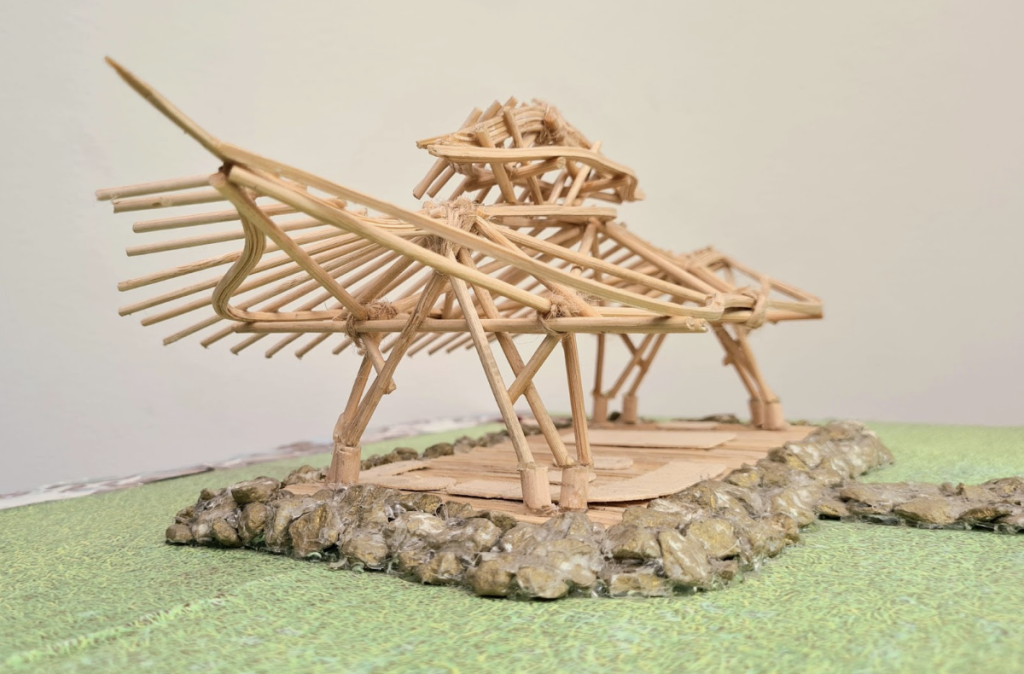
This question became the starting point for a workshop at our campus in Bali, which focused on testing a modular bamboo fish belly truss system. The fish belly truss is a structural system where the depth of the beam increases toward the center of the span, exactly where bending forces and deflection are greatest. Rather than resisting gravity with a straight and uniform element, the geometry itself begins to respond to the load. By placing more structural height where the forces intensify, the system becomes more efficient, allowing longer spans with less material.
Historically, this principle has been used in bridges and large-span steel structures, where engineers understood that geometry could become an active part of the structural performance.
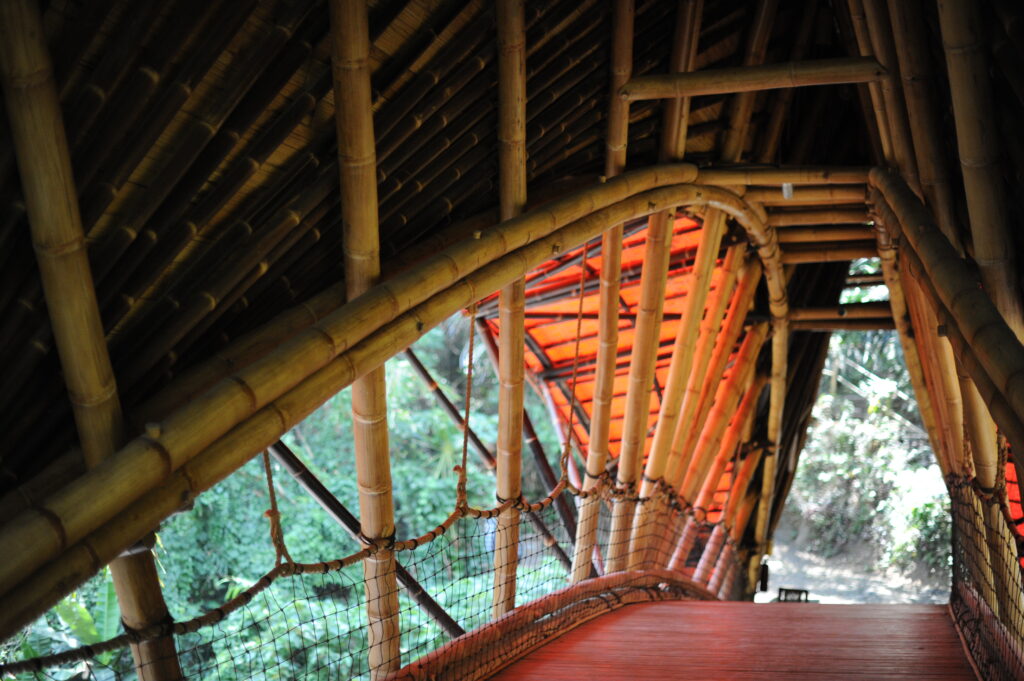
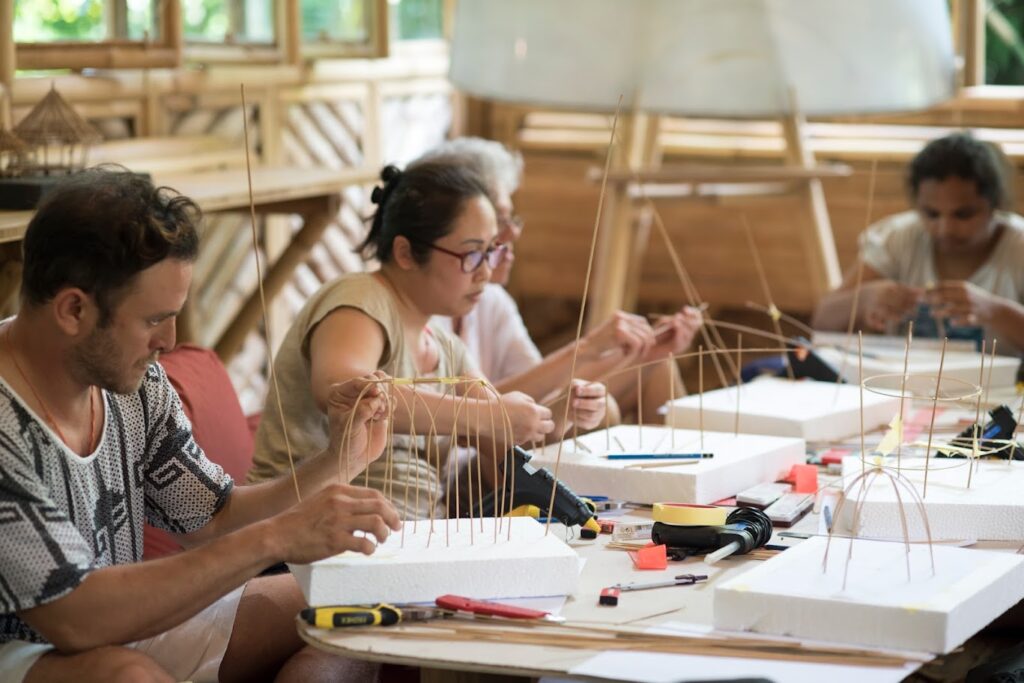
For bamboo, this structural logic becomes especially compelling. Bamboo pioneer Jörg Stamm has explored fish belly truss systems across a number of projects, demonstrating how they can efficiently span larger distances for pedestrian bridges and primary roof structures while maintaining a lightweight and elegant structural language. During the workshop, participants explored how to fabricate the trusses themselves, test structural behavior, and understand the relationship between force, material, and form. A modular and scalable system with the potential to be adapted into many different architectural applications.
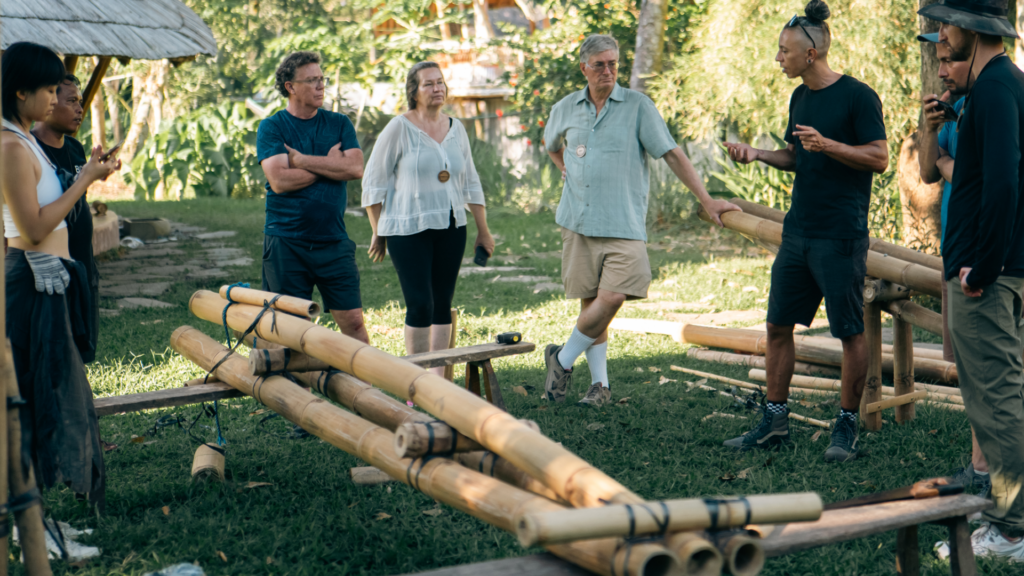
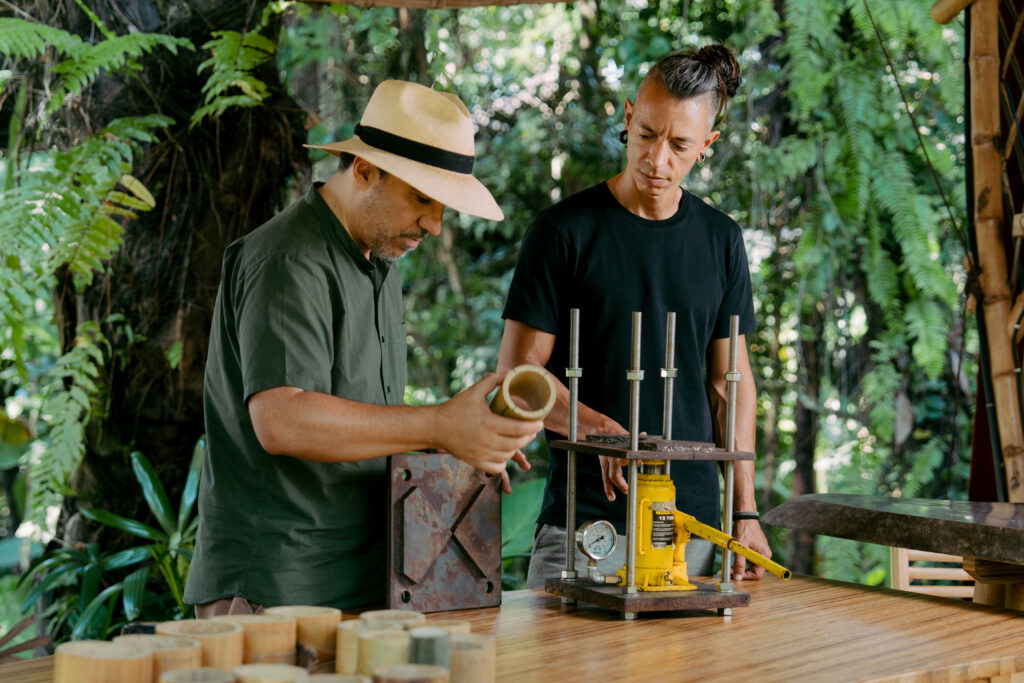
In order to optimize the design of the fish belly truss, participants in the April 2026 11-Day Build and Design Course carried out a number of tests. Jonathan Fashanu, a structural engineer, founder of DASH, and Bamboo U course participant, shared his reflections on the testing process:
“Making the fish belly truss was one of the most interesting aspects of the course because it showed how the intelligence of the bamboo can be used as a structural material in various ways. In simple terms, it’s two bamboo poles running at the top, with another member bent below to form the ‘belly’. Short supports between them keep the bent member in position, almost like loading a spring. The pre-loaded shape gave the structure more depth and stiffness. Allowing it to span further and potentially support heavier loads, such as a green roof. That’s important because green roofs are not just carrying plants and soil but also must be designed to be fully saturated with water.”
Jonathan also shared the team’s findings regarding the importance of grading bamboo:
“Selection matters. Some pieces performed better because they had fewer defects, thicker walls or closer node spacing. In one test, two better-quality bamboo pieces outperformed three poorer ones, which was a very practical lesson in understanding the material rather than making assumptions.”
Related: Preparing And Selecting Your Bamboo On-Site For Construction
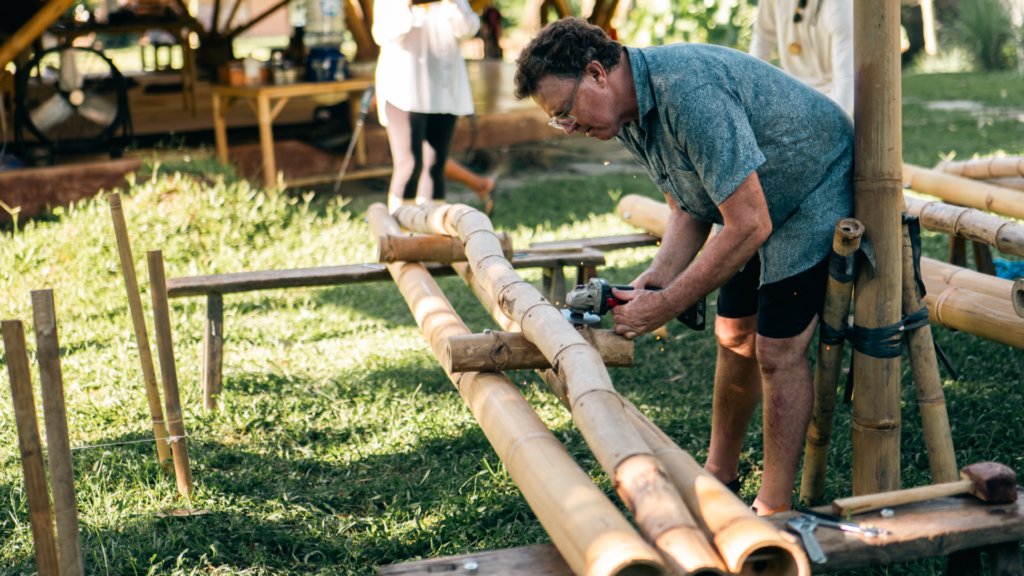
Alongside element design and bamboo pole selection, the course participants also explored which Southeast Asian species would be best suited for various parts of the truss.
“We also saw the difference between bamboo species. Bambu Petung, or Dendrocalamus asper, was straighter and easier to work with, which is why carpenters often prefer to work with it. But because its nodes are spaced further apart, it was more vulnerable to cracking or crushing between the nodes, especially where the short supports applied pressure. Bambu Duri, known as Bambusa blumeana, is less straight and more awkward to use, but its thicker walls and closer nodes gave it better resistance in critical areas.
For me, the biggest lesson was that testing changes the conversation. It helps people see bamboo not as a weak or temporary material, but as a strong, intelligent natural material that needs to be selected, detailed and respected properly.”
Related: 5 Of The Best Bamboo Species To Use In Construction
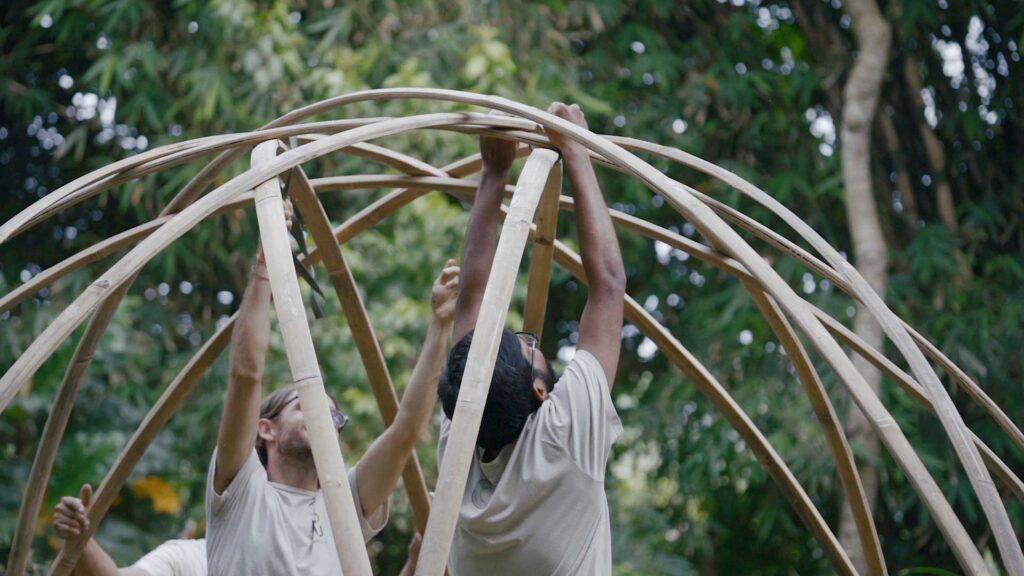
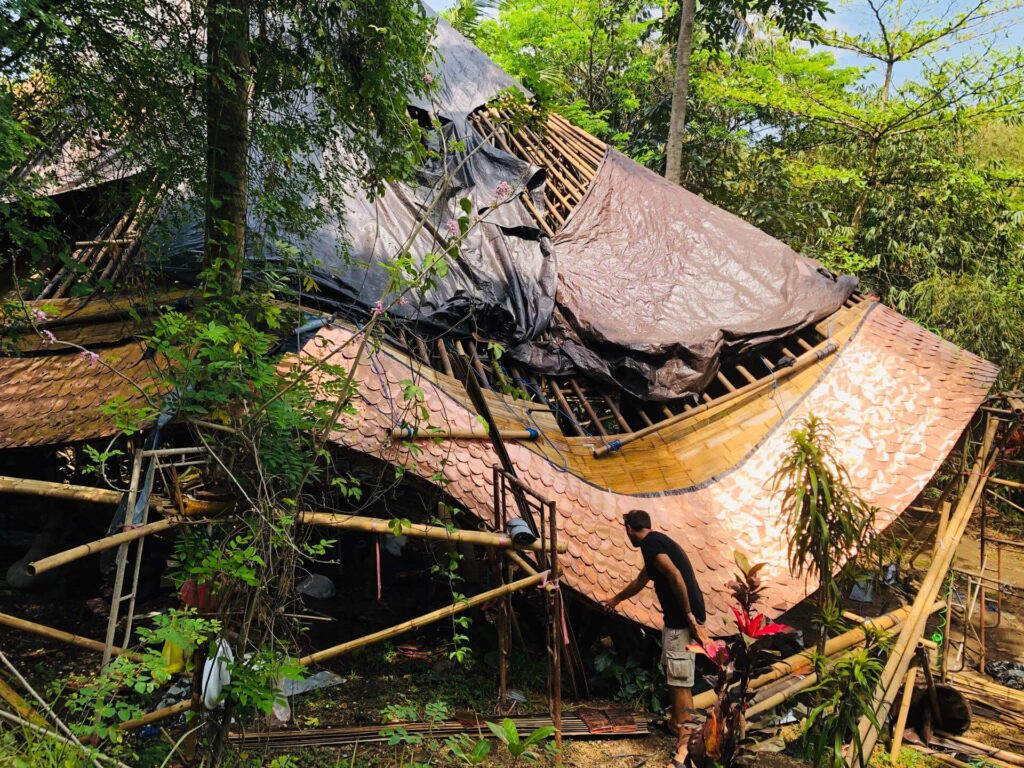
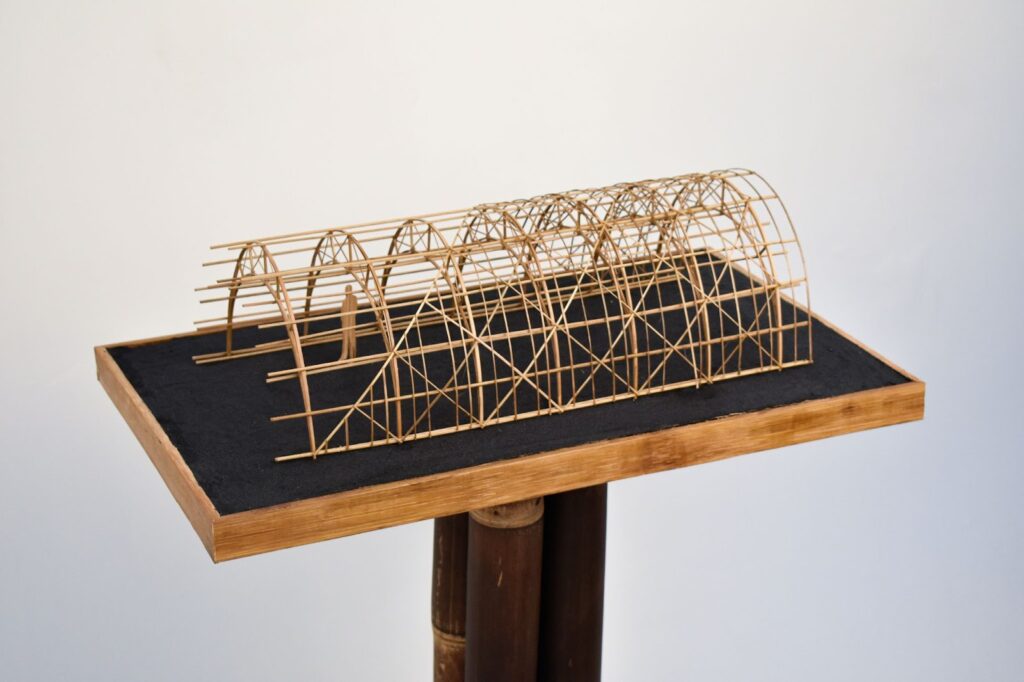
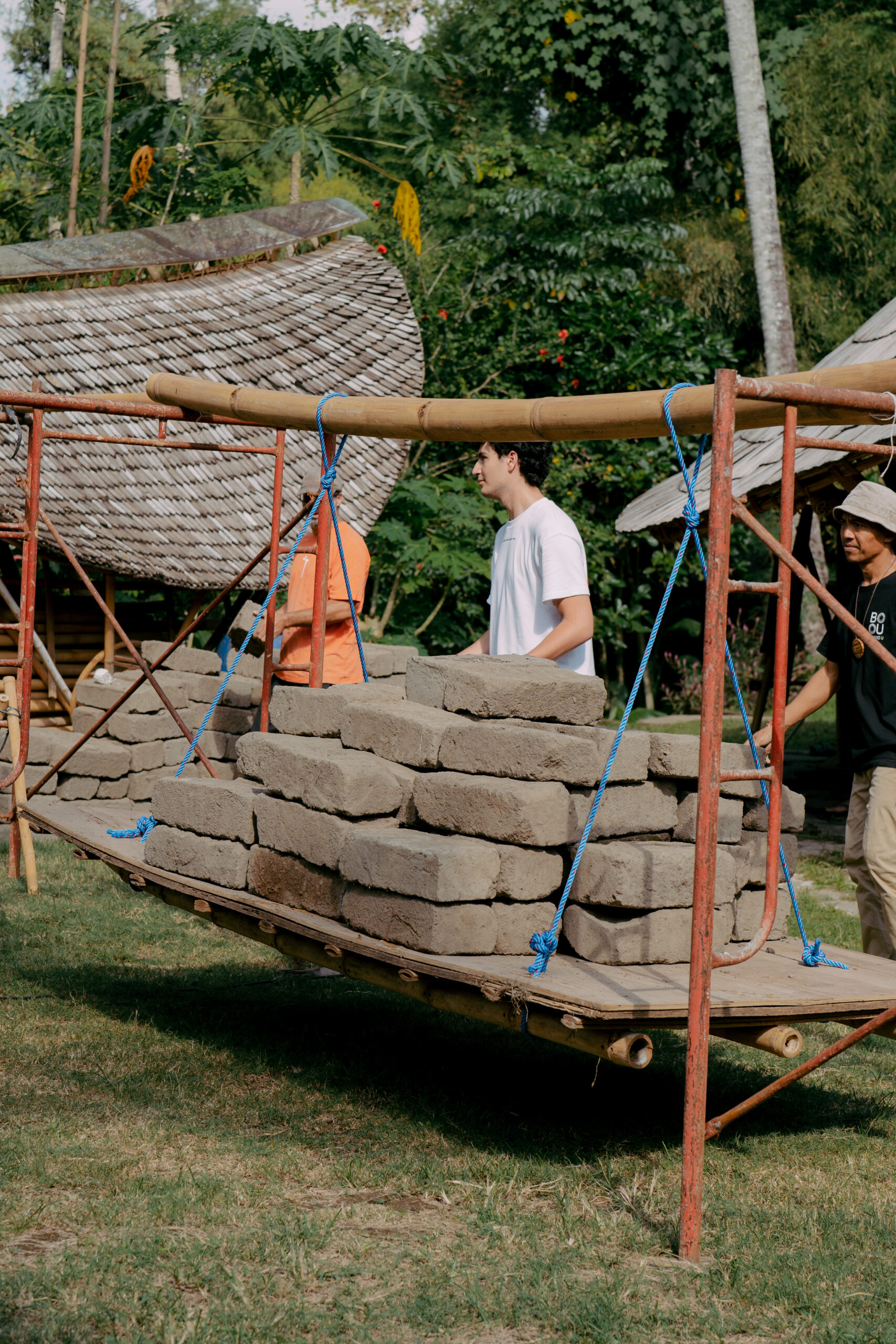
Following the testing phase, participants built a full-scale prototype structure using three fish belly trusses supported by bamboo columns. Woven bamboo panels and cob walls created soft organic forms designed to feel immersed within the surrounding landscape.
The project demonstrated how experimentation and testing can shift the way people understand bamboo. Rather than treating the material as either purely traditional or purely experimental, the process showed how bamboo can be approached with the same structural curiosity, rigor and innovation applied to any other building material.
Interested in gaining practical knowledge of natural building materials? Join one of our upcoming 11-Day Courses to get hands-on with bamboo. Click HERE to enroll today!
Start with bamboo engineering, free.
An introduction to bamboo engineering, created with Base Bahay Foundation. Free, online, start today.
Start the Free CourseSee all online courses

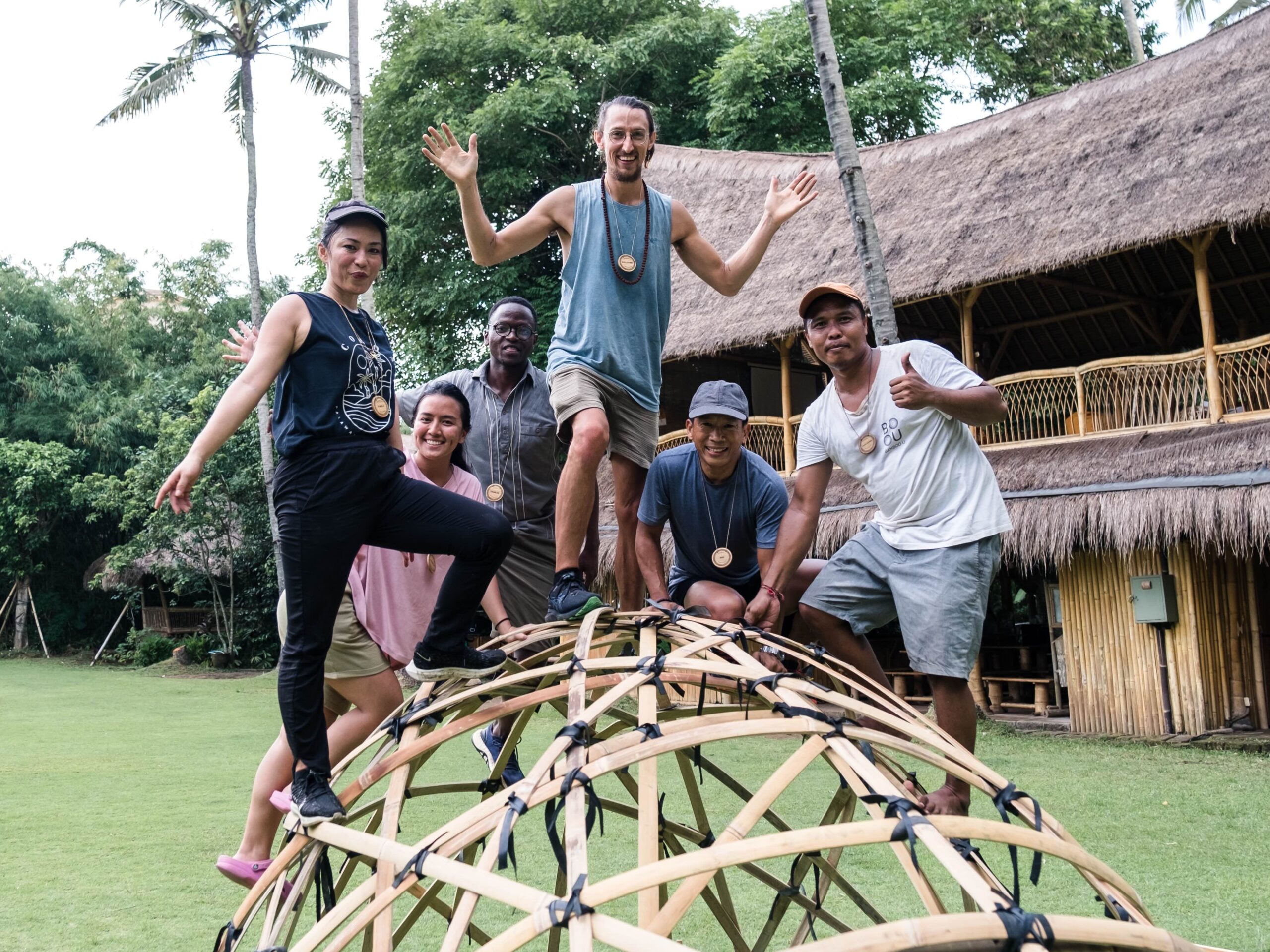
The 11-Day Build & Design Course
In collaboration with IBUKU
Immersed in the most beautiful and innovative bamboo environment. Meet the pioneers, the visionaries, the designers and builders who took this under-utilized material and transformed it into the most desired natural building material for bamboo structure design.
The Intro to Bamboo Engineering Online Course
Designed specially for structural engineers, this FREE online course has been created in collaboration with the Base Bahay Foundation, based in the Philippines.Join the course to learn how bamboo's innate properties make it a versatile building material, and how these properties can be maximized and applied in structural design.