Buildings that Wouldn’t Exist Without Digital Tools – Part 2
By | April 10, 2026 | Design -
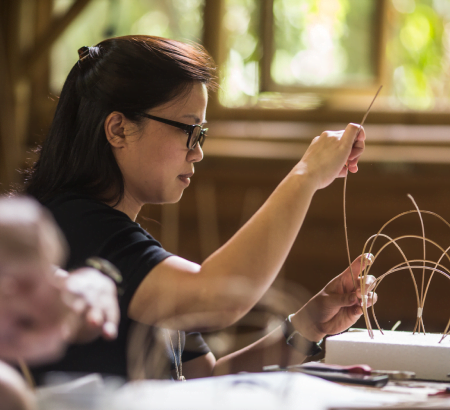
Most of the buildings at the Kul Kul Farm, appear intuitive and organic in their form. But coordinating this level of geometric and structural complexity by eye alone would be inefficient and imprecise. Over the years, we have integrated a range of digital design tools into our workflow. These tools allow us to test forms quickly, analyze structural behavior, calculate material quantities and guide construction with greater accuracy. These tools don’t replace model making or 2D architectural drawings, but they do allow us to push our bamboo architecture further than would otherwise be possible.
Over the years, we have integrated a range of digital design tools into our workflow. These tools allow us to test forms quickly, analyze structural behavior, calculate material quantities and guide construction with greater accuracy. Digital tools don’t replace model making or 2D architectural drawings. However, but they do allow us to push our bamboo architecture further than would otherwise be possible.
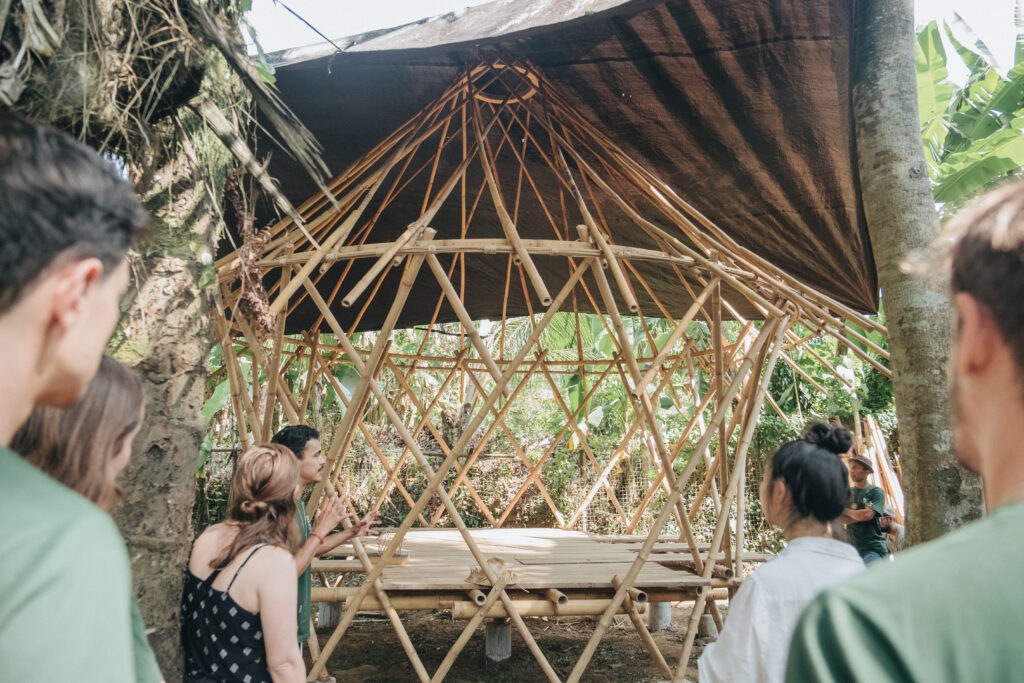
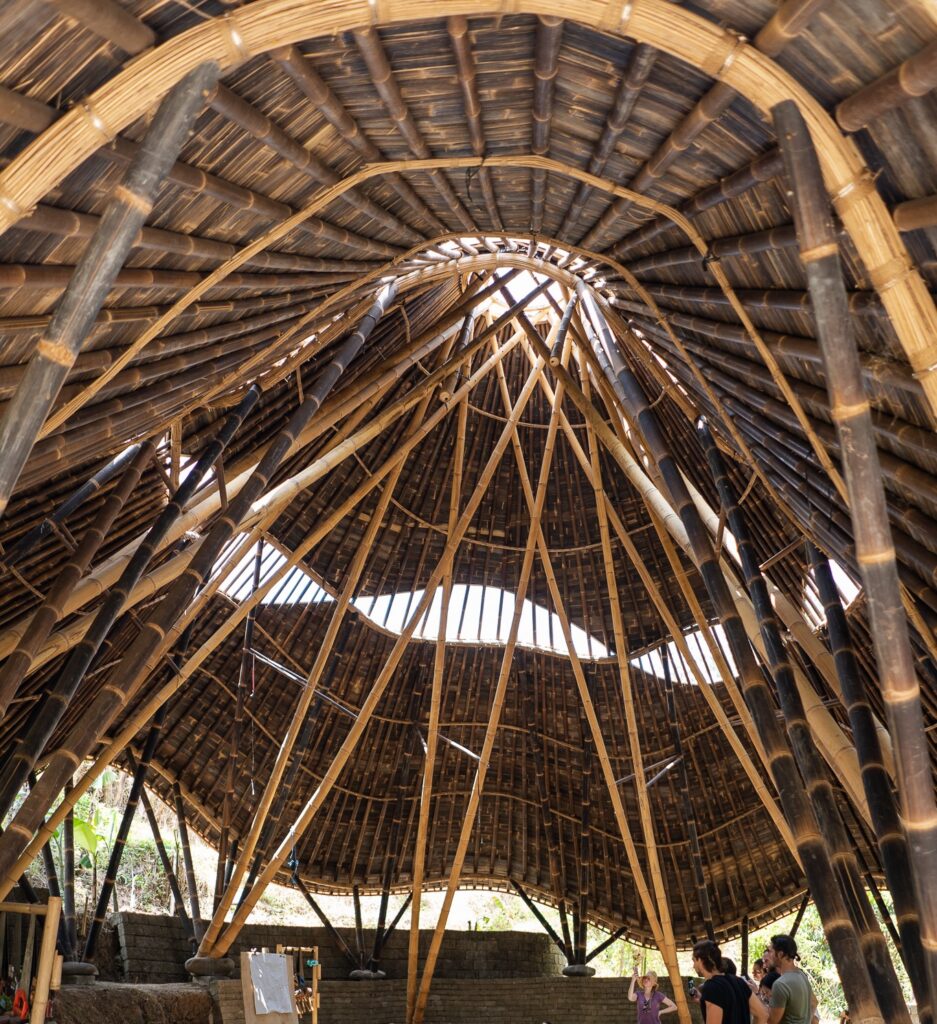
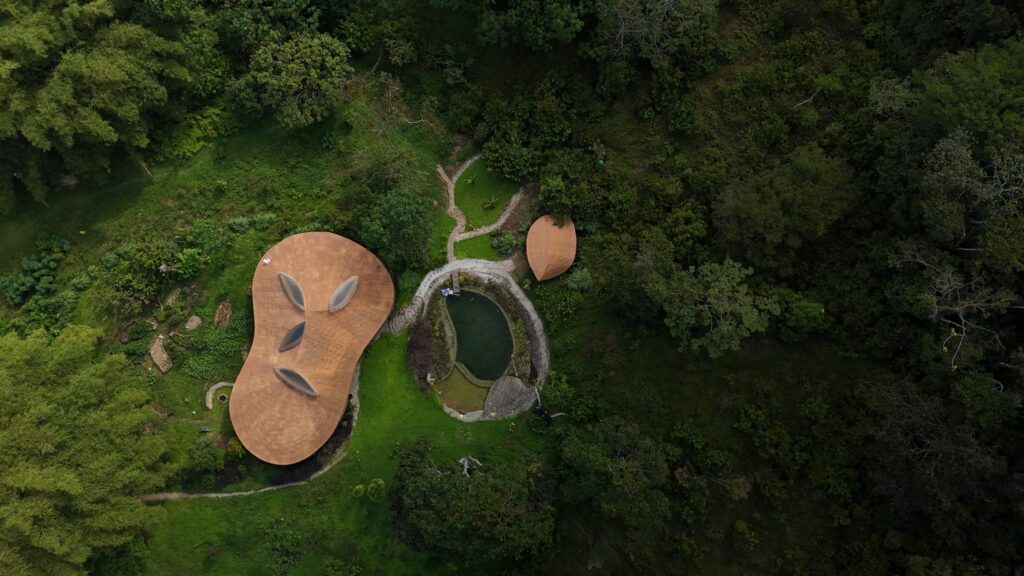
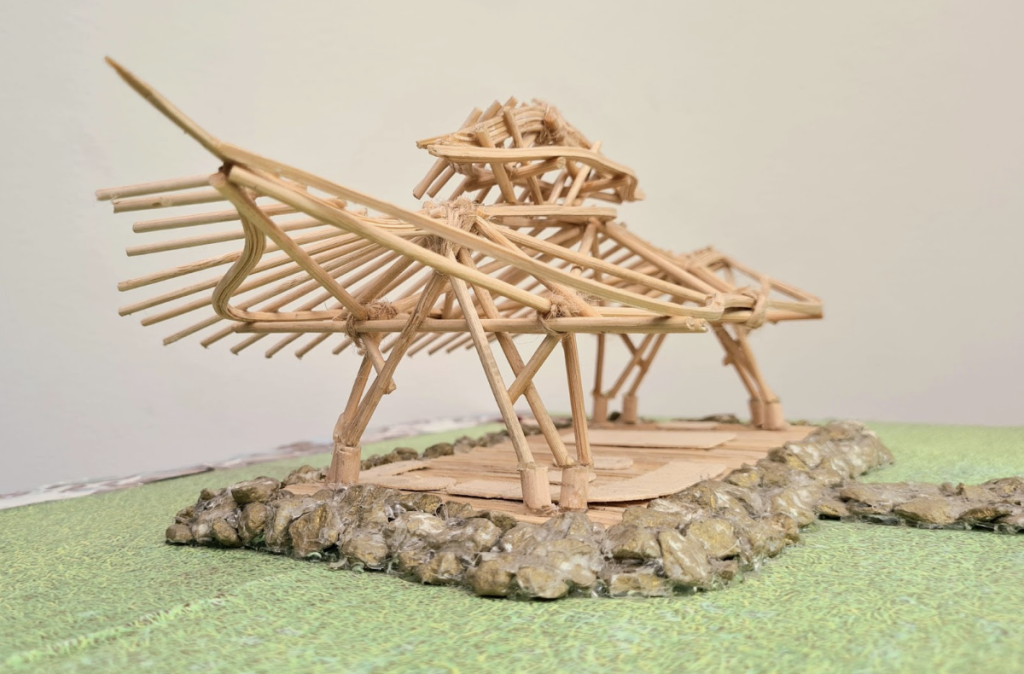
The yurts on the Kul Kul Farm, also called the “Tali Pods”, are simple and quick to build. In fact, they only take around five days to build the structure, and a few more days for finishings. Over the last ten years we have tested many different variations of the yurts, slowly improving their design.
In the beginning, we only used models and 2D drawings, but over the years we have begun to integrate Rhino with the plug-in Grasshopper in the design process. This has made it much easier to quickly test variations, such as trying different shapes, testing material efficiency, improving design durability, changing size and adding levels, and using different species of bamboo. All of these changes were done using a base model in Grasshopper. This allowed us to test out variations of the basic yurt structure quickly.
Grasshopper made it possible to rapidly iterate and refine the yurt over time, rather than relying on slower trial-and-error through physical models alone.
Related: How We Built An Amazing, Low-cost Bamboo And Mud Yurt
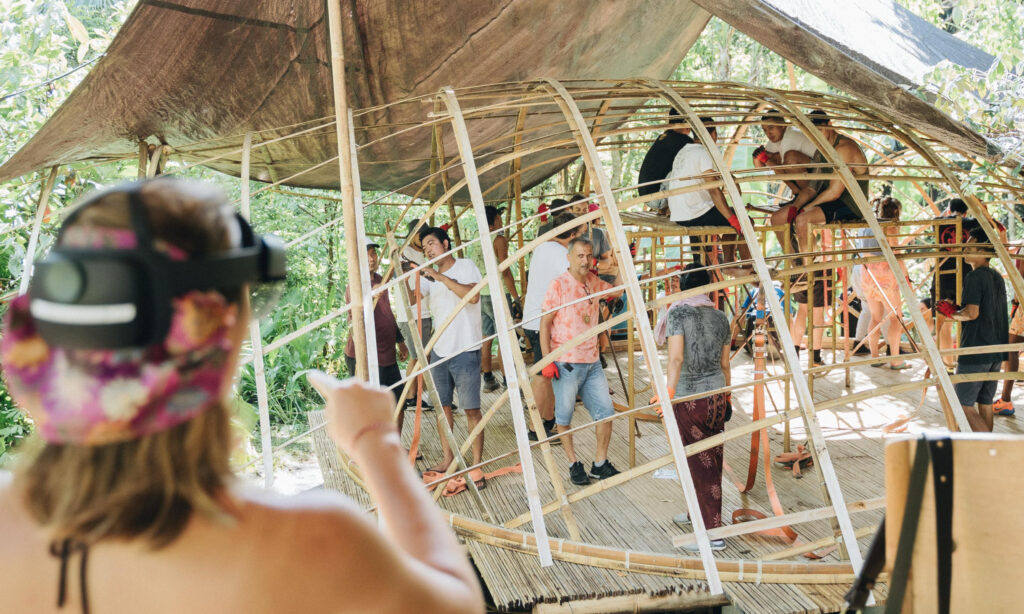
In collaboration with Kristof Crolla and Garvin Goepel from Hong Kong University, we used HoloLenses to project digital models onto reality, without the need for architectural drawings. Unlike virtual reality, which immerses users into a wholly digital environment, augmented reality (AR) superimposes digital data onto the physical world.
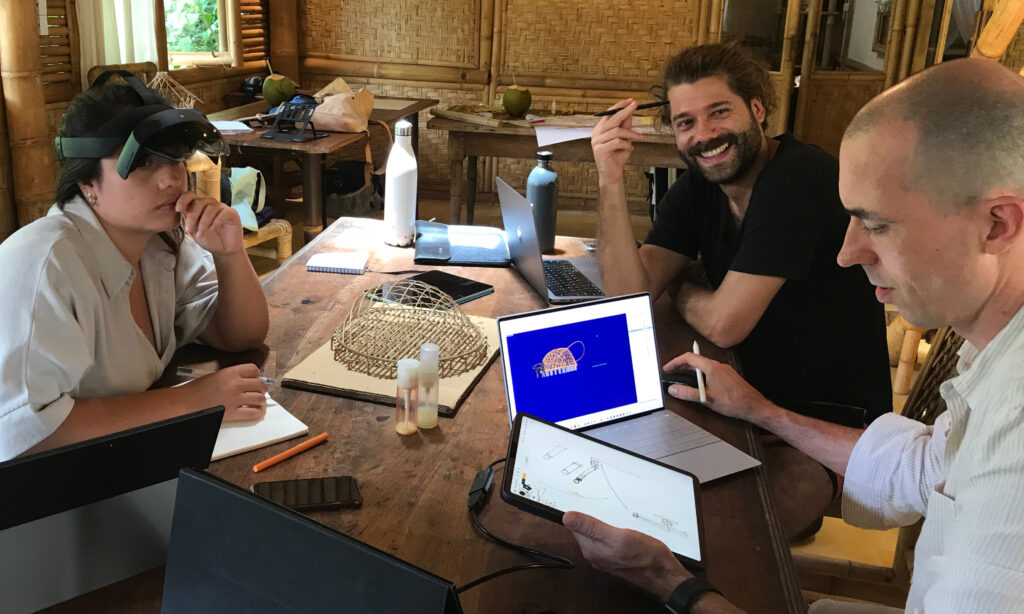
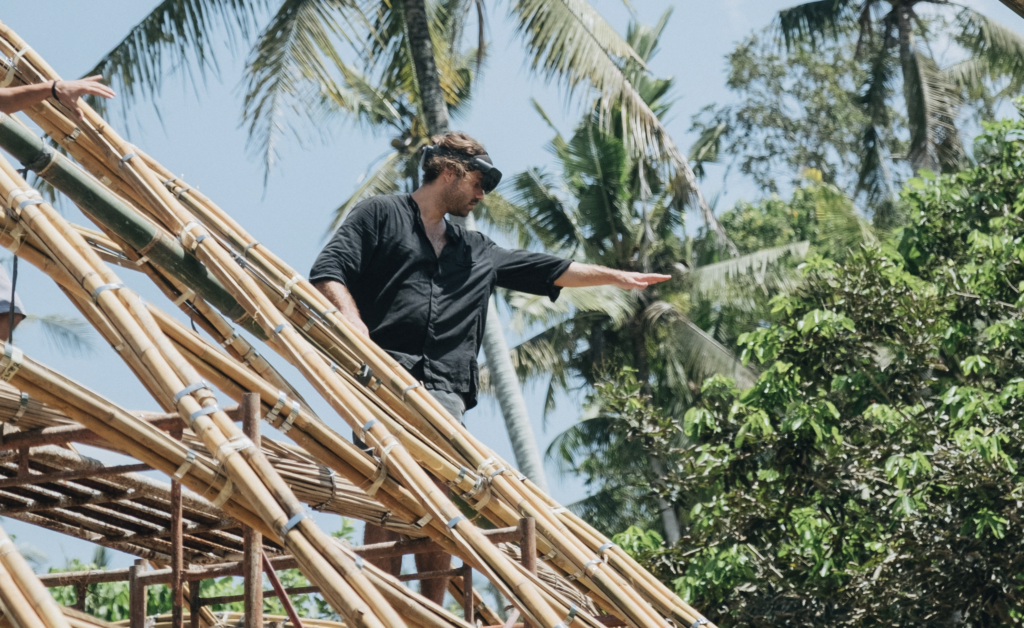
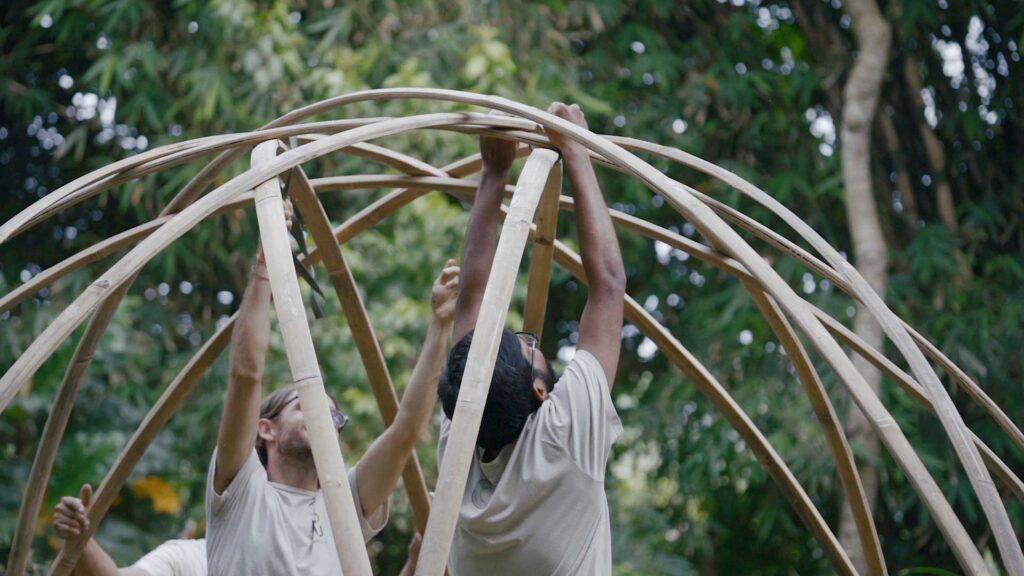
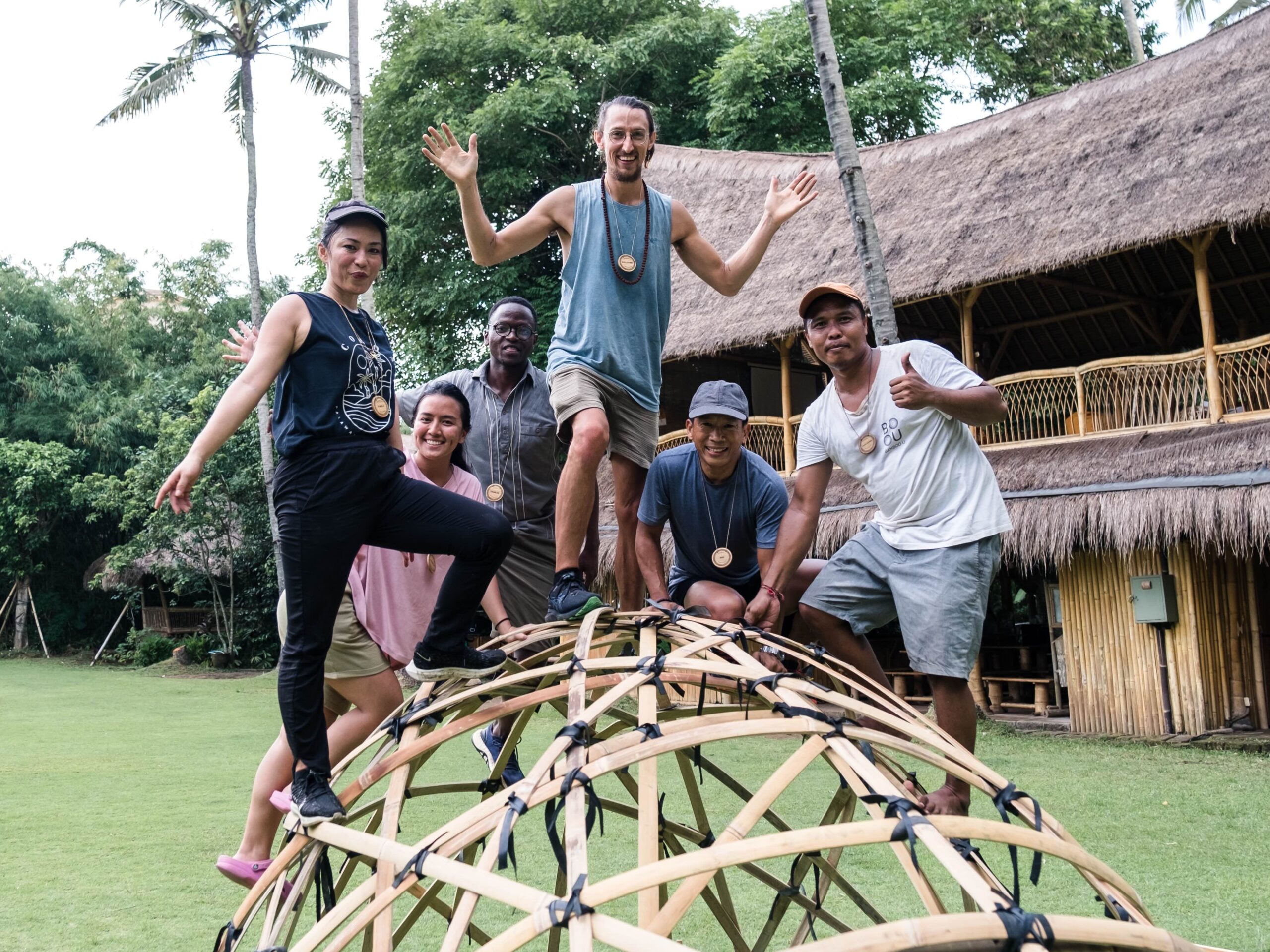
Enabling on-site visualization of complex models, AR makes it easier for designers to communicate their projects to local craftsmen. AR’s role was integral to the build process of the Cocoon Kecil. It assisted from the precise markings of foundations and bases of the domes, to preparing materials to the required dimensions and assembling the grid on site. After the students popped up the domes, we also used AR to check and adjust their geometry. As it was the first time we had used augmented reality in a project, it became clear how directly it could translate a digital model into the construction process.
AR was particularly useful here because it allowed the team and participants to understand and assemble a complex 3D geometry directly on-site, without needing to rely on 2D drawings.
Related: The Use of Augmented Reality (AR) In Bamboo Architecture
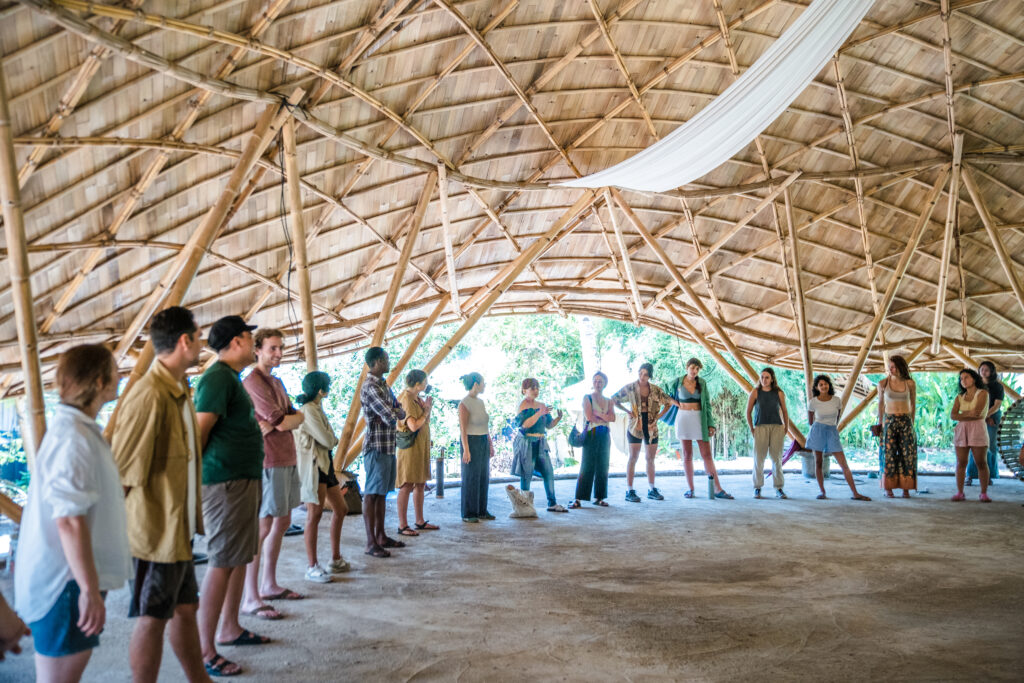
The dome was a continuation and scale-up of the experimentation we began with Cocoon Kecil, further developing the relationship between augmented reality and bamboo construction in collaboration with Kristof Crolla and Garvin Goepel from Hong Kong University.
A crane was used to lift up a grid shell made from bundles of three Thyrsostachys siamensis bamboos and a bamboo split, with their placement and lengths determined through using augmented reality (AR) goggles. Once the roof was elevated, scaffolding was used to support the structure, allowing for the accurate placement of the lidi bundles according to the model viewed through the augmented reality glasses.
At this larger scale, digital tools became critical in coordinating the overall geometry. Rhino and Grasshopper helped us define the form, while AR enabled that geometry to be communicated directly on site during construction.
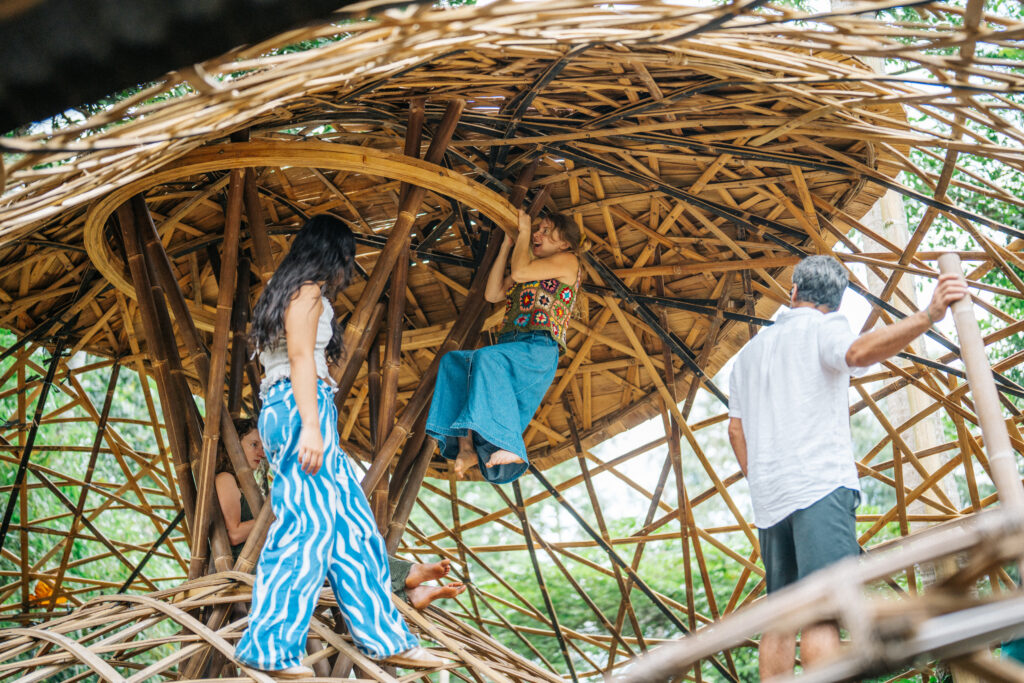
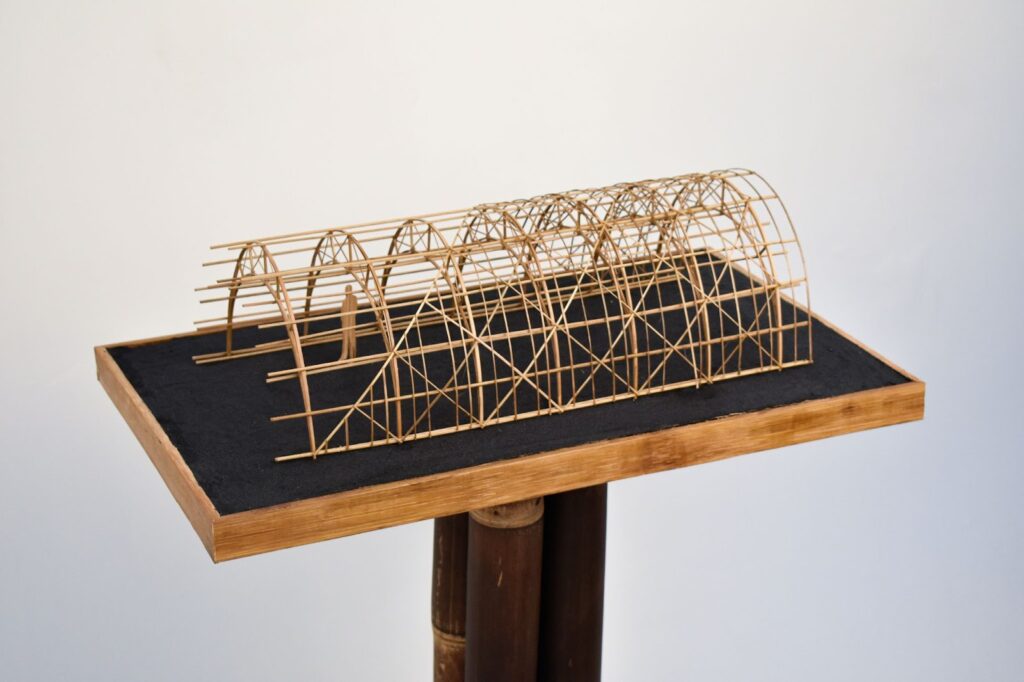
As part of a design competition in 2024, Ckori Pena used Rhino and Grasshopper to design the overall structure of The Kul Kul Farm Playground. Her winning design consists of a hyperbolic tower and various grid shells. As the design developed, we used Kangaroo for physics simulations and form-finding for the undulating regular grid shell that forms the climbing surface. The parameters of the hyperbolic tower were also adjusted using Grasshopper. To do an engineering analysis of the grid shells, SAP 2000 was used to help determine the structural members. After the structure was designed, Lumion was used to render the project.
Since the playground combines multiple structural systems, digital tools were essential in enabling the team to test, form-find, and engineer the project before construction began.
Related: Designing a Bamboo Playground

Bamboo U did start out only using drawings and models to design our buildings, but over the years we have embraced digital design tools to work with increasingly complicated designs and speed up the process. We think that this mix of high and low tech is where the cutting edge of sustainability in architecture lies.
If you would like to learn more about how we use these digital tools, take a look at our beginners’ course for applying Digital Design Tools!
Enroll in the Digital Design for Bamboo Course HERE.
Learn to design and build with bamboo in Bali.
Join the 11-Day Bamboo Build and Design Course: hands-on building alongside experts, architects and makers from around the world.
Explore the 11-Day CoursePrefer to start online?

The 11-Day Build & Design Course
In collaboration with IBUKU
Immersed in the most beautiful and innovative bamboo environment. Meet the pioneers, the visionaries, the designers and builders who took this under-utilized material and transformed it into the most desired natural building material for bamboo structure design.
The Intro to Bamboo Engineering Online Course
Designed specially for structural engineers, this FREE online course has been created in collaboration with the Base Bahay Foundation, based in the Philippines.Join the course to learn how bamboo's innate properties make it a versatile building material, and how these properties can be maximized and applied in structural design.